Blue Water Lilies — History & Facts
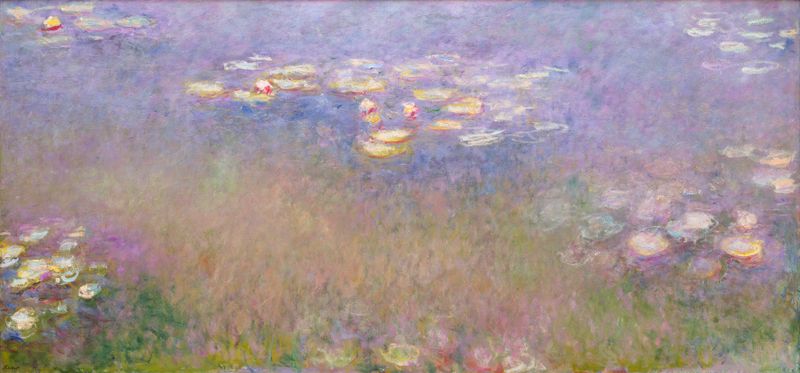
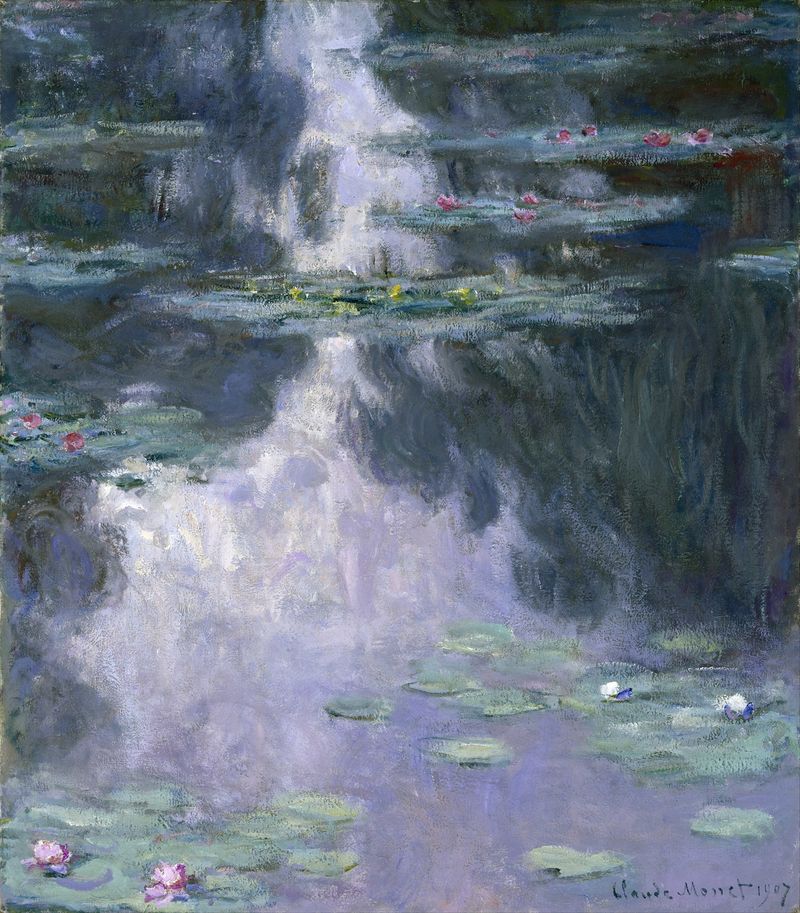
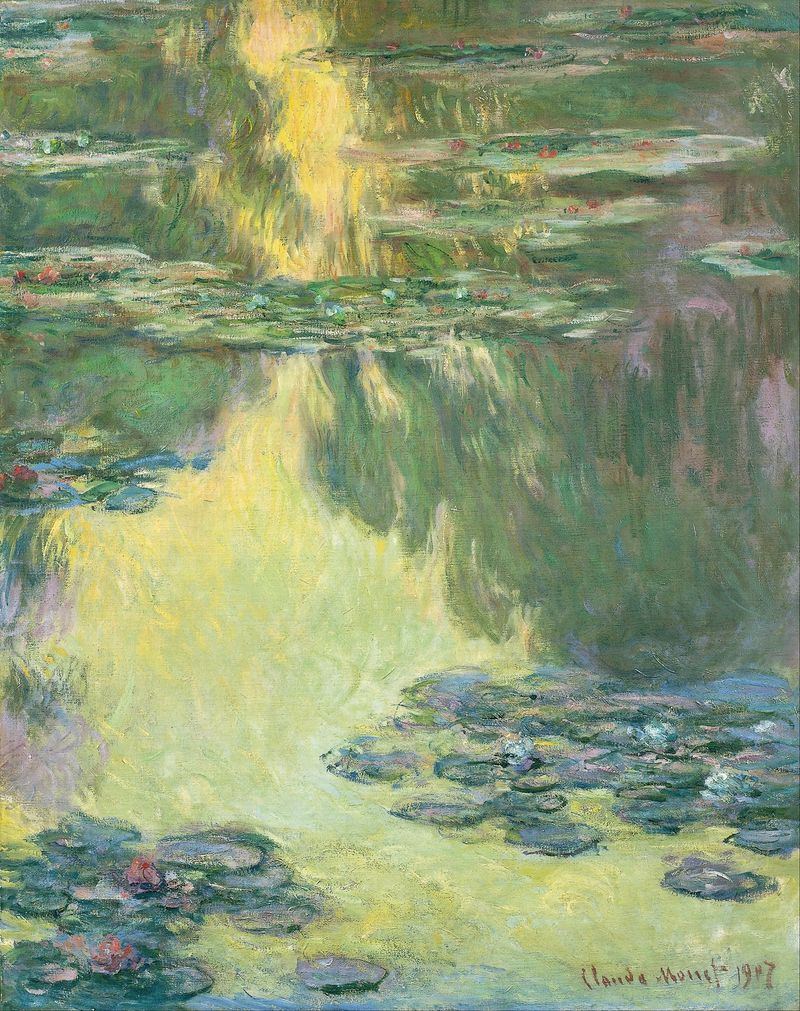
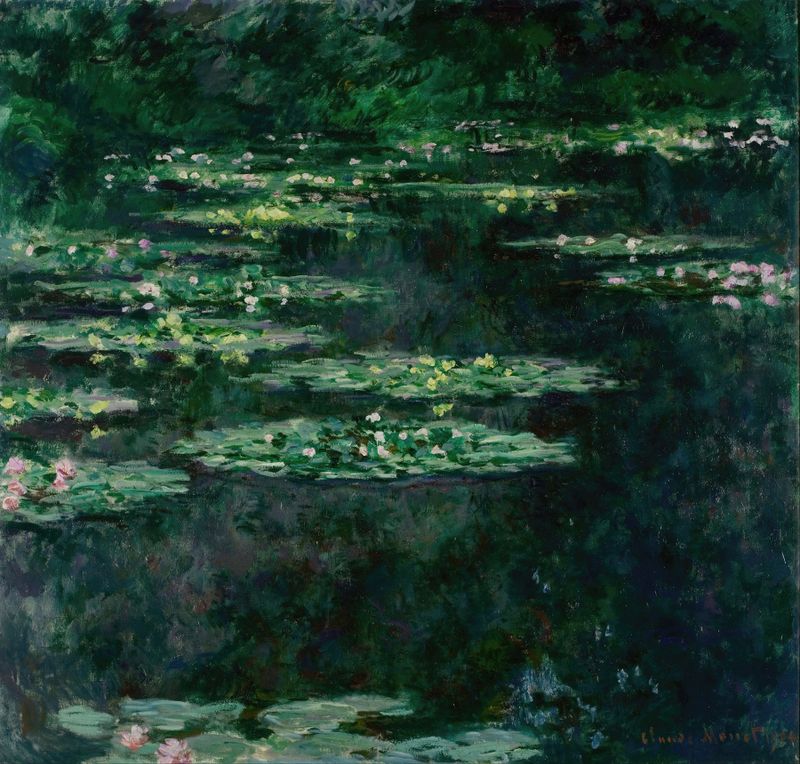
Did the painter know this moment would outlive them? In Blue Water Lilies, innocence dances on the canvas, inviting viewers into a serene yet transient world where time feels both suspended and eternal. Focus on the vibrant hues that swirl across the surface, drawing your gaze to the tranquil water, where blues and greens blend in a harmonious embrace. The brushstrokes are both deliberate and carefree, creating a sense of fluidity that mirrors the gentle ripples of the lilies. Notice how the light plays upon the water, illuminating each petal and reflecting the sky, as if the canvas itself becomes a portal to nature’s quiet poetry. The interplay between the delicate flowers and their aquatic surroundings highlights a profound juxtaposition: the fragility of beauty against the backdrop of a constantly shifting reality.
Each lily seems to float on the cusp of disappearance, embodying innocence yet hinting at an inevitable passage of time. The overall composition evokes a meditative calm while simultaneously stirring an undercurrent of melancholy, challenging us to reflect on what is fleeting in our own lives. Created during a period of personal struggle for Monet, between 1916 and 1919, this work emerged amidst his battle with failing eyesight and the backdrop of World War I. While the world around him was engulfed in chaos, Monet sought solace in his garden at Giverny, striving to capture the essence of a natural beauty that would endure beyond the turmoil of his time.