Boerenerf — History & Facts
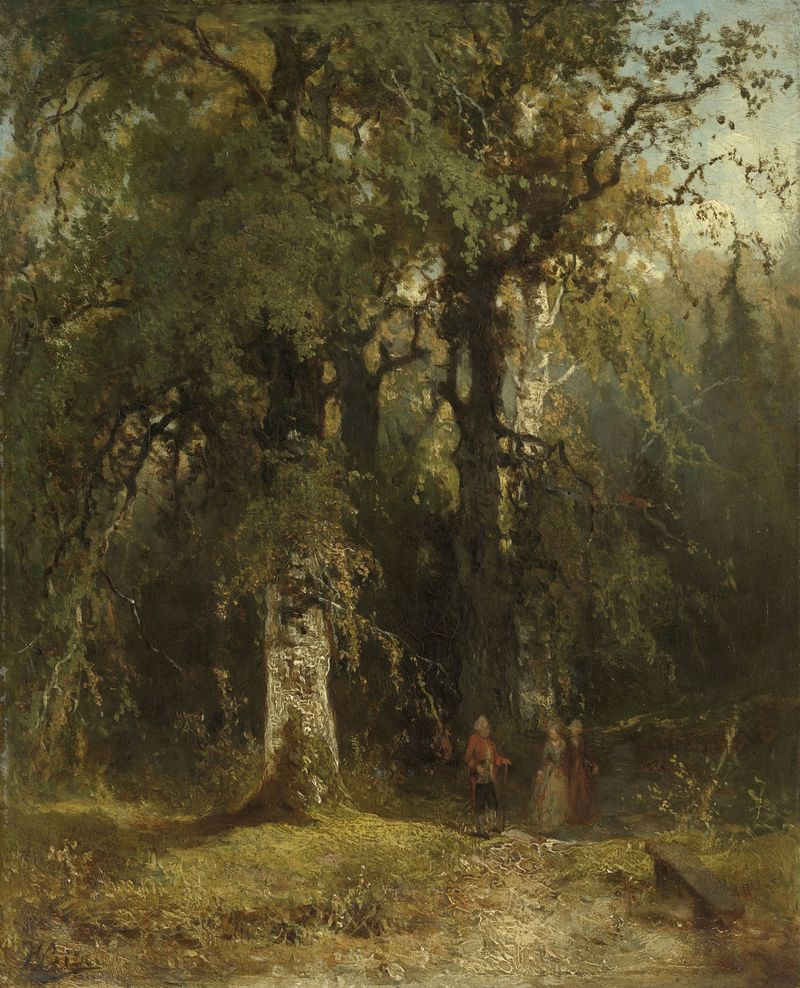
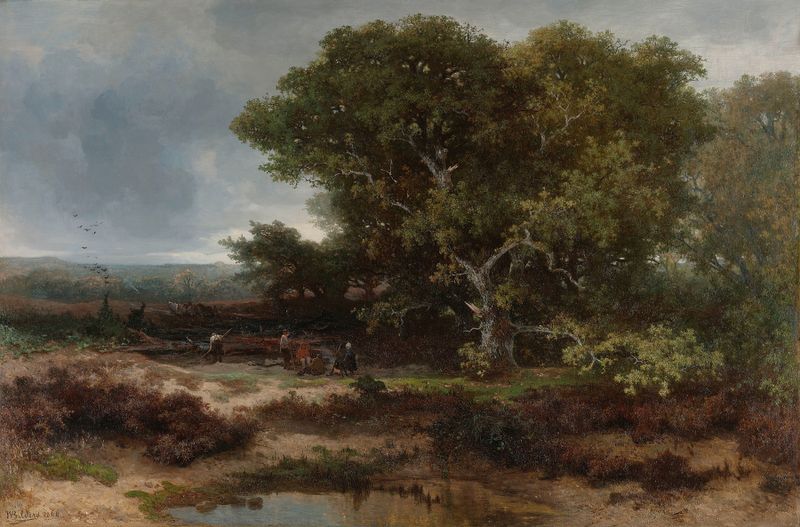
Who listens when art speaks of silence? In the hushed realm of Boerenerf, longing resonates through the stillness of a pastoral landscape, inviting reflections on home and memory. Look to the center, where a modest farmhouse stands, its weathered facade framed by lush greenery and the gentle curve of the horizon. The artist employs a muted palette dominated by earthy browns and soft greens, creating a harmonious blend that evokes a sense of tranquility. The light, dappled by the treetops, casts delicate shadows across the scene, guiding the eye to the inviting entrance of the home.
This careful arrangement suggests a sanctuary, a world untouched by the chaos beyond its borders. Yet, within this serenity lies a poignant contrast. The surrounding fields stretch endlessly, hinting at the isolation of rural life. Each brushstroke conveys a longing for connection, suggesting that the solitude of the farmhouse is both a refuge and a source of yearning.
The absence of figures intensifies this emotional landscape, urging viewers to contemplate the stories that unfold in silence, echoing the unspoken desires of the heart. Created between 1845 and 1889, Boerenerf reflects a period in which Johannes Wernardus Bilders was deeply entrenched in the Dutch Romantic movement. This era celebrated nature and emotional depth, mirroring his personal experiences in the Dutch countryside. As he navigated the complexities of life and art, he captured the essence of longing in quiet elegance, producing a work that resonates with the universal search for belonging.