Bosgezicht bij Wolfheze. — History & Facts
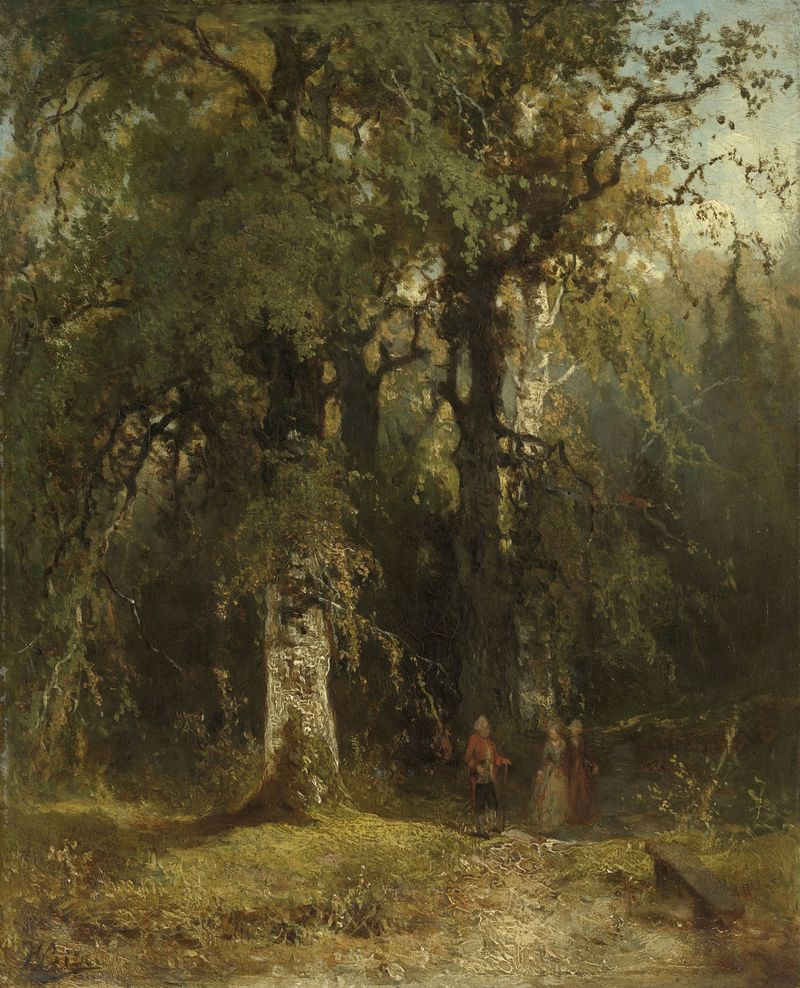
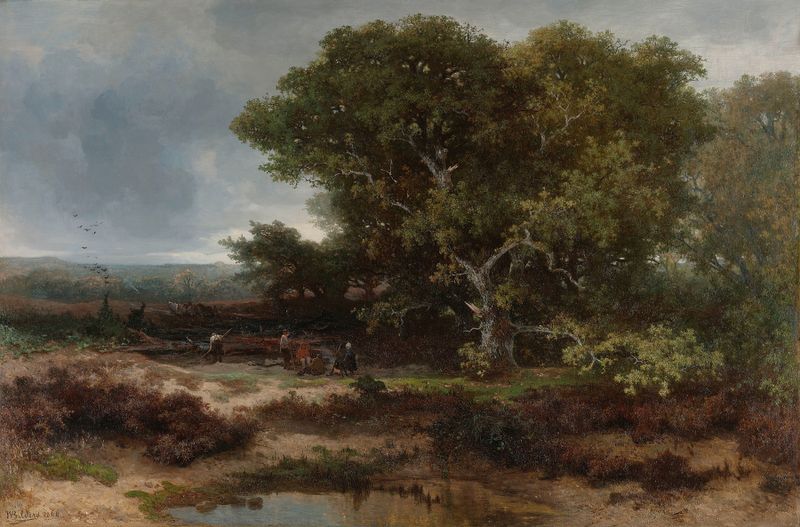
In the quiet of this landscape, a soft yearning whispers through the trees and meadows, inviting contemplation and escape. Look to the foreground where the gentle brook winds its way through the lush greenery. Notice how the artist employs a delicate palette of greens and blues, blending strokes that seem to breathe with life. The subtle interplay of light and shadow casts a serene glow over the scene, emphasizing the tranquility that mirrors both the physical and emotional landscape.
Your gaze is drawn towards the horizon, where clouds playfully dance, hinting at a world beyond this tranquil setting. Amidst the serenity lies a deeper tension—the contrast between the vibrant foliage and the almost ghostly pale sky suggests fleeting moments of beauty and the inevitable passage of time. The winding brook, symbolizing the journey of life, beckons the viewer to ponder their own path against the backdrop of nature’s unwavering presence. The interplay of light not only illuminates but also reflects a yearning for connection and understanding in a world often marked by silence. In the latter half of the 19th century, the artist was immersed in the Dutch landscape tradition, capturing nature’s subtleties with emotional depth.
Painted between 1860 and 1890, this work reflects a time of personal exploration and a broader movement toward naturalism in art, as society began to embrace the complexities of the natural world in new, profound ways.