View in the Woods — History & Facts
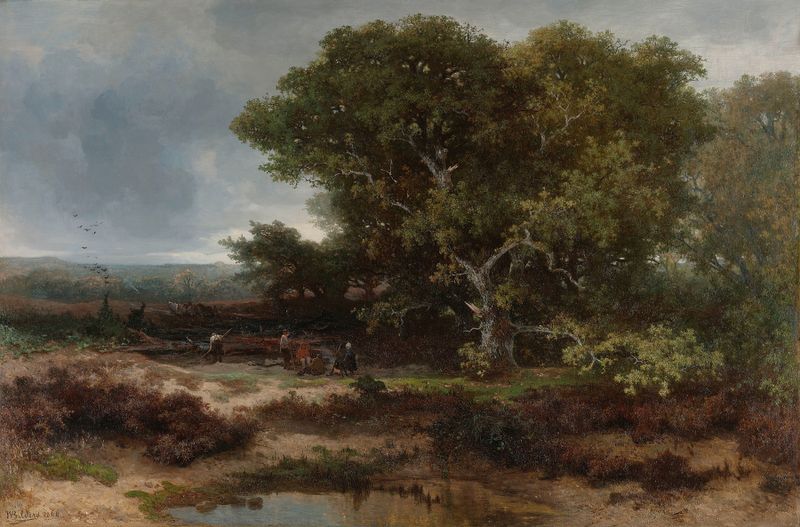
Did the painter know this moment would outlive them? In View in the Woods, the interplay of light and shadow offers a glimpse into nature’s eternal embrace, a reminder of the fleeting beauty that transcends time and mortality. Focus on the vibrant green foliage that dominates the canvas, where dappled sunlight filters through the treetops, casting a mosaic of earthy tones on the forest floor. Notice how the brushstrokes evoke a sense of movement—the gentle sway of the leaves and the soft rustle of the underbrush draw you deeper into the scene. The composition invites your gaze to wander, capturing the serene stillness of the woods while hinting at the life that thrives within. The emotional tension in this work lies in its balance between silence and an unspoken vitality.
While the scene appears tranquil, there is an underlying pulse, a whisper of the animals hidden among the trees, perhaps a reminder of the life that will continue long after the artist's hand has stilled. The contrasts between light and dark serve as metaphors for the cycles of existence—each beam of light illuminating not just the path ahead, but also the unknown shadows that accompany it. Completing this piece during the mid to late 19th century, Bilders was situated within a vibrant circle of Dutch artists embracing realism and romanticism. As he painted amidst the lush German landscape, he sought to capture nature’s essence in its purest form.
This period was marked by a growing interest in landscape painting as a means of exploring human emotion and experience, reflecting a society increasingly aware of its relationship with the natural world.