The Heath near Wolfheze — History & Facts
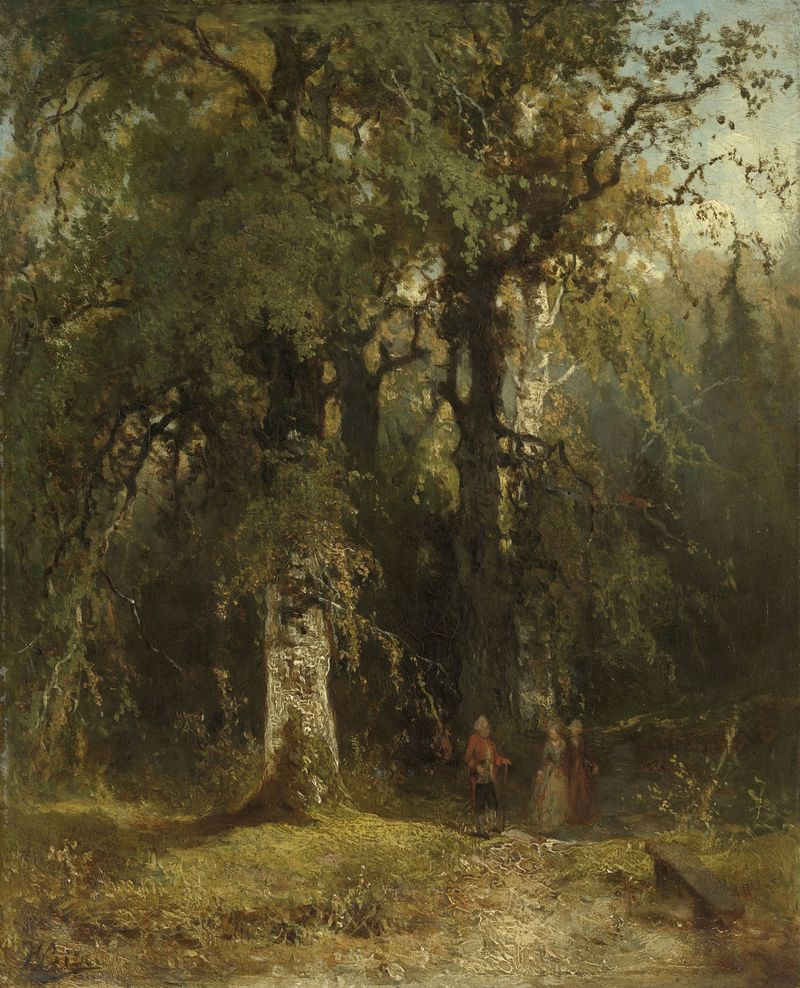
This sentiment echoes through the landscape of The Heath near Wolfheze, where hues of ochre and emerald resonate with a haunting beauty that belies its muted melancholy. Focus first on the lush green foreground, where the vibrant grasses sway gently under the weight of an unseen breeze. Notice how the brushstrokes are both delicate and confident, merging the colors to create an almost tactile sensation. The sky above, a swirling mix of cool blues and soft whites, adds depth to the scene, contrasting with the warmth of the earth below.
The composition draws the eye into a harmonious dialogue between the land and the sky, inviting viewers to linger in this tranquil moment. Yet, beneath the surface of this serene landscape lies a tension between the natural beauty and the isolation it evokes. The sparse trees scattered across the heath seem to stand sentinel, embodying both solitude and strength—reminders of life enduring against the odds. This duality resonates in the color choices, where vibrant greens hint at vitality while the brooding sky suggests an encroaching storm, reflecting the complexities of existence itself. During 1866, the artist painted this piece amid a burgeoning movement in the Netherlands, where realism began to intertwine with impressionistic techniques.
At this time, Bilders was exploring the interplay of light and color in nature, reflecting both his personal journey and the broader artistic quest for truth in representation. This artwork encapsulates a moment of contemplation in a world on the brink of change, capturing the essence of beauty intertwined with a deeper sense of longing.