
Bohdan Khmelnytsky's Church in Subotiv — History & Facts
When Taras Shevchenko painted Bohdan Khmelnytsky's Church in Subotiv in 1845, he chose as his subject a building steeped in the birth of modern Ukraine. The Church of St. Elijah in Subotiv was not only the family church of the legendary Cossack hetman Bohdan Khmelnytsky, but also his burial place, making it a symbol of national identity and resistance.
In the mid-19th century, as Ukrainian culture struggled under imperial Russian rule, Shevchenko’s rendering of this church became a quiet act of remembrance and defiance. The painting is often cited as a visual manifesto for Ukrainian heritage, and its creation coincided with Shevchenko’s travels through central Ukraine, where he sketched and wrote about the land’s history. The scene Shevchenko chose is tranquil but charged: the low, whitewashed walls of the church rise from the rolling green hills, their simplicity set against an expansive sky. The building stands alone, its modest dome and cross clear against the horizon, a visual anchor amid the open landscape.
Every element is deliberate—the isolation of the church suggests both vulnerability and endurance, while the play of light on its walls gives it a quiet dignity. Unlike the dramatic, crowded historical canvases of Jan Matejko, Shevchenko’s approach is spare, focusing not on the figure of Khmelnytsky himself but on the place that outlasted him. The absence of people in the scene invites the viewer to reflect on memory, loss, and the endurance of cultural symbols. The medium of Bohdan Khmelnytsky's Church in Subotiv is not definitively recorded, though Shevchenko worked in both watercolor and pencil during his 1845 travels.
The painting has survived turbulent times, including wars and political upheaval, and is now held in the collection of the National Museum Taras Shevchenko in Kyiv. It occupies a special place in Shevchenko’s career, created during his prolific period of documenting Ukrainian architecture and folklore. This work stands as a testament not only to a pivotal historical figure and site but also to Shevchenko’s own role as both artist and chronicler of his nation’s soul.
More Artworks by Taras Shevchenko
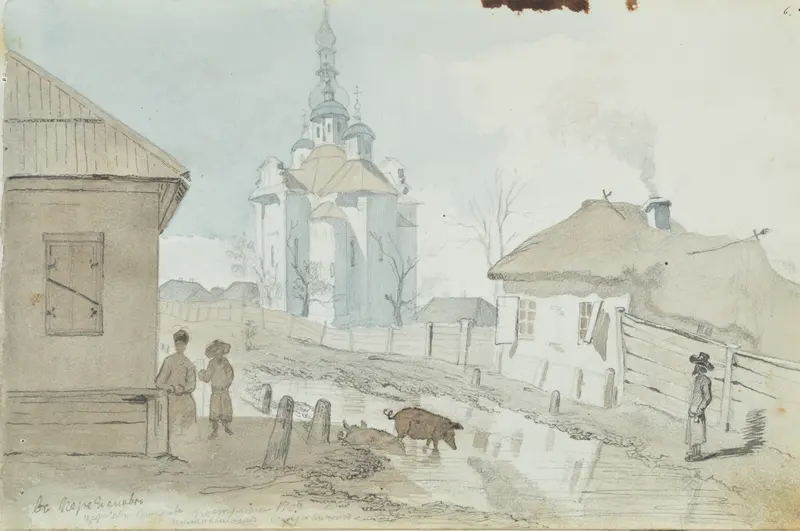
1845 Sh Sketchbook f.06r
Taras Shevchenko

1845 Sh Sketchbook f.04r
Taras Shevchenko

1848 Bilia vohnu
Taras Shevchenko
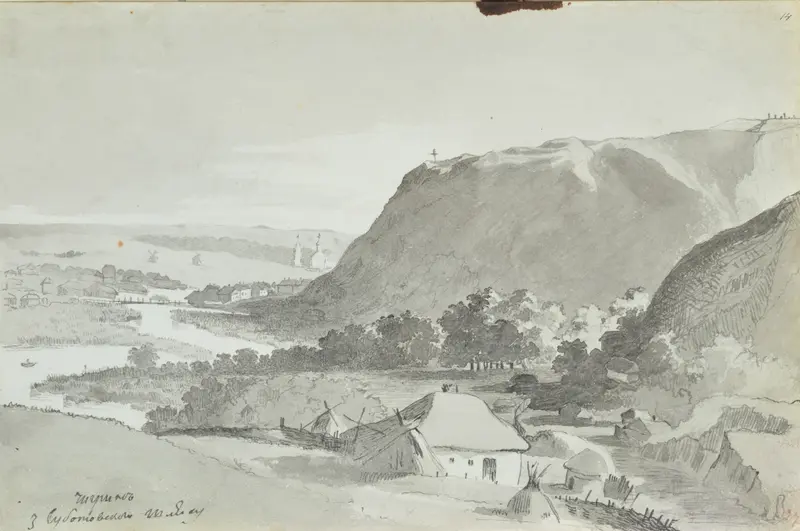
1845 Sh Sketchbook f.14r
Taras Shevchenko
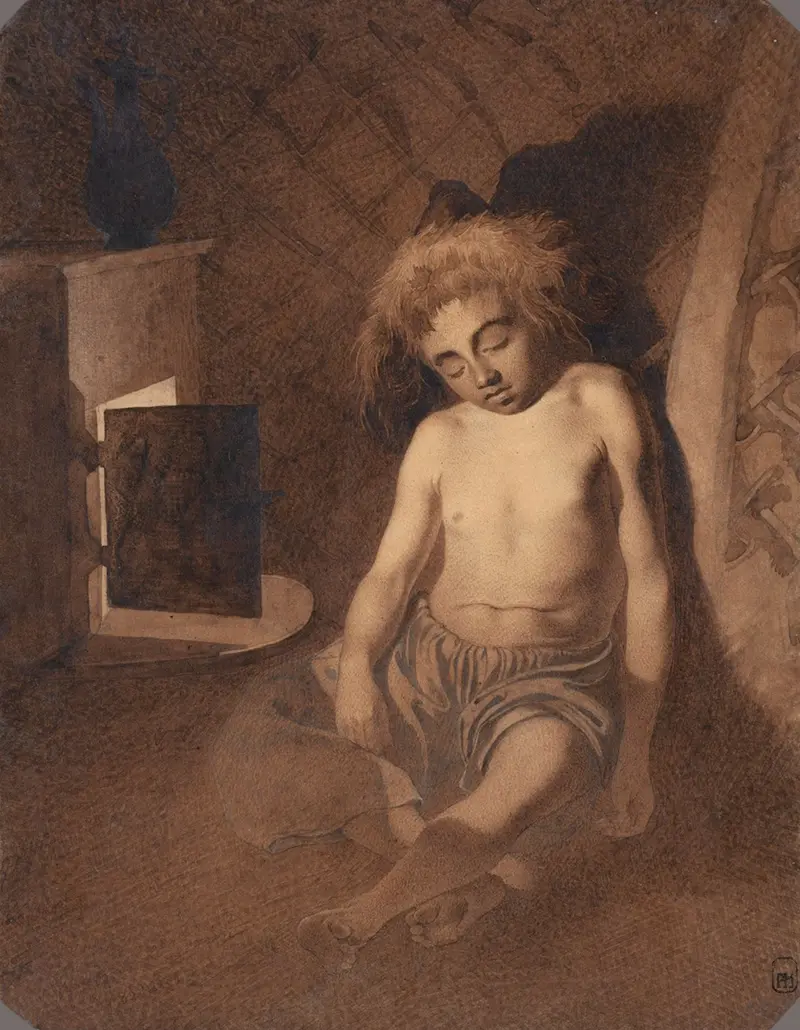
1848 Hlopcyk zasnuv
Taras Shevchenko
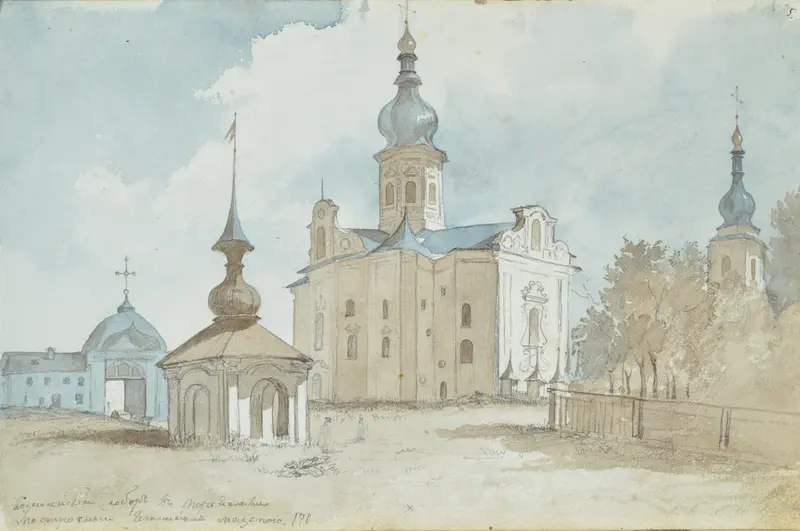
1845 Sh Sketchbook f.05r
Taras Shevchenko
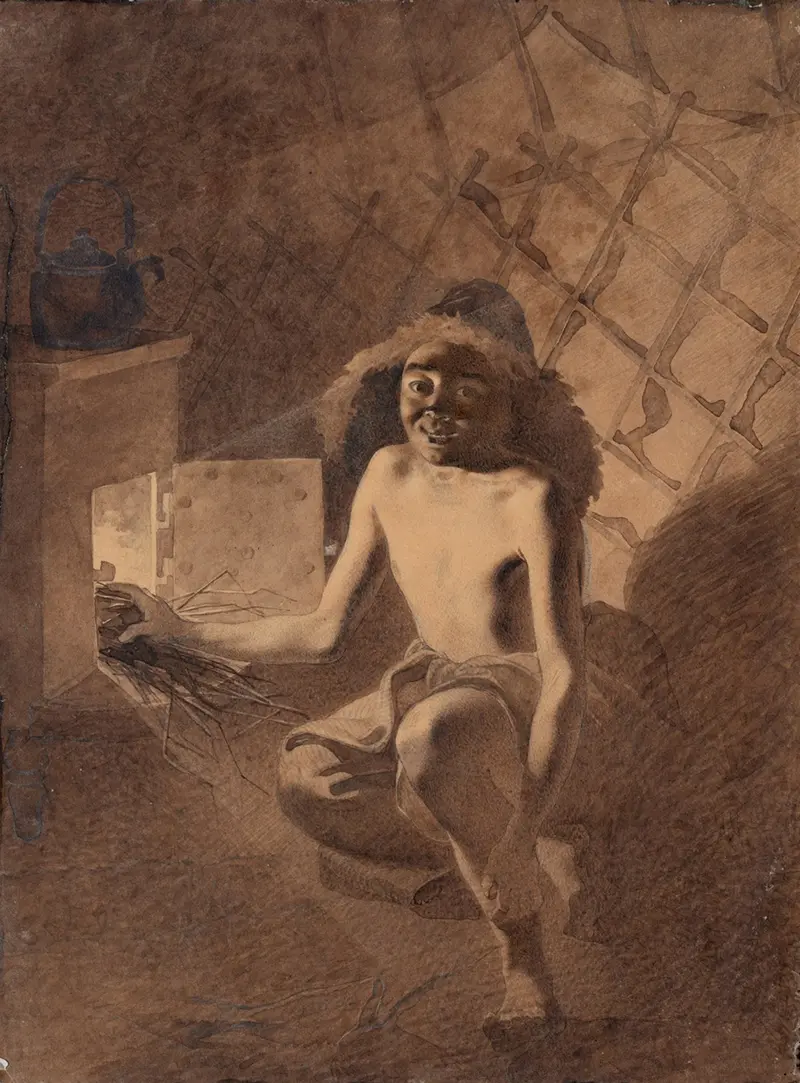
1848 Hlopcyk rozpalije
Taras Shevchenko
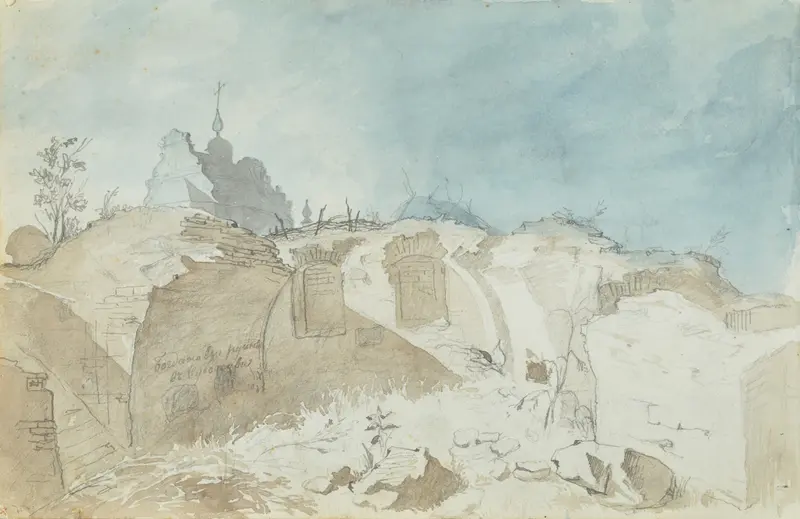
1845 Sh Sketchbook f.12v
Taras Shevchenko
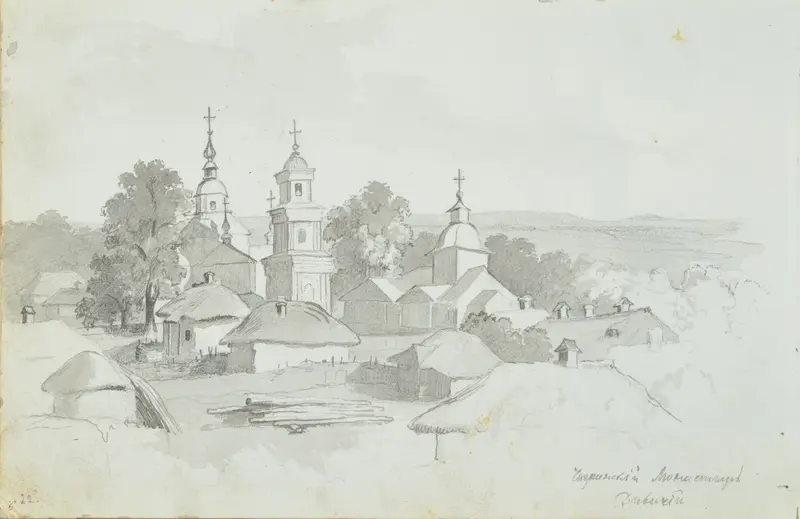
1845 Sh Sketchbook zz f.11v
Taras Shevchenko
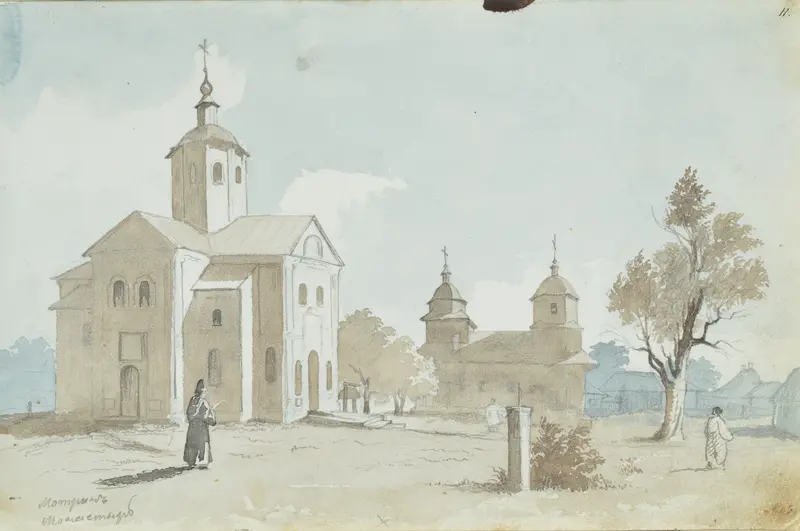
1845 Sh Sketchbook f.11r
Taras Shevchenko





