
1848 Hlopcyk zasnuv — History & Facts
The hush of a peasant home lingers in the air, as a young boy, bare-chested and tousle-haired, surrenders to sleep beside the stove. The artist’s hand draws your gaze to the gentle slack of his limbs, the way his head tips forward in utter abandon, and the soft light that pools across his skin, warming him even in rest. Every line and wash of tone is chosen for intimacy: the stove’s open door, its dark mouth hinting at a fading fire, echoes the boy’s own vulnerability.
The palette, limited and earthy, holds the viewer in a quiet, interior world, where the only drama is the deep, unguarded peace of childhood sleep. Created in 1848 by Taras Shevchenko, this work belongs to a period when scenes of everyday rural life were gaining new dignity in art. In mid-19th-century Eastern Europe, artists and writers began to turn their attention to the realities of peasant existence, often as a quiet act of resistance or national pride. Works like this, humble in subject but rich in observation, were rarely grand commissions; instead, they were intimate studies, sometimes kept in private collections or used as illustrations.
The source places this piece in the collection at kobzar.ua, a fitting home for a work that captures a fleeting, universal moment—one that still invites us to linger, tracing the play of light and shadow across the boy’s dreaming face.
Sources: Wikidata Q123163869 · Image source (Wikimedia Commons)
More Artworks by Taras Shevchenko
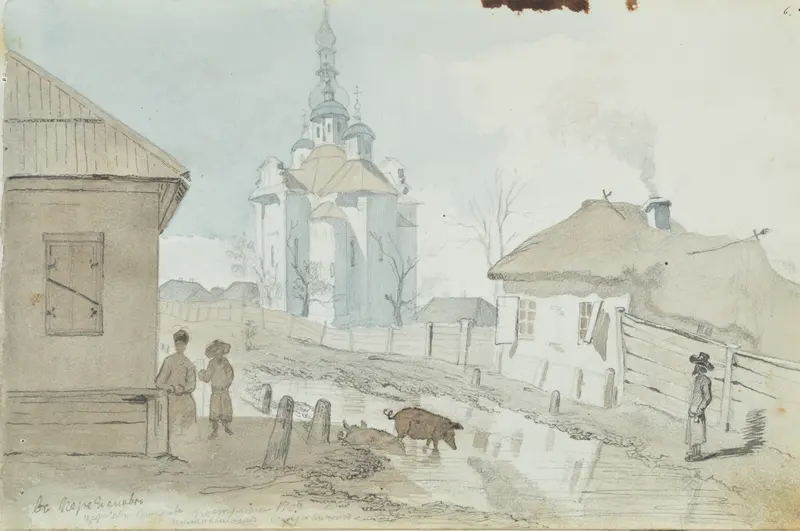
1845 Sh Sketchbook f.06r
Taras Shevchenko

1845 Sh Sketchbook f.04r
Taras Shevchenko

1848 Bilia vohnu
Taras Shevchenko
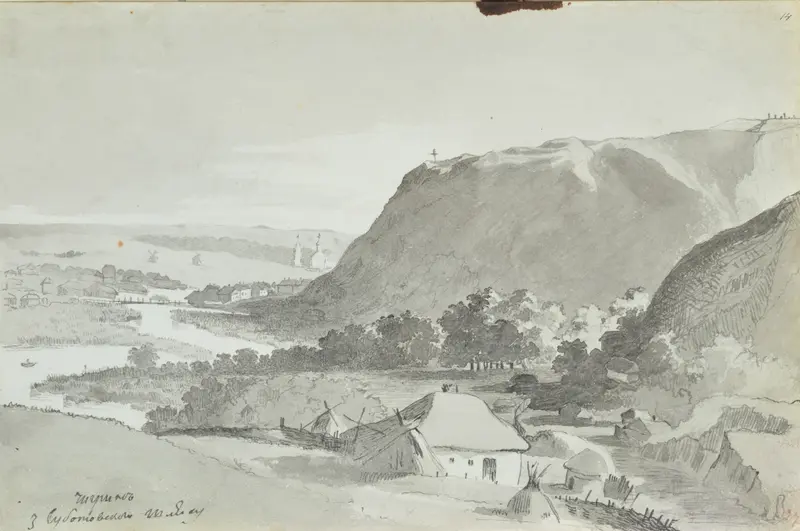
1845 Sh Sketchbook f.14r
Taras Shevchenko
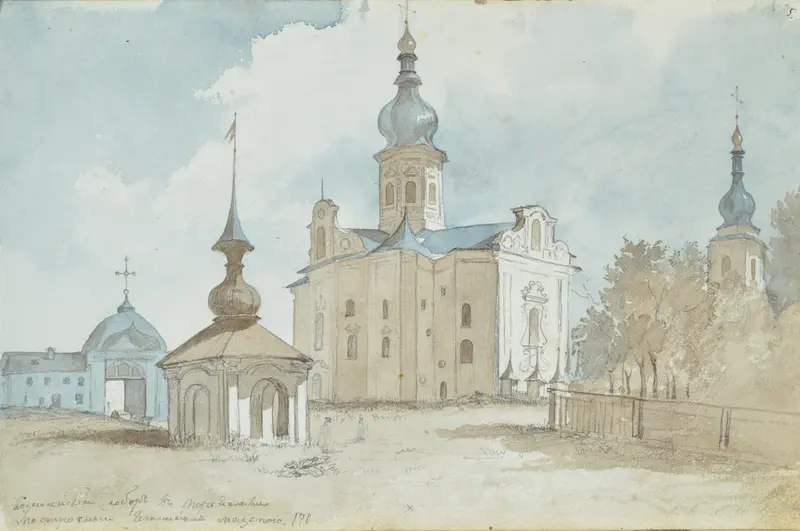
1845 Sh Sketchbook f.05r
Taras Shevchenko
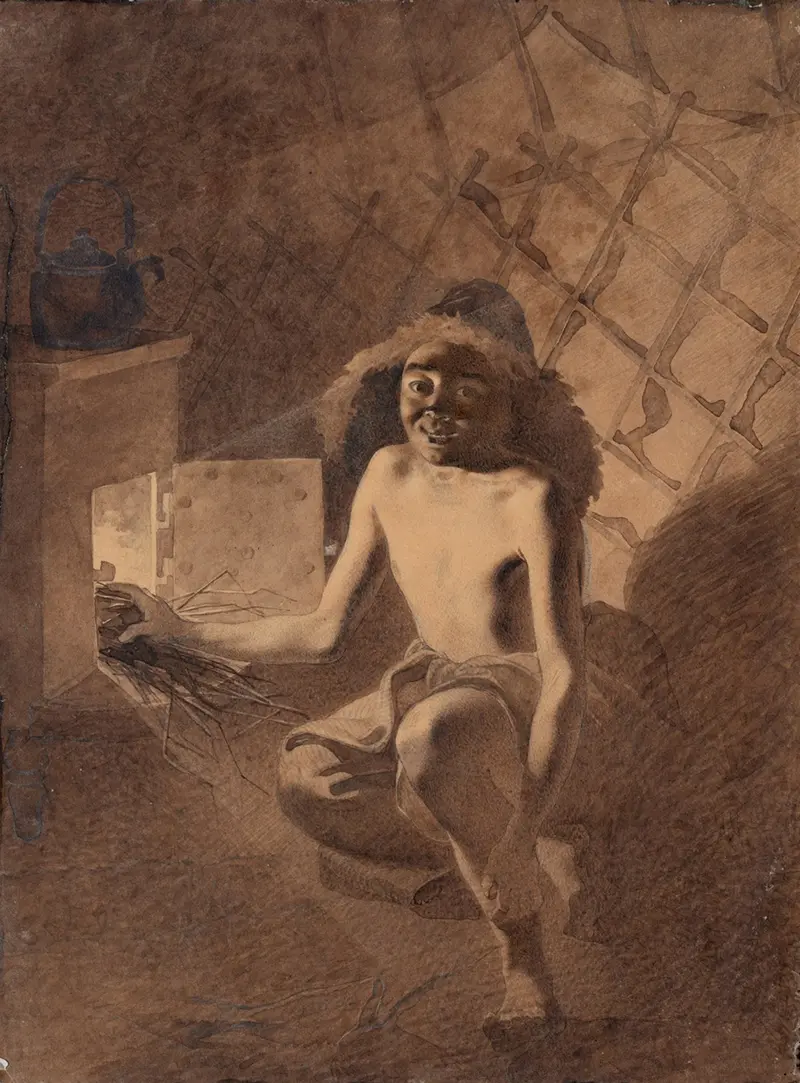
1848 Hlopcyk rozpalije
Taras Shevchenko
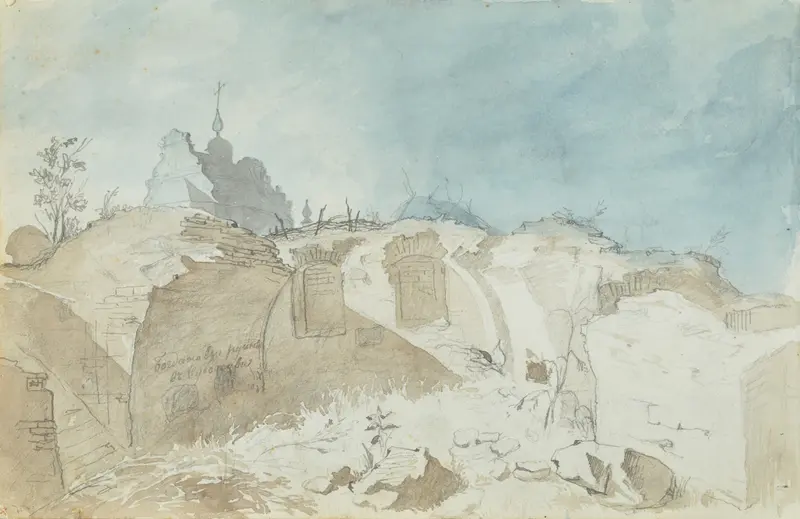
1845 Sh Sketchbook f.12v
Taras Shevchenko
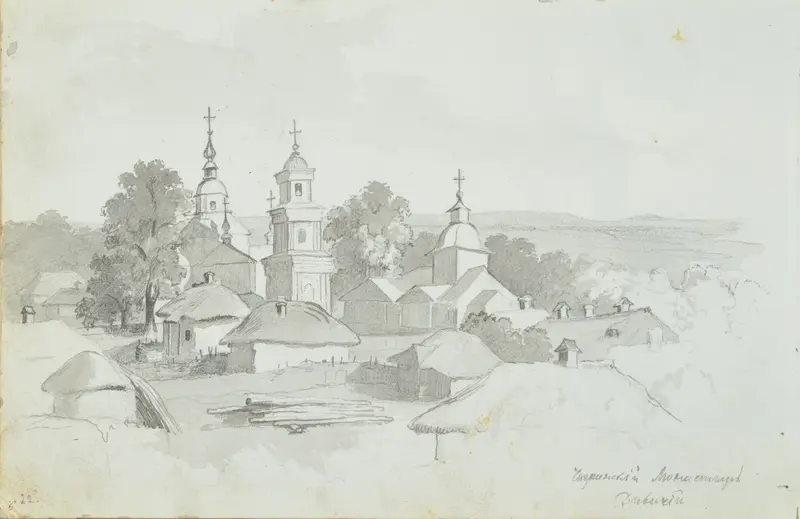
1845 Sh Sketchbook zz f.11v
Taras Shevchenko
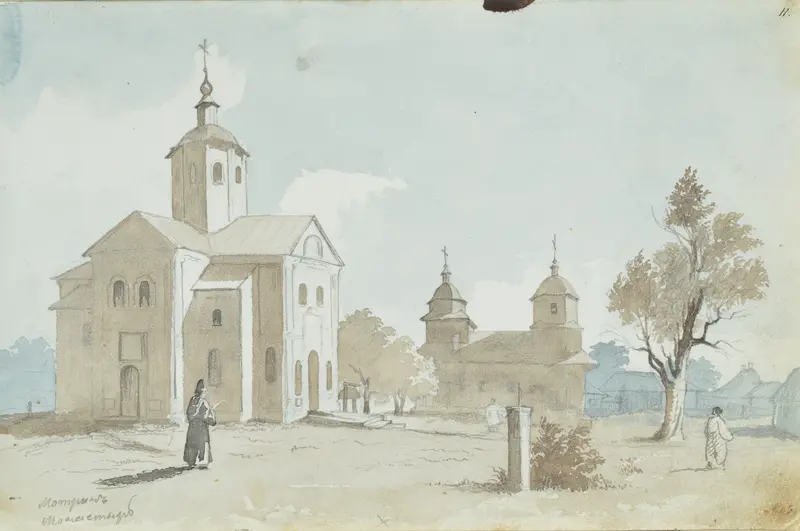
1845 Sh Sketchbook f.11r
Taras Shevchenko
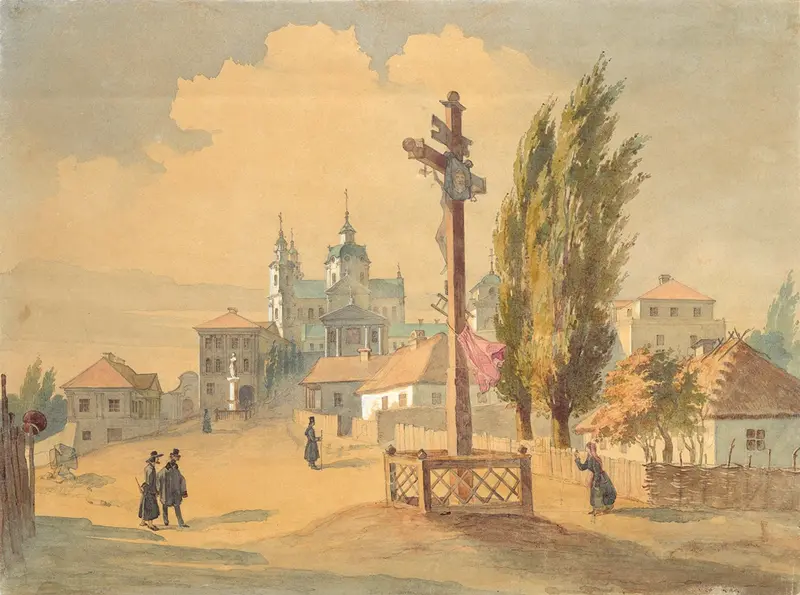
1846 10 20 Taras Shevcenko Pochaiv to West
Taras Shevchenko
More Genre Scene Art

Banquet of the Officers of the St George Civic Guard
Frans Hals

Rembrandt and Saskia in the Scene of the Prodigal Son
Rembrandt van Rijn

Bal du moulin de la Galette
Pierre-Auguste Renoir

Quadrille at the Moulin Rouge
Henri de Toulouse-Lautrec

A Burial at Ornans
Gustave Courbet

When Will You Marry?
Paul Gauguin