
1848 Hlopcyk rozpalije — History & Facts
What first draws the eye in 1848 Hlopcyk rozpalije by Taras Shevchenko is the warm, almost secretive glow that spills from the open stove, catching the boy’s face in a moment of gentle mischief or perhaps simple comfort. The boy kneels, half-draped in a cloth, his hand reaching into the stove with a bundle of twigs—a gesture that speaks of routine, of tending to warmth in a humble home. The light from the fire carves out his features and the tumble of his hair, while the rest of the room recedes into a lattice of shadow, hinting at woven walls or a patterned screen.
A kettle perches above, silhouetted in the upper gloom, suggesting the promise of tea or supper, and the boy’s direct gaze meets the viewer with an intimacy that feels both timeless and immediate. Painted in 1848, this work belongs to a world where daily life and domestic rituals were frequent subjects for artists seeking to capture the rhythms of ordinary existence. In Eastern Europe, and especially in Ukraine, such scenes often carried a quiet dignity, reflecting both hardship and resilience. Taras Shevchenko himself is celebrated for bringing the lives of common people into art, and here, the honest simplicity of the setting—bare floor, rough stove, a child at work—speaks volumes about the era’s realities.
The piece is held in a collection documented at kobzar.ua, a fitting home for a work that preserves a fleeting, firelit moment from a past that history has otherwise left largely unrecorded. Let your eyes linger on the boy’s expression, and consider how much of a life can be glimpsed in a single, ordinary task.
More Artworks by Taras Shevchenko
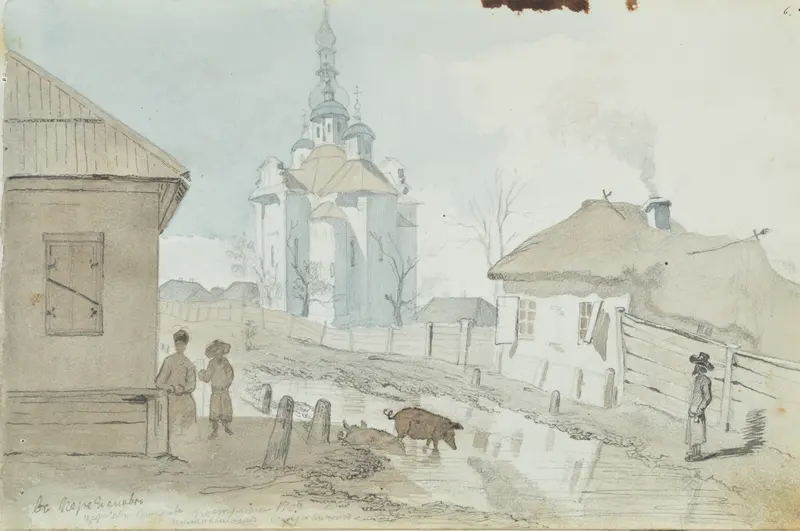
1845 Sh Sketchbook f.06r
Taras Shevchenko

1845 Sh Sketchbook f.04r
Taras Shevchenko

1848 Bilia vohnu
Taras Shevchenko
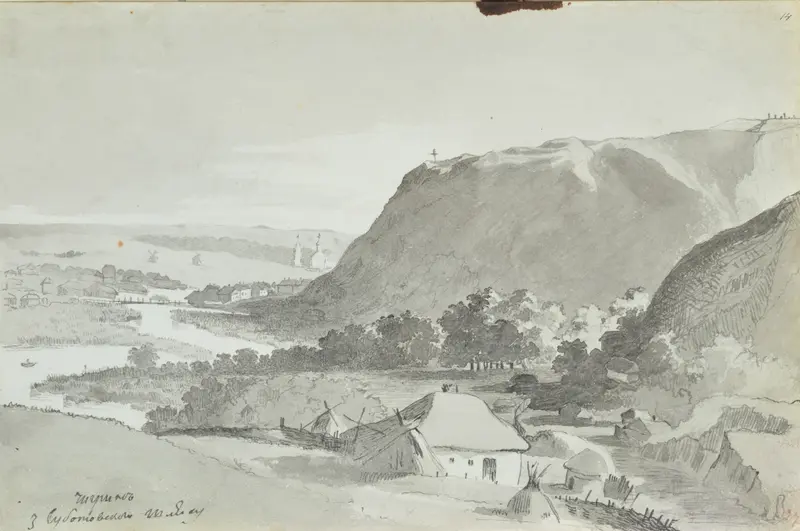
1845 Sh Sketchbook f.14r
Taras Shevchenko
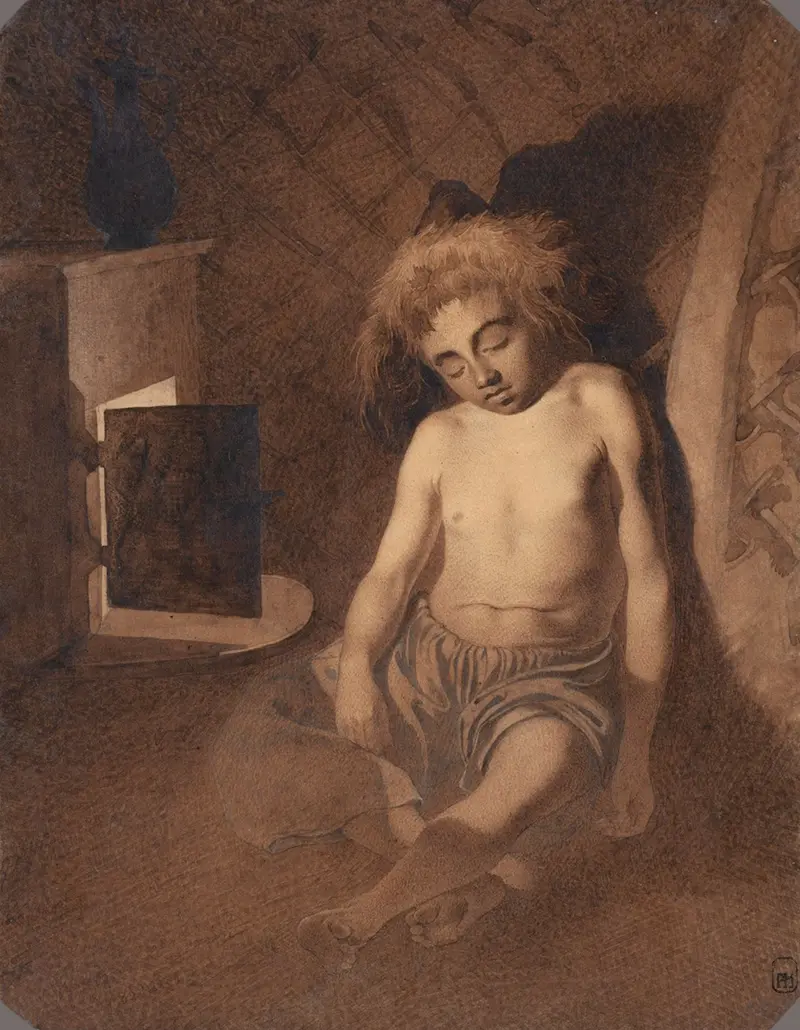
1848 Hlopcyk zasnuv
Taras Shevchenko
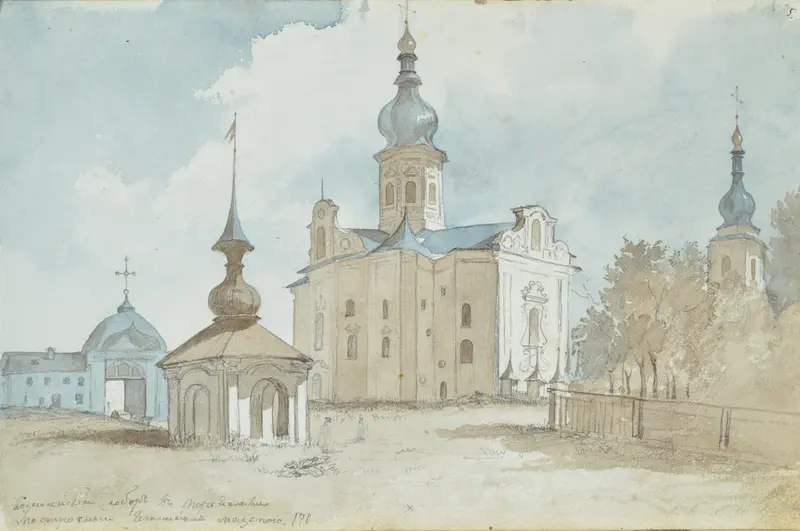
1845 Sh Sketchbook f.05r
Taras Shevchenko
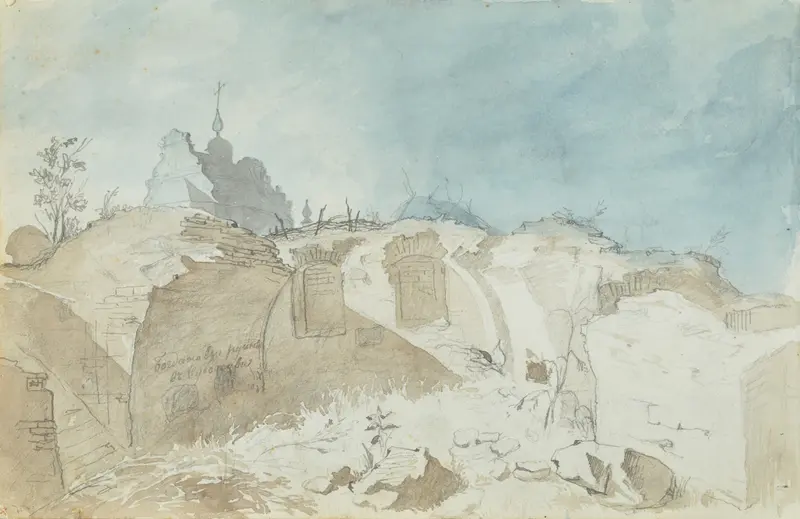
1845 Sh Sketchbook f.12v
Taras Shevchenko
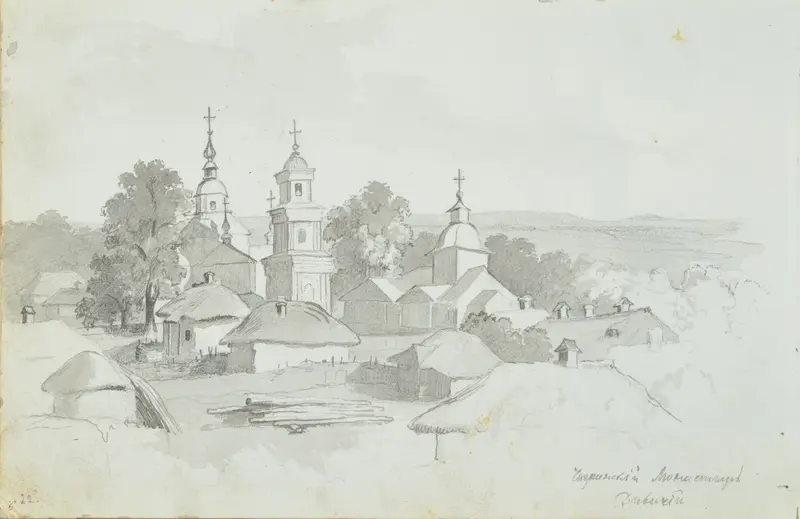
1845 Sh Sketchbook zz f.11v
Taras Shevchenko
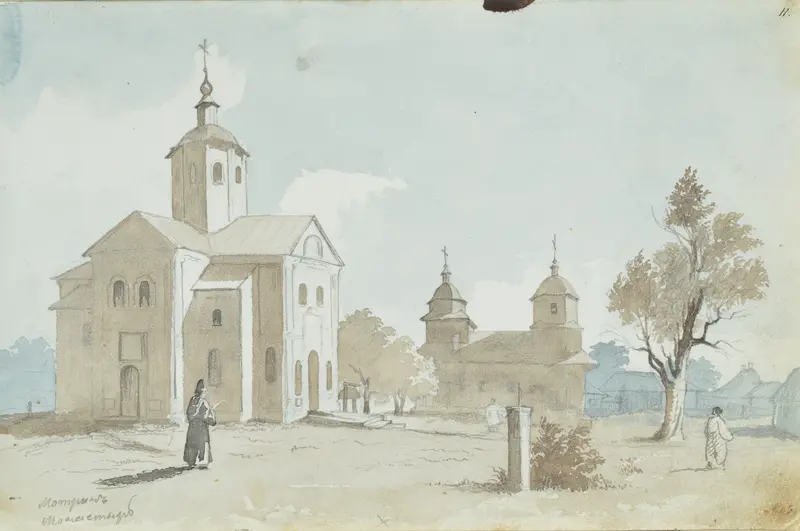
1845 Sh Sketchbook f.11r
Taras Shevchenko
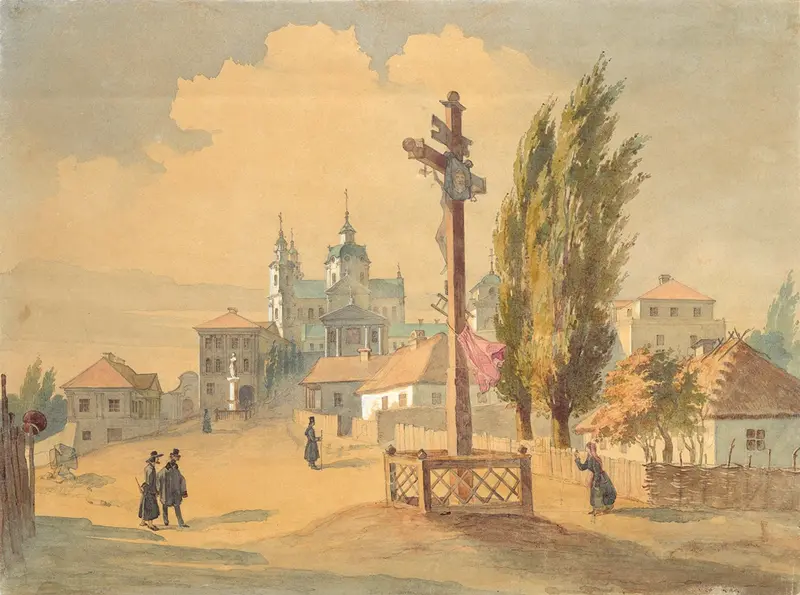
1846 10 20 Taras Shevcenko Pochaiv to West
Taras Shevchenko
More Genre Scene Art

Banquet of the Officers of the St George Civic Guard
Frans Hals

Rembrandt and Saskia in the Scene of the Prodigal Son
Rembrandt van Rijn

Bal du moulin de la Galette
Pierre-Auguste Renoir

Quadrille at the Moulin Rouge
Henri de Toulouse-Lautrec

A Burial at Ornans
Gustave Courbet

When Will You Marry?
Paul Gauguin