
Boleslaw the Brave with Svyatopolk at the Golden Gate in Kiev — History & Facts
On a summer day in 1018, the Polish ruler Boleslaw the Brave entered Kiev through its famed Golden Gate, having marched east to restore his son-in-law, Svyatopolk the Accursed, to the throne of Kievan Rus. This dramatic episode, a rare moment when a Western king seized the heart of Eastern Europe, gripped the imagination of 19th-century Poles yearning for national pride under foreign rule. When Jan Matejko painted Boleslaw the Brave with Svyatopolk at the Golden Gate in Kiev in 1884, he did so at a time when Poland itself was partitioned and erased from the map, making this vision of Polish triumph both a historical meditation and a coded political statement. Matejko captures the instant of victory: Boleslaw, armored and resolute, stands at the city gate, his sword raised in salute or warning, while Svyatopolk, anxious and uncertain, lingers nearby.
The battered gate and the anxious crowd evoke the cost of conquest, while the glinting crown and the Polish eagle on Boleslaw’s shield assert the legitimacy of his intervention. The artist’s dense, narrative style—crowded with banners, weaponry, and expressive faces—invites comparison to the panoramic storytelling of Delacroix in works like The Entry of the Crusaders into Constantinople, but Matejko’s focus remains on the tension between heroism and unease. The painting’s golden light, falling on Boleslaw’s figure, makes him both conqueror and outsider—a duality at the heart of the historical event. The precise journey of this painting after its completion is less well documented than some of Matejko’s other works, but it remains a key piece in his cycle of Polish history paintings.
Created in the later years of his career, when Matejko was already recognized as the chronicler of Poland’s past, Boleslaw the Brave with Svyatopolk at the Golden Gate in Kiev embodies his mission to educate and inspire through art. Today, the painting is held in the collection of the National Museum in Warsaw, where it continues to spark debate about the meaning of victory and the costs of political ambition.
More Artworks by Jan Matejko
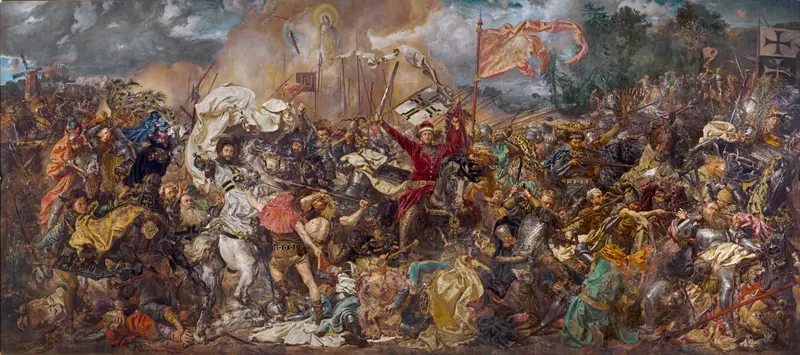
Battle of Grunwald
Jan Matejko

Stańczyk
Jan Matejko

Battle of Raclawice
Jan Matejko
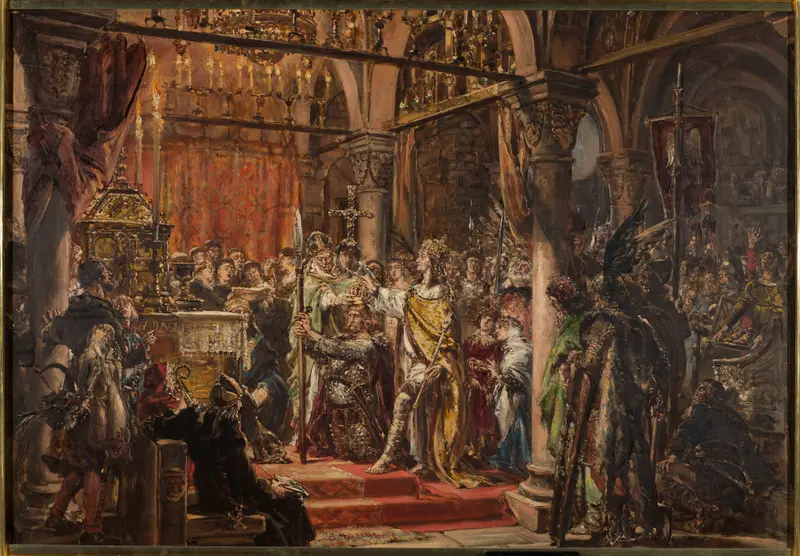
Coronation of the First King, 1001 AD, from the series “History of Civilization in Poland”
Jan Matejko
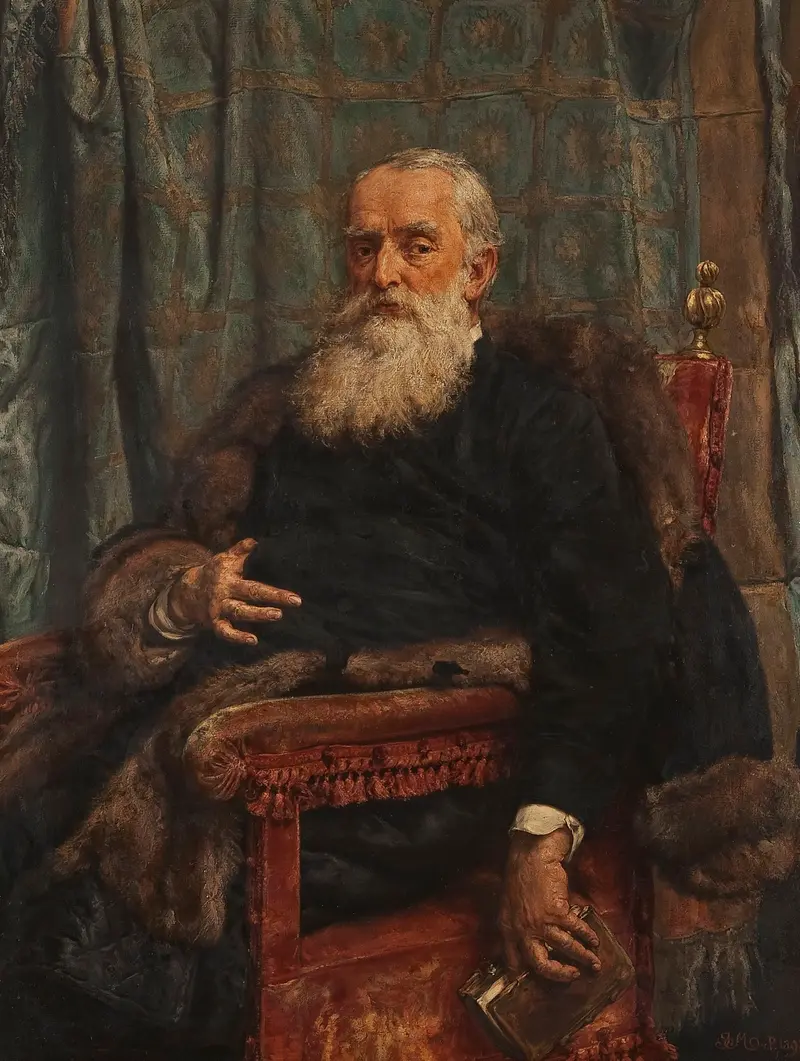
Portrait of Henryk Krajewski
Jan Matejko
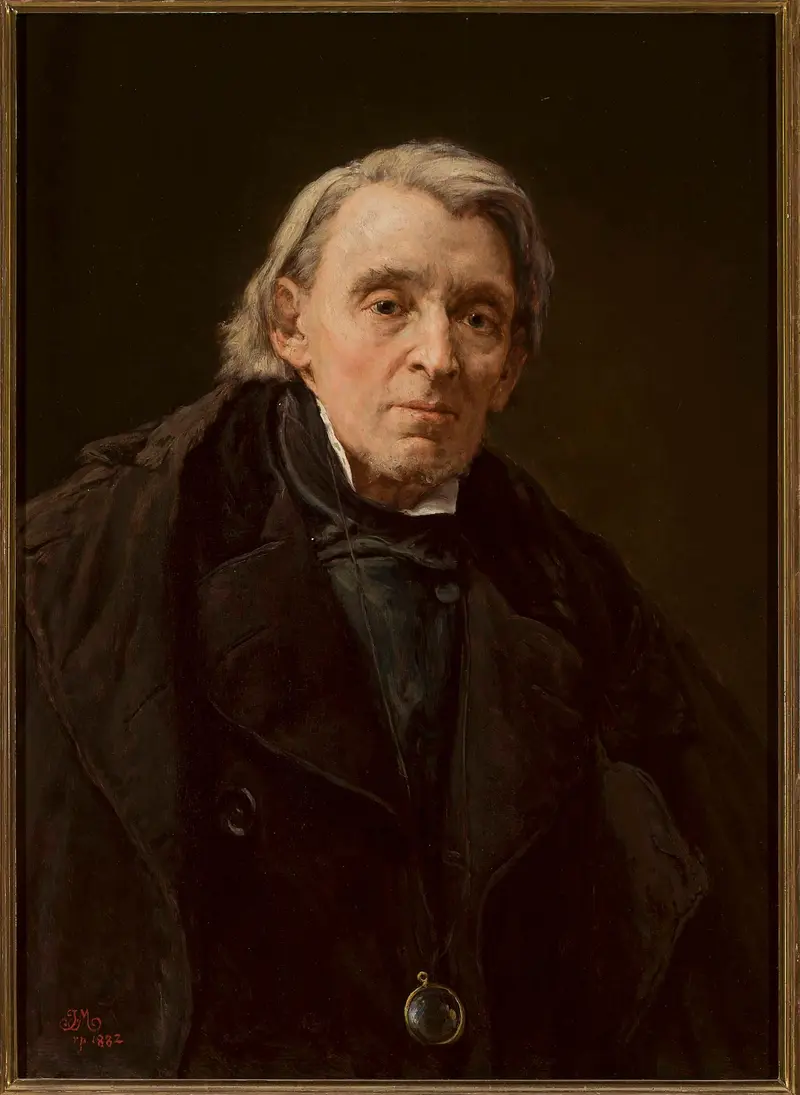
Portrait of Karol Podlewski
Jan Matejko
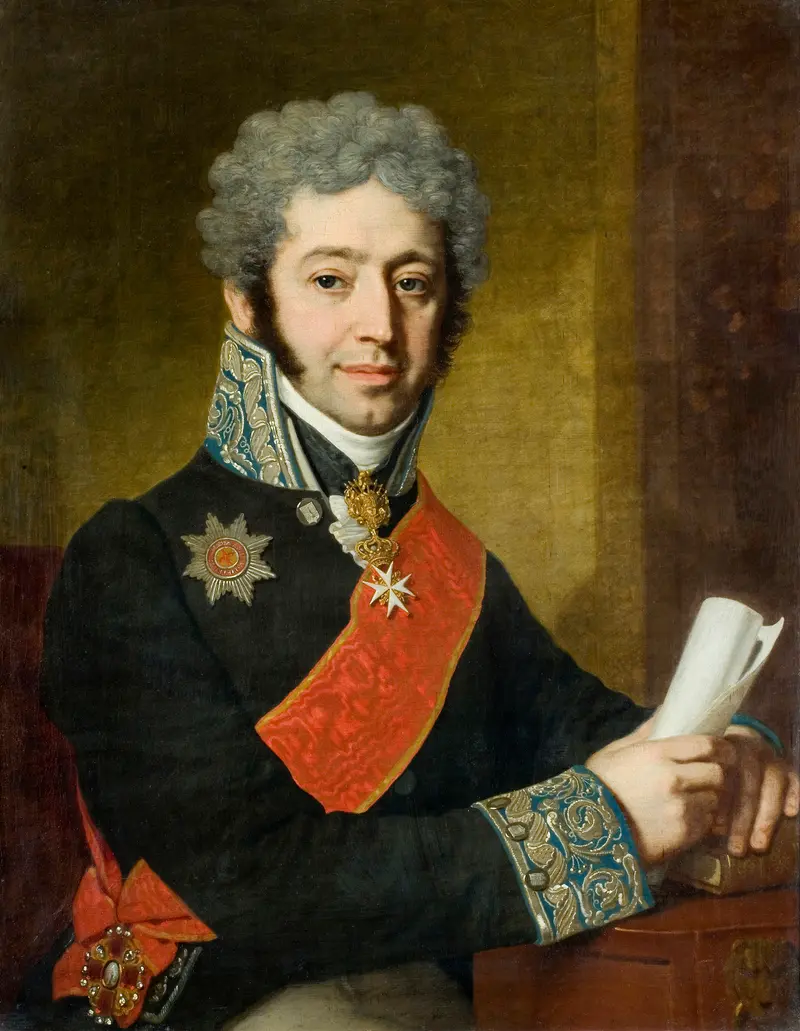
Portrait of Potocki and Poninski
Jan Matejko
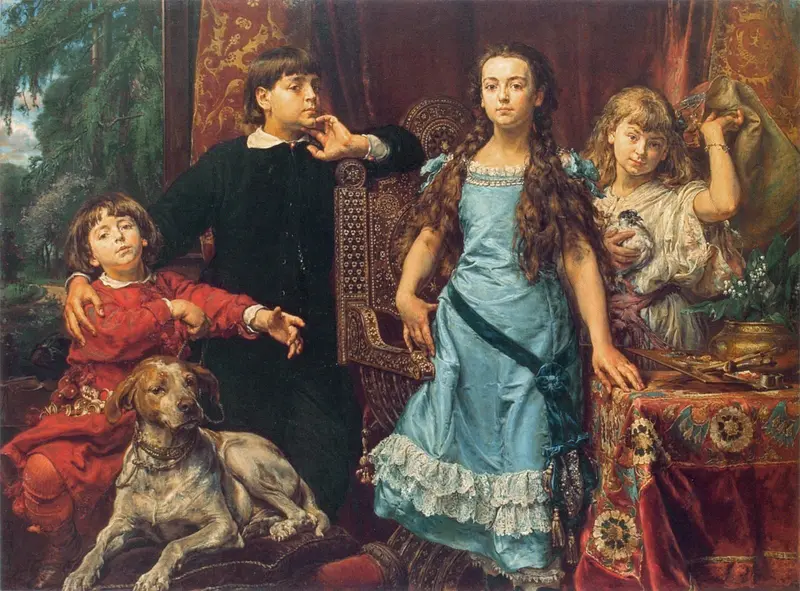
Portrait of the artist's four children
Jan Matejko
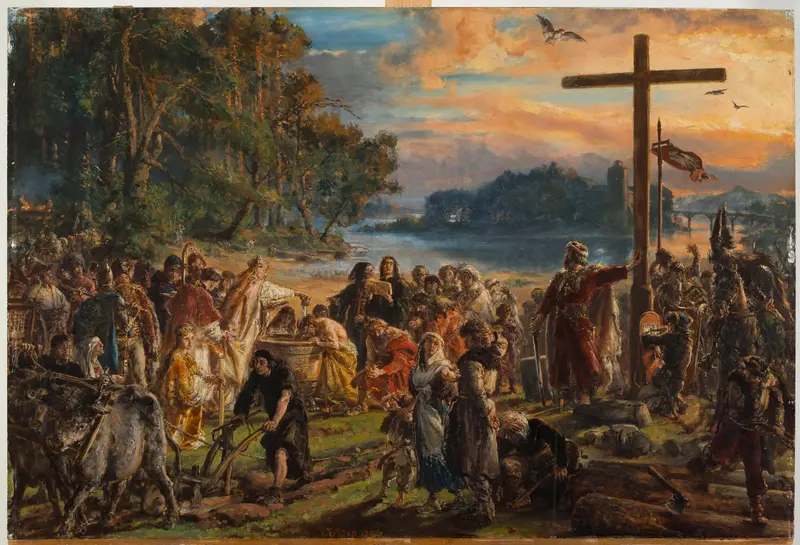
Introduction of Christianity in Poland
Jan Matejko
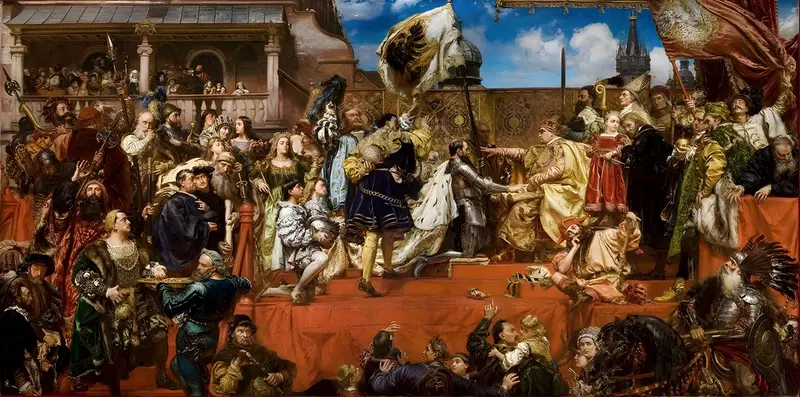
Prussian Homage
Jan Matejko





