
Bondegård — History & Facts
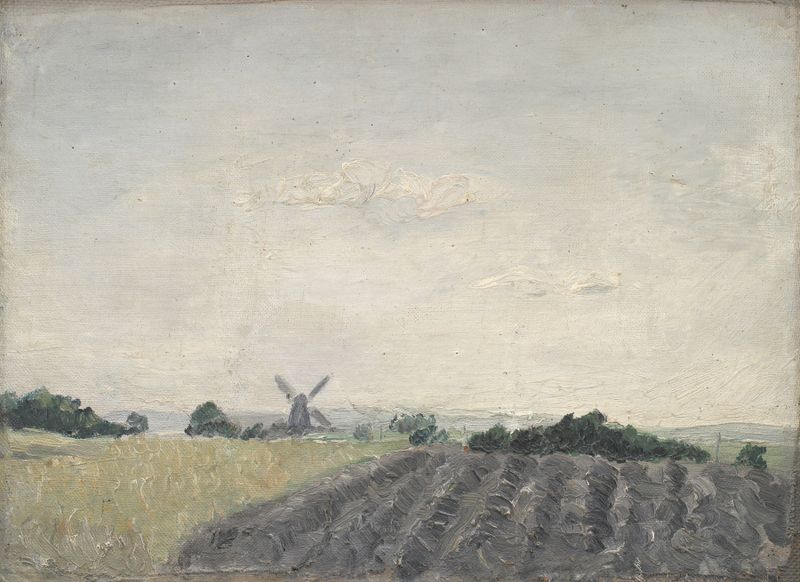
What if silence could speak through light? In Bondegård, a rural Danish landscape whispers a tale of faith and perseverance, gently illuminated by the soft glow of an overcast sky. Look to the center, where the modest farmhouse, framed by verdant fields and distant trees, stands resilient against the encroaching gray. The artist's brushwork captures the texture of the thatched roof and the sturdy wooden beams, evoking a sense of warmth and stability amidst nature's embrace. Notice how the palette, with its subdued greens and browns, harmonizes with the wintry atmosphere, creating a tranquil yet introspective mood that draws the viewer deeper into the scene. In this painting, the contrasting elements of light and shadow symbolize the duality of rural life.
The soft light bathing the house suggests hope and divine presence, while the looming clouds hint at the uncertainty inherent in farming. Small details, like the grazing sheep and distant figures toiling in the fields, suggest a community grounded in faith, striving for sustenance and connection with nature. This delicate interplay between the serene setting and the unseen struggles of life adds profound emotional depth. During 1831-1832, Rørbye painted this scene in Denmark, a time when the nation was undergoing significant social shifts.
The Romantic movement was blossoming across Europe, influencing artists to explore the emotional aspects of everyday life. For Rørbye, this meant capturing the essence of rural existence, imbuing it with a spiritual resonance that would come to characterize much of his work.
More Artworks by Martinus Rørbye
Browse all →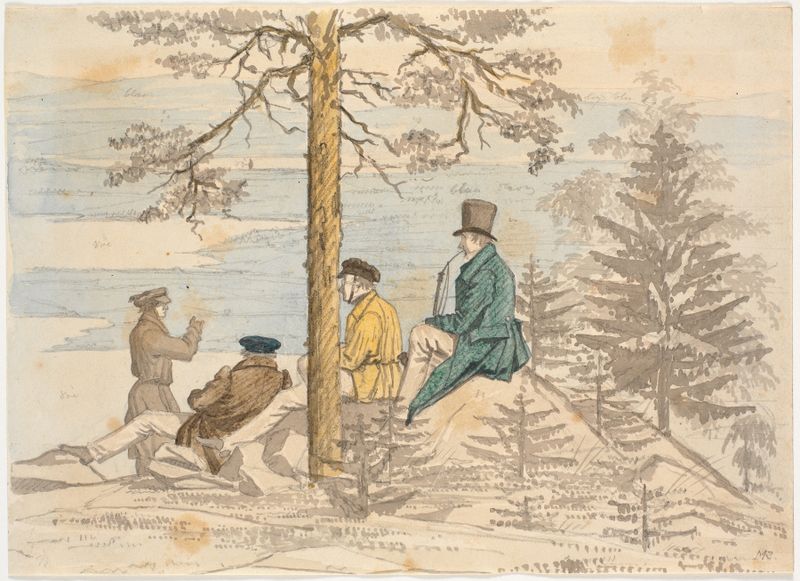
Fire mænd betragter udsigten fra Holmekollen
Martinus Rørbye
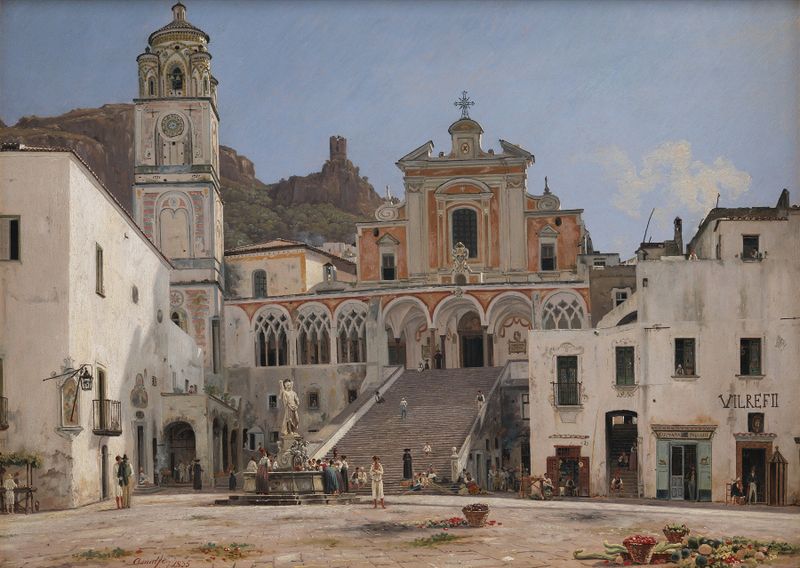
View of the Square in Amalfi
Martinus Rørbye
A Courtyard in Rome. Copy after Eckersberg
Martinus Rørbye
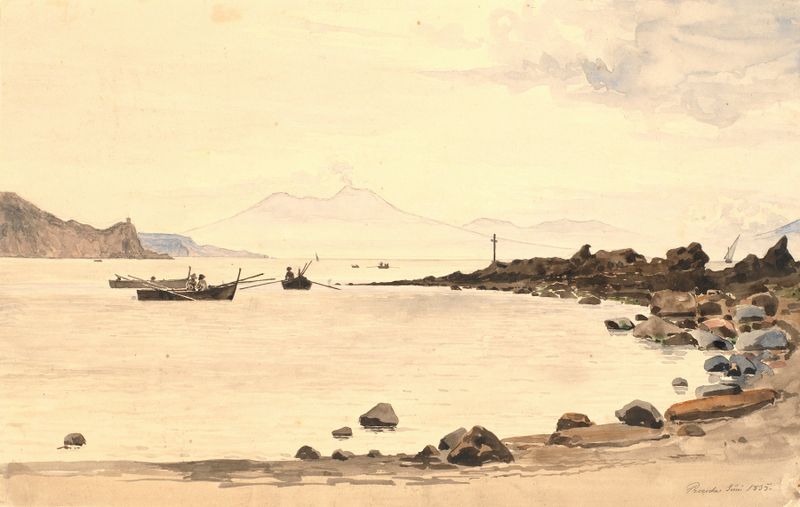
Udsigt mod Vesuv fra Procida
Martinus Rørbye
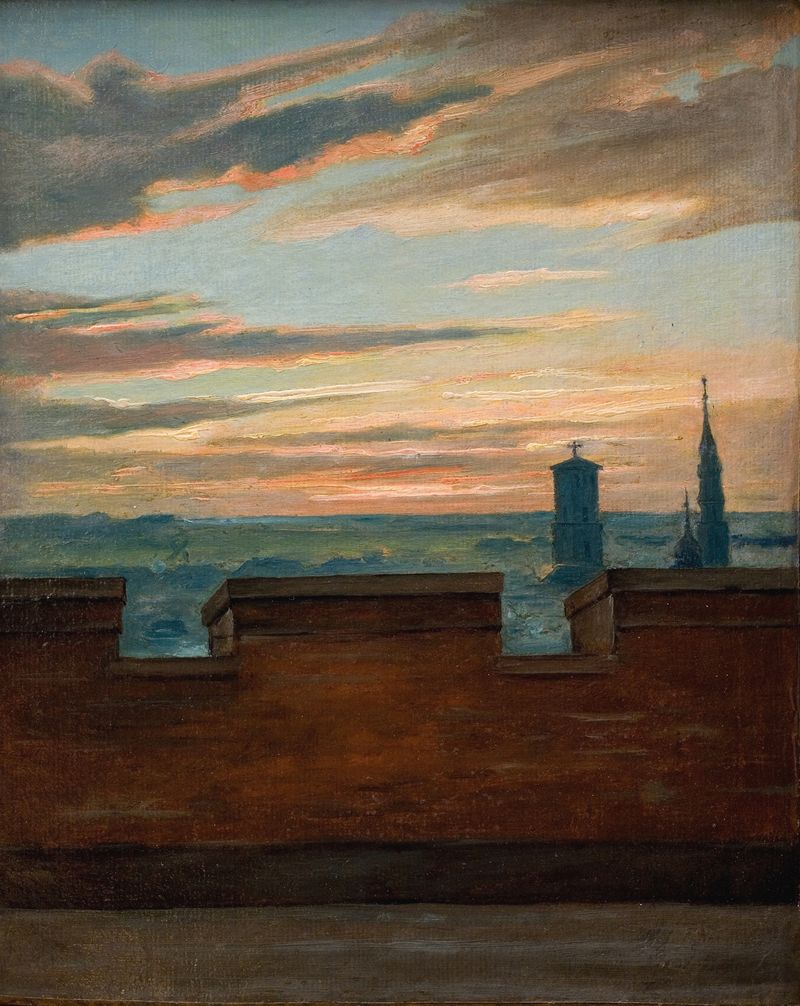
View of Copenhagen at Sunset
Martinus Rørbye
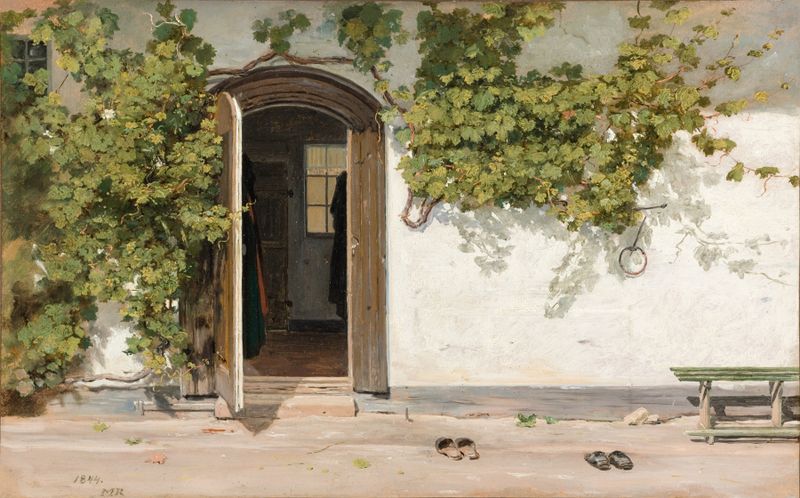
Entrance to an Inn in the Praestegarden at Hillested
Martinus Rørbye
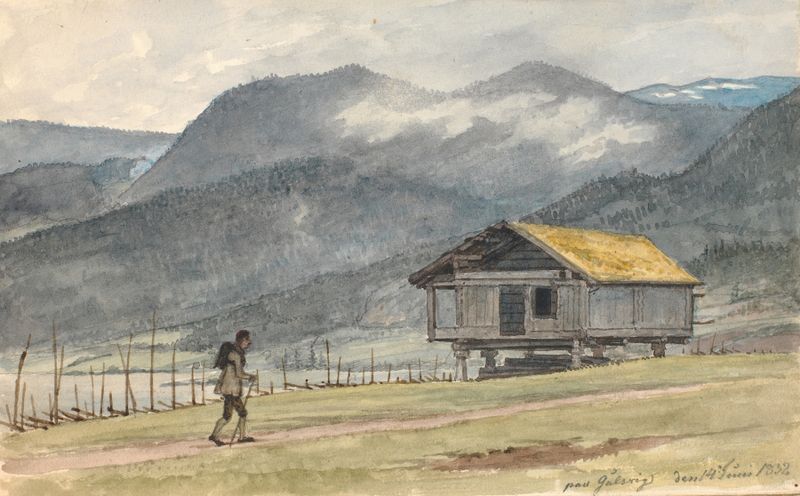
Fjeldlandskab med hytte og vandrer
Martinus Rørbye
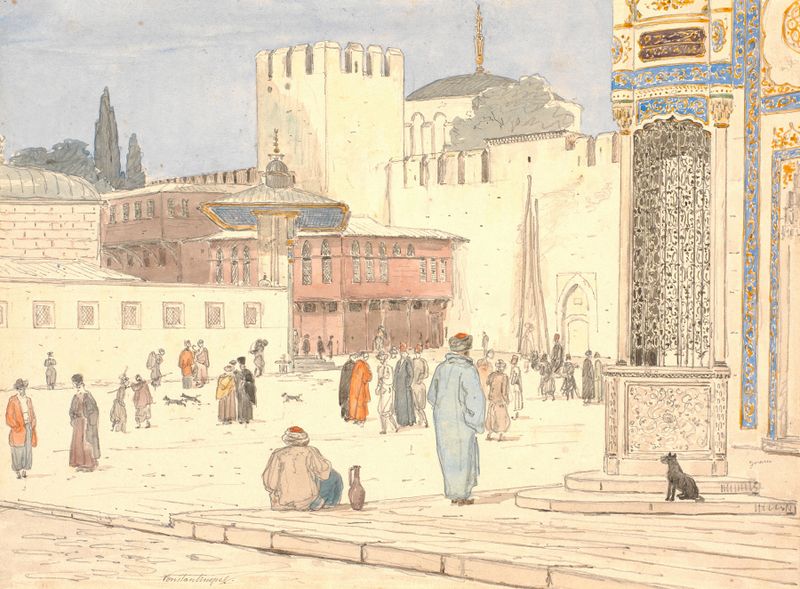
The Square in Front of Bab-i-Hümayan in Constantinople
Martinus Rørbye
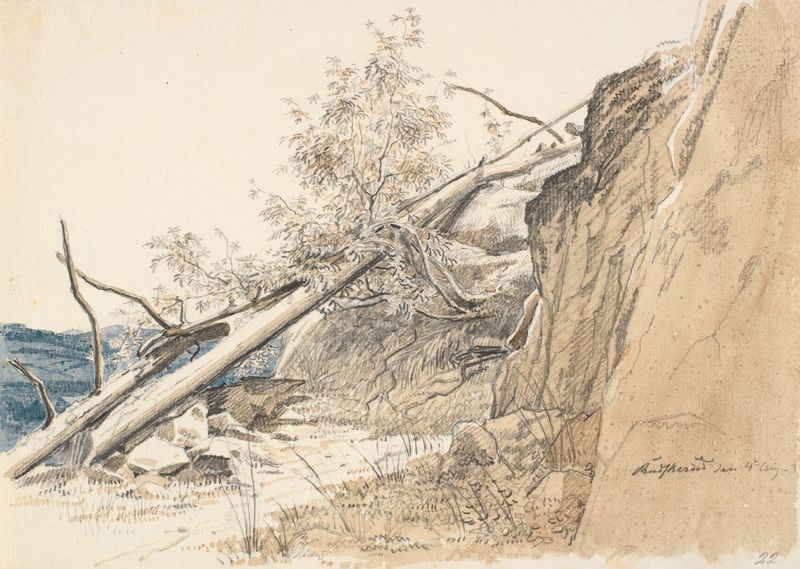
Tree Trunk Leaning Against a Rock. Norway
Martinus Rørbye
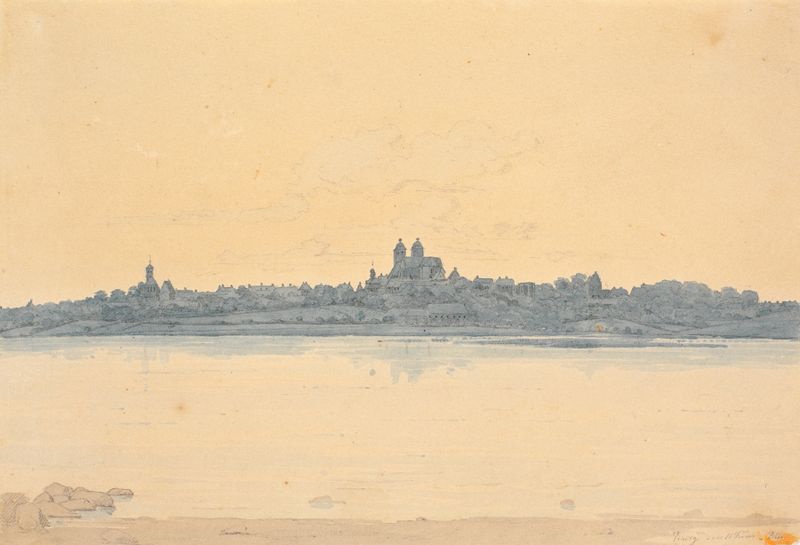
Viborg Seen from Asmild Klosterhave near Søndersø
Martinus Rørbye





