Bord de la rivière — History & Facts
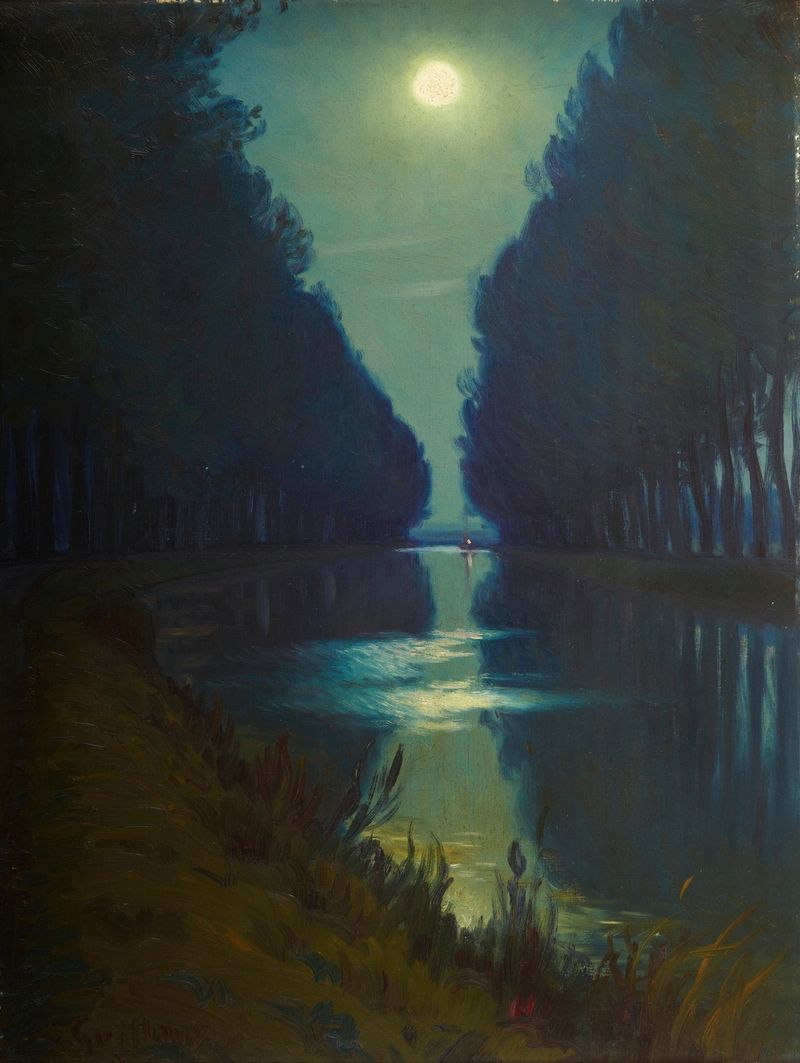
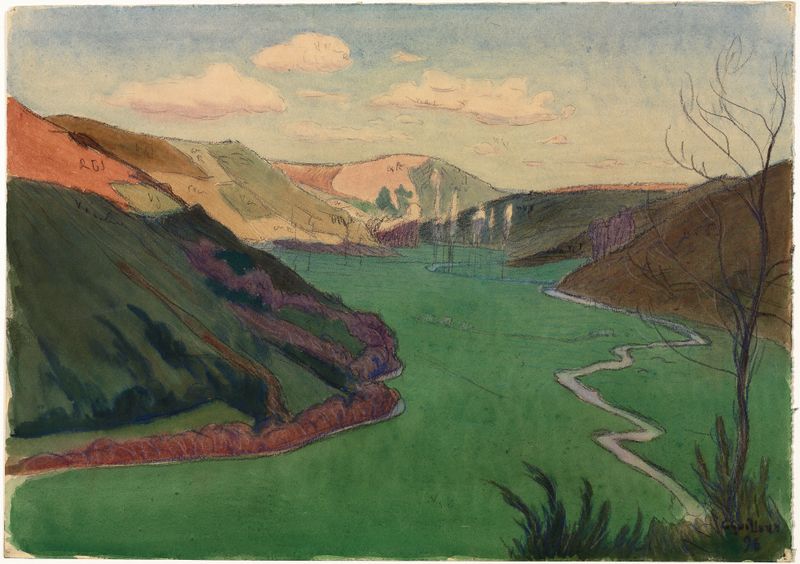
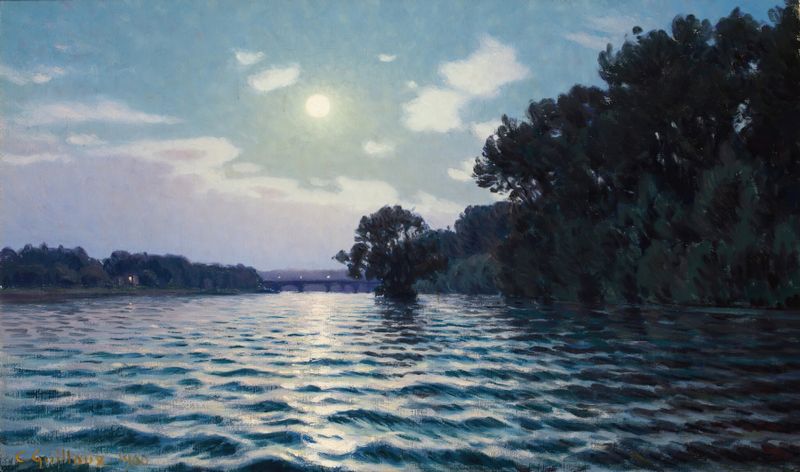
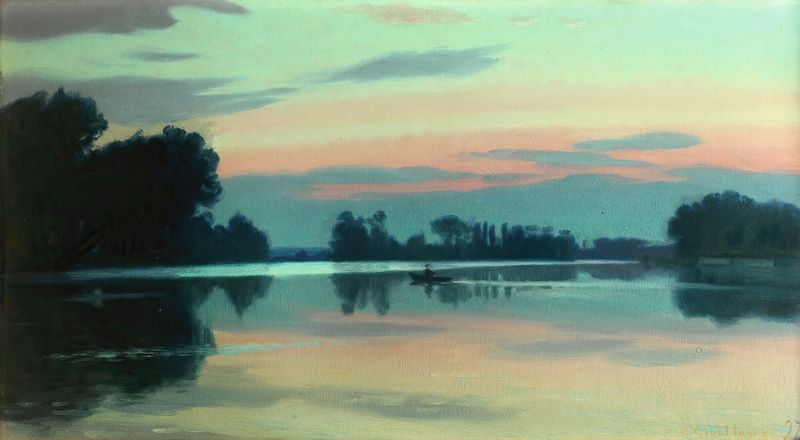
Could beauty survive in a century of chaos? In Bord de la rivière, a tranquil riverside scene captures the poignant contrast of nature's serenity against the backdrop of an unsettling world. Look to the left at the gentle curves of the riverbanks, where verdant grass meets the water's edge. The brushwork invites you to trace the ripples across the surface, letting your eyes wander to the mirrored reflections that dance below the overhanging branches. Notice how the light filters through the leaves, casting playful shadows that evoke a sense of fleeting time and ephemeral beauty.
The artist's palette of soft greens and deep blues harmonizes with warm, golden hues, creating an inviting yet contemplative atmosphere. Hidden within this picturesque setting lies an undercurrent of tension. The stillness of the river contrasts sharply with the chaotic realities of life in the late 19th century, a time marked by rapid industrialization and social upheaval. The viewer may sense the encroaching violence of modernity, with nature quietly bearing witness to the changes that threaten its existence.
Every brushstroke communicates a delicate balance between tranquility and the ominous specter of disruption—a reminder that beauty often flourishes on the edge of chaos. Charles Guilloux painted this piece in 1897 while living in France, a period when Impressionism was giving way to new artistic movements. Amidst a society grappling with political and social upheaval, Guilloux sought to capture the sublime in ordinary landscapes. His work reflects both the tranquility of nature and the complexities of a world on the brink, serving as a poignant reminder of the resilience of beauty in turbulent times.