Canal de Chelles (Clair de Lune) — History & Facts
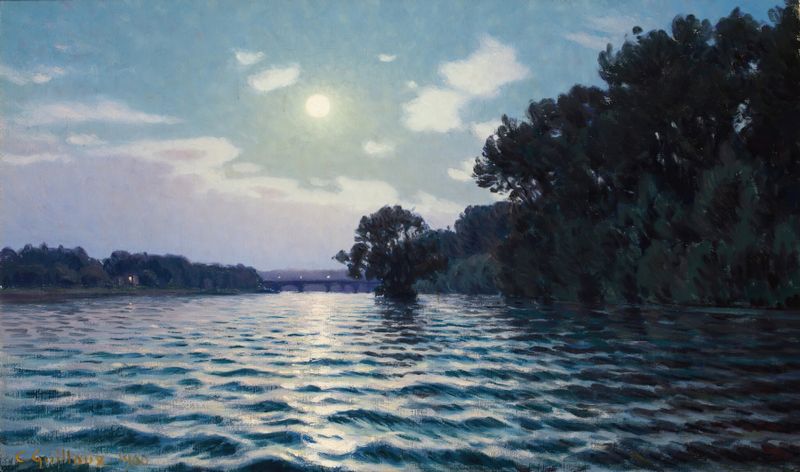
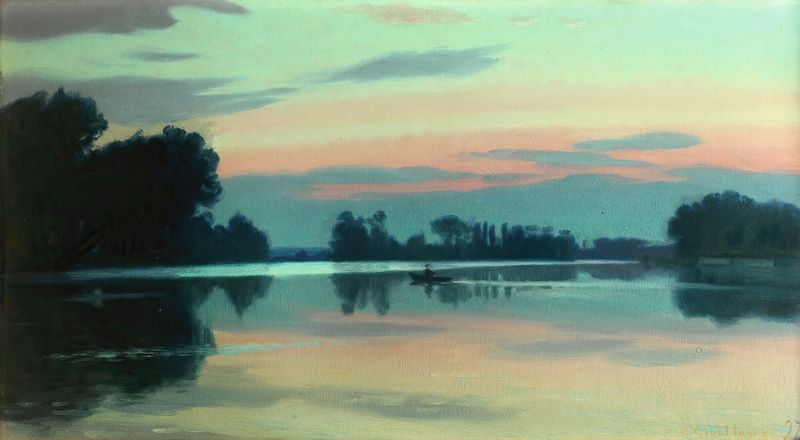
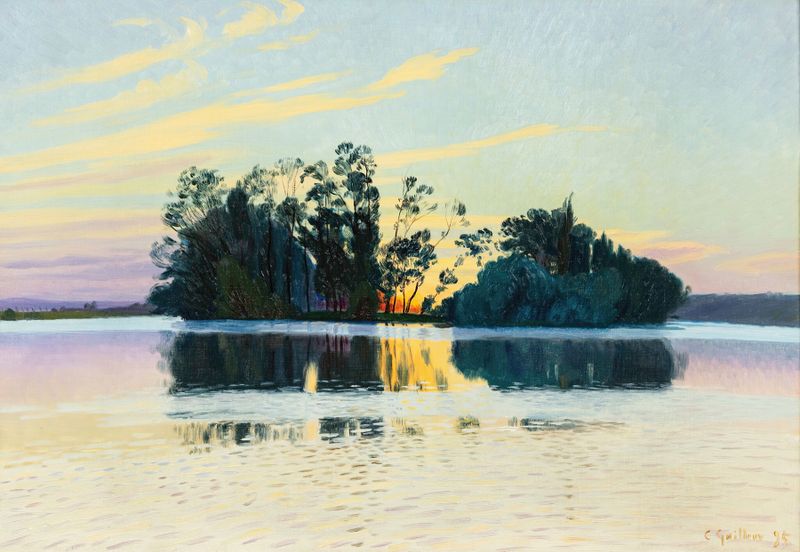
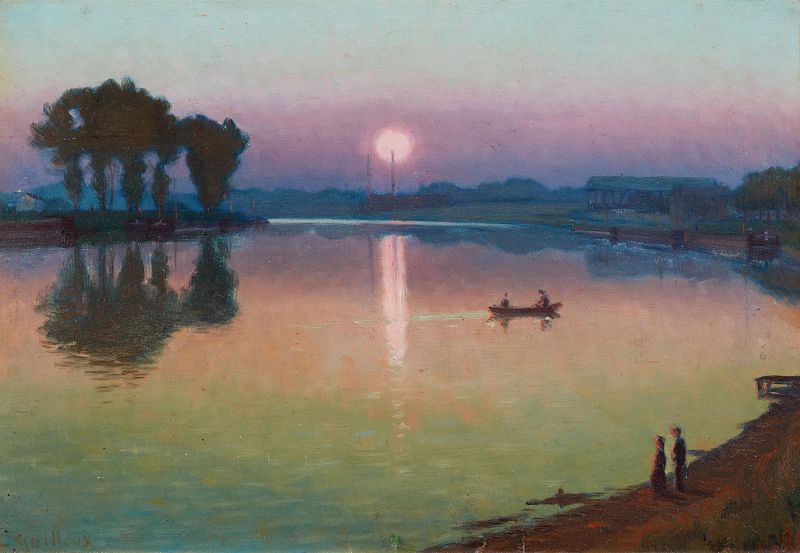
Who listens when art speaks of silence? In Canal de Chelles (Clair de Lune), a quiet awakening unfolds, inviting us to contemplate the world through a gentle lens of tranquility. Look closely at the shimmering water that dominates the canvas; it reflects the moonlight, casting a silvery glow that dances across the surface. Notice how the artist employs soft brushstrokes to convey the ethereal quality of moonlit nights, blending rich blues and delicate whites that evoke a sense of calm. The horizon is nearly imperceptible, drawing the eye into an infinite expanse where nature seems to breathe softly, as if in a moment of stillness. This scene captures the contrast between the vibrant world of nature and the contemplative silence of the night.
The vibrant foliage on the banks whispers stories untold, while the still water suggests a deeper, introspective silence. The interplay of light and shadow reveals not just the immediate beauty but hints at the transient nature of time, a fleeting moment in which the viewer is invited to pause and reflect. Charles Guilloux painted this work in the 19th century, during a time when France was experiencing significant social and artistic transformation. The Impressionist movement was taking shape, challenging traditional techniques and pushing boundaries.
As Guilloux developed his unique style, influenced by the changing landscape of art, Canal de Chelles (Clair de Lune) emerged as a testament to the beauty found in quiet reflection amidst an evolving world.