Le Lac glacé — History & Facts
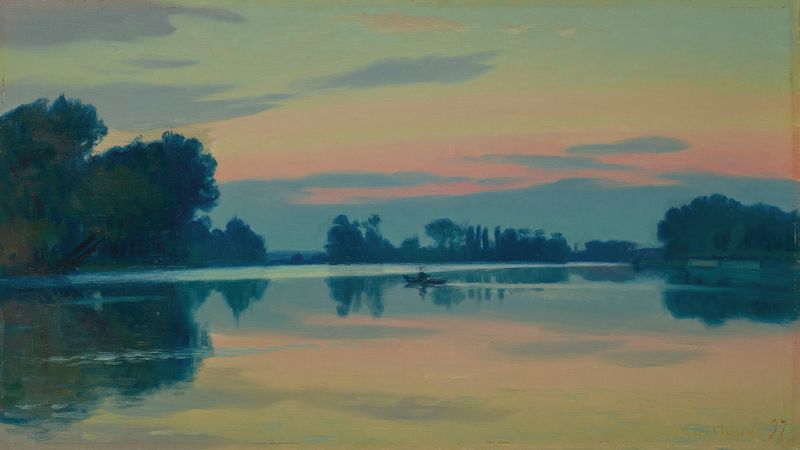
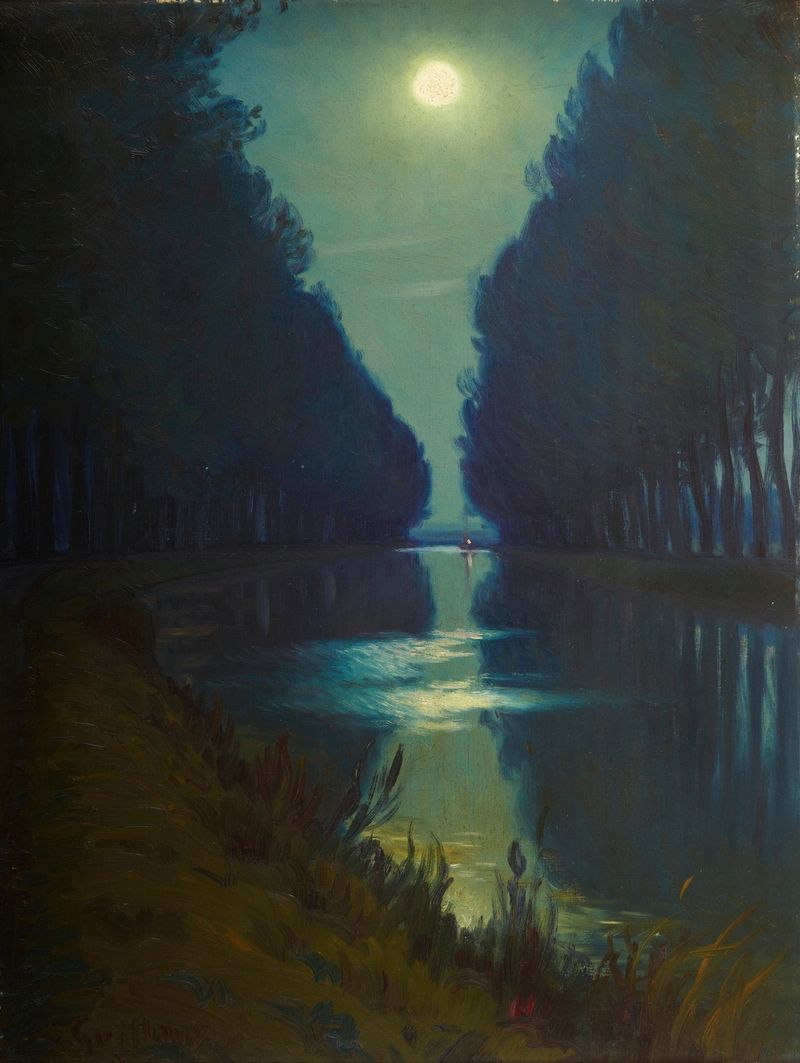
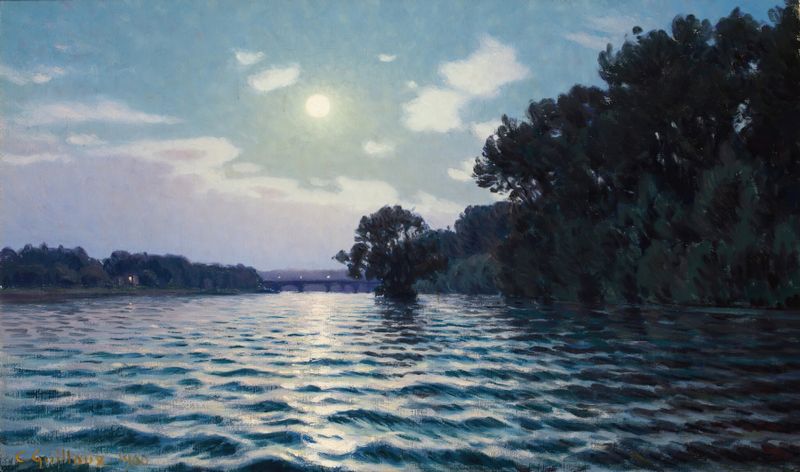
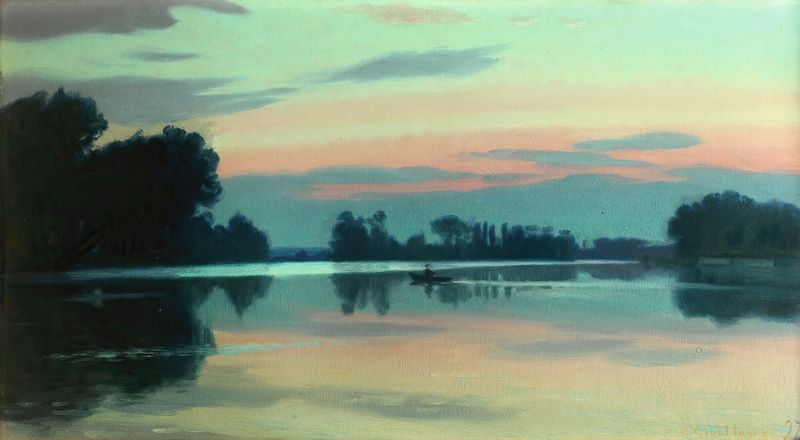
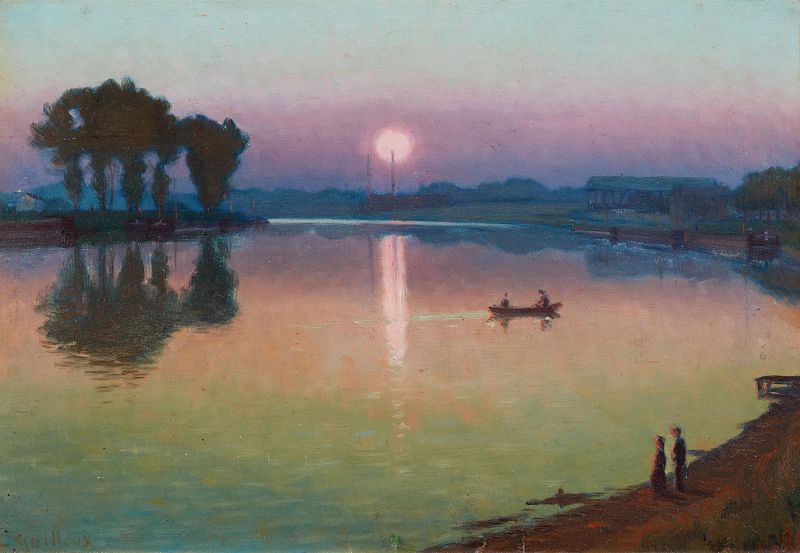
Is this a mirror — or a memory? The stillness of the surface invites reflection, both literal and metaphorical, evoking the weight of legacy woven into the fabric of existence. Focus on the tranquil lake at the center, where the muted blues and greens blend seamlessly into a serene embrace. Notice how the delicate brushstrokes capture the ripple of gentle waves, hinting at a subtle breeze that breathes life into the scene. The surrounding trees, with their dark, shadowy outlines, frame the water’s surface like guardians of forgotten whispers, compelling the viewer to search deeper within their own psyche. The juxtaposition of light and shadow in Le Lac glacé reveals an emotional tension that speaks to the passage of time.
The shimmering reflections hint at moments suspended in memory, while the somber hues suggest an underlying melancholy. Here, we find the interplay between nature's beauty and the inevitable decay of all things, compelling us to contemplate the legacies we leave behind. In 1895, Charles Guilloux painted this evocative landscape while immersed in the artistic movements of post-impressionism, a time when artists sought personal expression and emotional depth. Living in France, he was influenced by the changing dynamics of nature and society, grappling with both modernity and tradition.
This work reflects his desire to capture the essence of memory and legacy, echoing a broader conversation within the art world about the relationship between humankind and the natural world.