La Seine — History & Facts
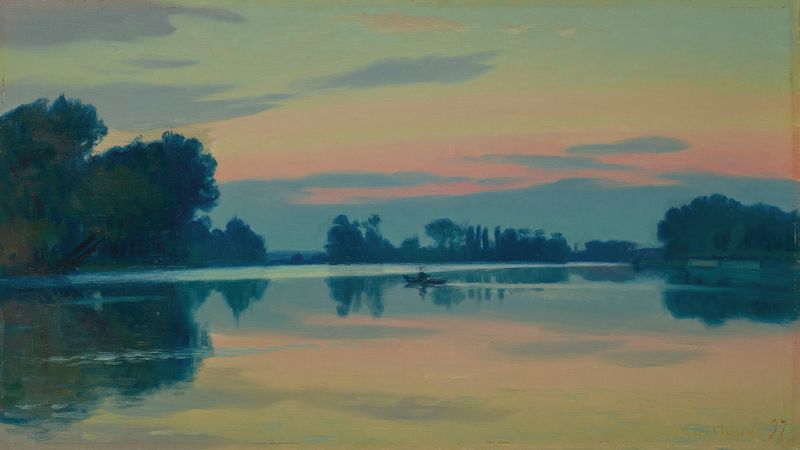
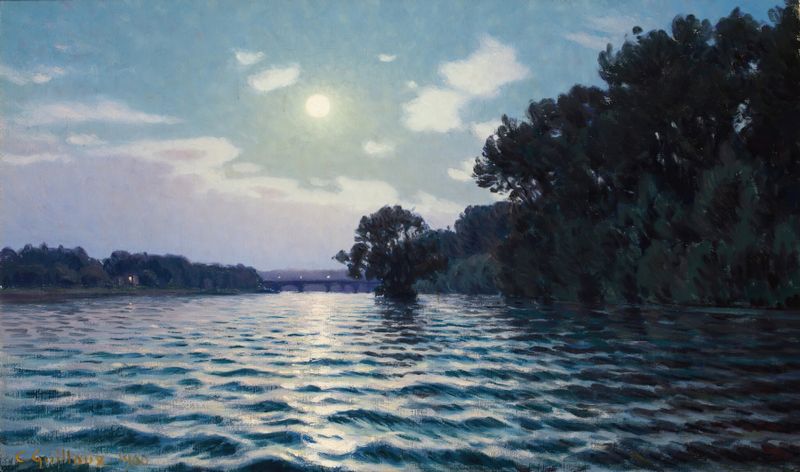
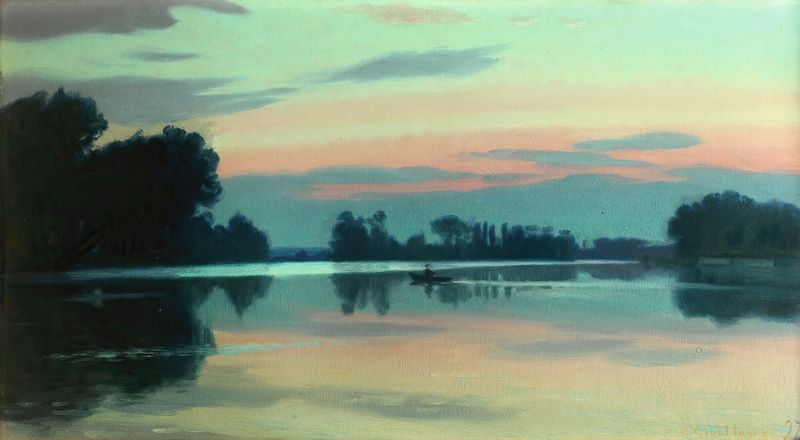
Where does light end, and longing begin? Charles Guilloux's La Seine invites us to ponder this profound question as the soft glow of dawn breaks over the tranquil waters. Look to the left at the serene riverbank, where gentle hues of blue and green meld seamlessly, reflecting the quietude of early morning. Notice the emphasis on the interplay of light and shadow—how it dances across the rippling surface of the Seine, giving life to the scene. The delicate brushstrokes create a sense of movement, while the way the light bounces off the water's surface evokes a feeling of awakening, as if nature itself is stirring from slumber. As you explore further, pay attention to the subtle contrasts between the vibrant colors of the landscape and the muted tones of the sky.
This juxtaposition mirrors the emotional tension present—between the tranquility of the water and the promise of a new day. The soft illumination suggests hope, while the serene surroundings invoke contemplation, creating a space where time seems suspended. In 1892, Guilloux painted La Seine during a period marked by a burgeoning Impressionist movement in France. Living in the artistic hub of Paris, he was influenced by contemporaries who sought to capture the essence of light and atmosphere.
This work reflects his desire to blend realism with poetic beauty, embodying the artistic exploration prevalent in his time.