
Bord de mer — History & Facts
What if beauty was never meant to be finished? In Bord de mer, the sweeping coastline invites contemplation of nature's incomplete symphony, where every wave and shadow tells a story yet to unfold. Look to the left at the gentle curves of the sandy beach, where the soft wash of the tide lingers just below the horizon. The interplay of light and shadow creates a delicate balance, drawing your eye to the shimmering water that reflects hues of azure and gold. Notice how the brushstrokes evoke movement, capturing the rhythm of the sea while simultaneously grounding the scene with the solidity of the rocks in the foreground.
The palette of earthy tones juxtaposed against vibrant blues mirrors the harmony of land and sea, inviting viewers into a serene moment suspended in time. Hidden within this picturesque landscape lies a deeper conversation between solitude and connection. The solitary figure, seemingly lost in thought, embodies the quiet tension between human existence and the vastness of nature. The gentle shadows cast by the evening light serve as a reminder of transience, suggesting that beauty, much like light, is ephemeral and ever-changing.
As waves lap at the shore, they whisper secrets of what lies beneath, urging one to look beyond the surface. Painted in 1843, this work emerged during a period of significant transformation in the art world, with the rise of Romanticism challenging traditional conventions. Jacques-Raymond Brascassat, working primarily in France, was deeply influenced by contemporary movements that celebrated the emotional power of nature. At this time, artists sought to capture the sublime, a notion reflected in the sweeping vistas and introspective figures that populate their canvases.
More Artworks by Jacques-Raymond Brascassat
Browse all →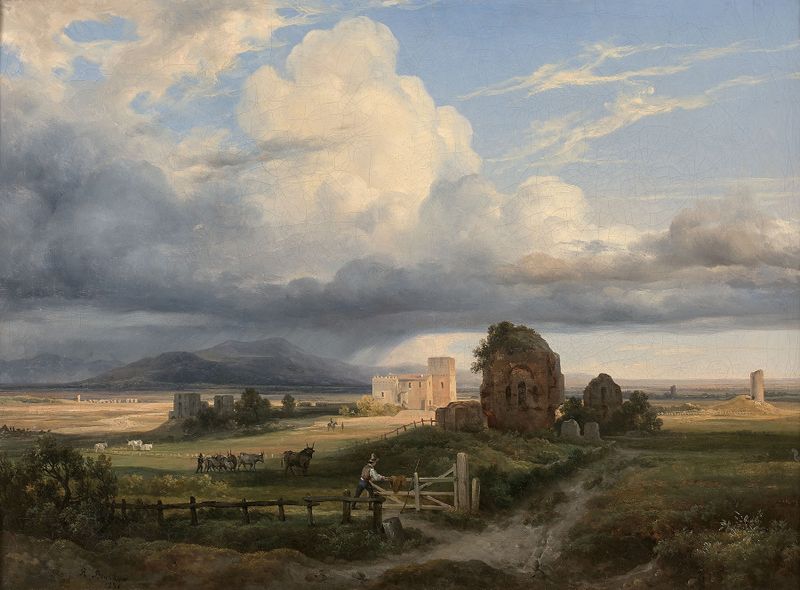
Vacher et son troupeau dans la campagne romaine, dans les environs de la via Appia
Jacques-Raymond Brascassat

Puits
Jacques-Raymond Brascassat

Paysage d’Italie
Jacques-Raymond Brascassat

Tour en bordure de mer
Jacques-Raymond Brascassat

Le Monastère
Jacques-Raymond Brascassat

Cascade et rochers
Jacques-Raymond Brascassat

Le Vieux chêne
Jacques-Raymond Brascassat

View of Bordeaux
Jacques-Raymond Brascassat
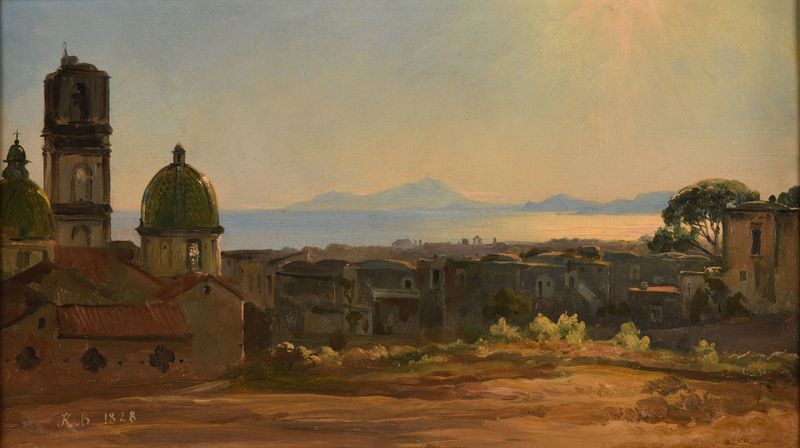
Vue de ville d’Italie
Jacques-Raymond Brascassat
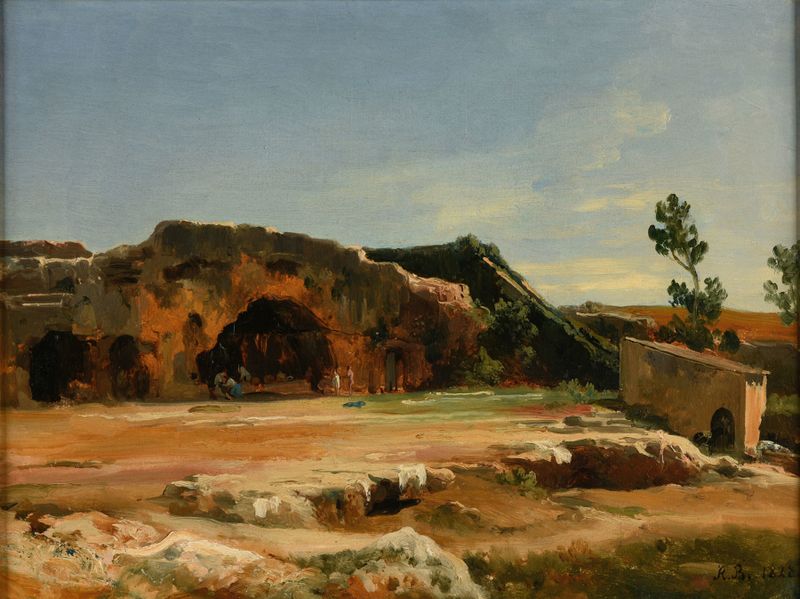
Grotte du Nymphée (Syracuse)
Jacques-Raymond Brascassat





