
Bord de rivière — History & Facts
Could beauty survive in a century of chaos? The vibrant hues of a riverside landscape beckon, an oasis untouched by the tumult of the time. Look to the left at the brilliant emerald greens of the foliage, lush and inviting, where the light filters through the leaves, creating a dappled effect on the water’s surface. The gentle blend of cobalt blues and soft lavenders in the sky draws your gaze upward, inviting contemplation. Notice how the brushstrokes dance across the canvas, each stroke imbued with rhythm, creating a harmony that brings the scene to life.
The composition, framed by overhanging branches, leads the viewer’s eye towards the serene river flowing quietly, embodying both calm and continuity. Here, nature’s beauty contrasts sharply with the uncertainty of the era. The tranquil water reflects not only the colorful landscape but also a deep reservoir of emotion—hope, nostalgia, and perhaps a yearning for simplicity amidst an increasingly complex world. The varied colors evoke feelings of serenity and joy, yet the underlying tension lies in the knowledge that such beauty may be fleeting, reminding us of nature’s resilience against the backdrop of human strife. In 1901, while painting Bord de rivière, the artist was deeply engaged with the Impressionist movement, exploring the poetics of color and light.
Loiseau created this work in France, during a time when rapid industrialization was altering landscapes and lifestyles. This juxtaposition of a serene natural scene with the encroaching chaos of modernity reflects the artist's pursuit of tranquility, capturing a moment that feels both timeless and transient.
More Artworks by Gustave Loiseau
Browse all →
Rue de village en Normandie
Gustave Loiseau
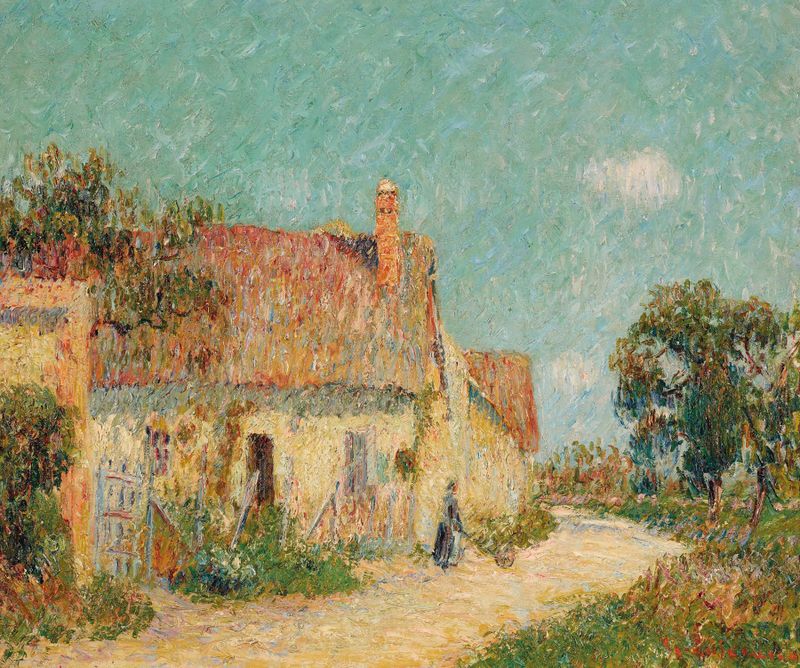
Chaumière en Normandie
Gustave Loiseau

Paysage d’Hiver à Chaponval
Gustave Loiseau
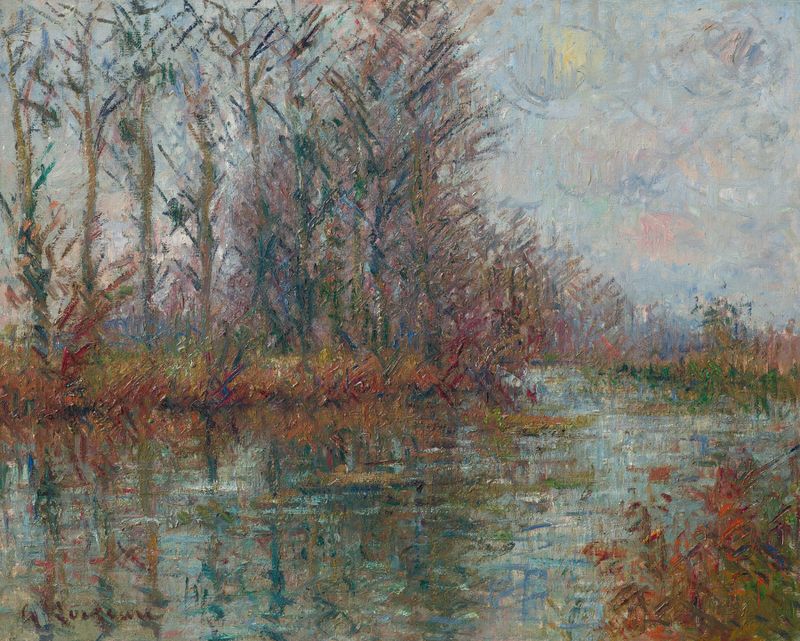
Tournant de rivière, L’Eure
Gustave Loiseau

Pont Marie, Paris
Gustave Loiseau

Le Bras De Mer
Gustave Loiseau

Le Pont Suspendu À Triel
Gustave Loiseau

Bord de la rivière
Gustave Loiseau
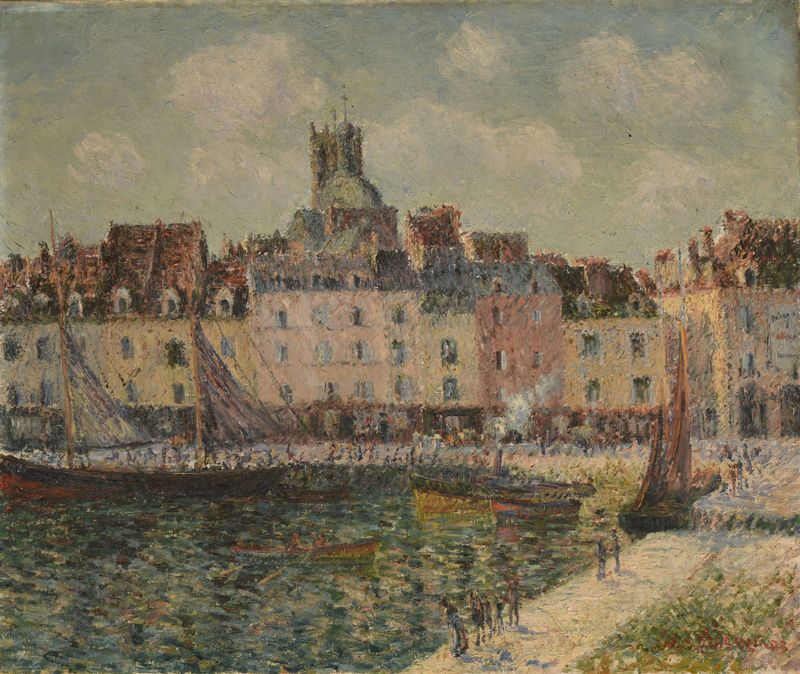
Le Quai Duquesne à Dieppe
Gustave Loiseau

Rocher la Teignouse, Cap Fréhel
Gustave Loiseau





