
Bosgezicht te Groenendaal — History & Facts
Could beauty survive in a century of chaos? This haunting question lingers in the stillness of the landscape, inviting viewers to contemplate the transformation that lies beneath the surface. Look to the left, where the trees stand sentinel, their twisting forms reaching skyward, painted in deep greens and ochres. The sky, a tumult of blues and soft whites, hints at an impending metamorphosis—an interplay of light and shadow that bathes the scene in a spectral glow. Notice how the brushstrokes evoke movement, as if the trees themselves are alive, whispering secrets to the winds that swirl about them. Beneath the tranquil beauty lies a tension between the natural and the chaotic, as hints of darkness seep through the vibrant foliage.
The interplay of shadow and light suggests a world in flux, where serenity coexists with the inevitability of change. Each detail, from the intricate branches to the distant horizon, reflects a deeper narrative of rebirth and decay, erasing the boundaries between the idyllic and the unsettling. In 1888, James Ensor was navigating a pivotal period in his life, living in Ostend, Belgium. Emerging as a prominent figure in the Symbolist movement, he wrestled with the challenges of modernity while creating this extraordinary piece.
His artistic exploration mirrored the cultural turmoil of Europe, making this artwork a profound statement on the resilience of beauty amidst uncertainty and transformation.
More Artworks by James Ensor
Browse all →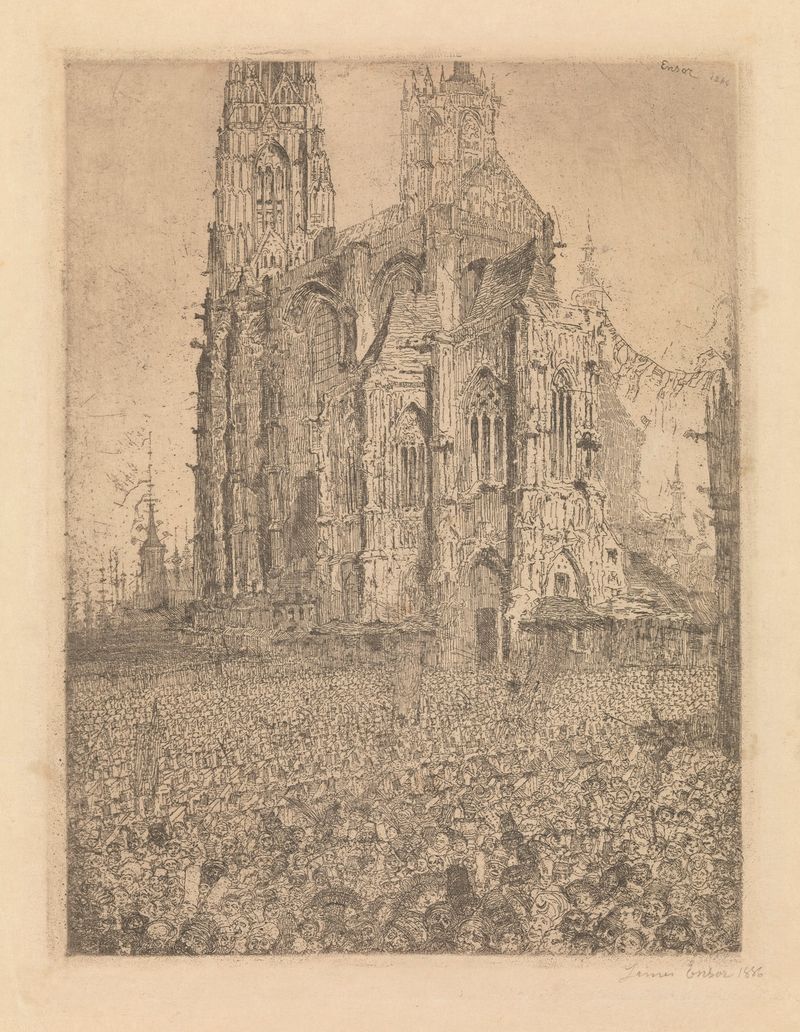
The Cathedral
James Ensor
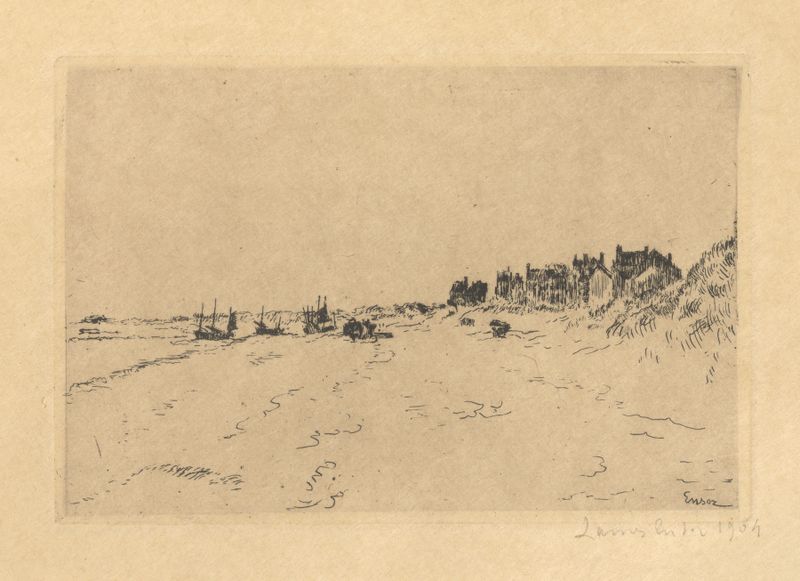
Het strand van De Panne
James Ensor
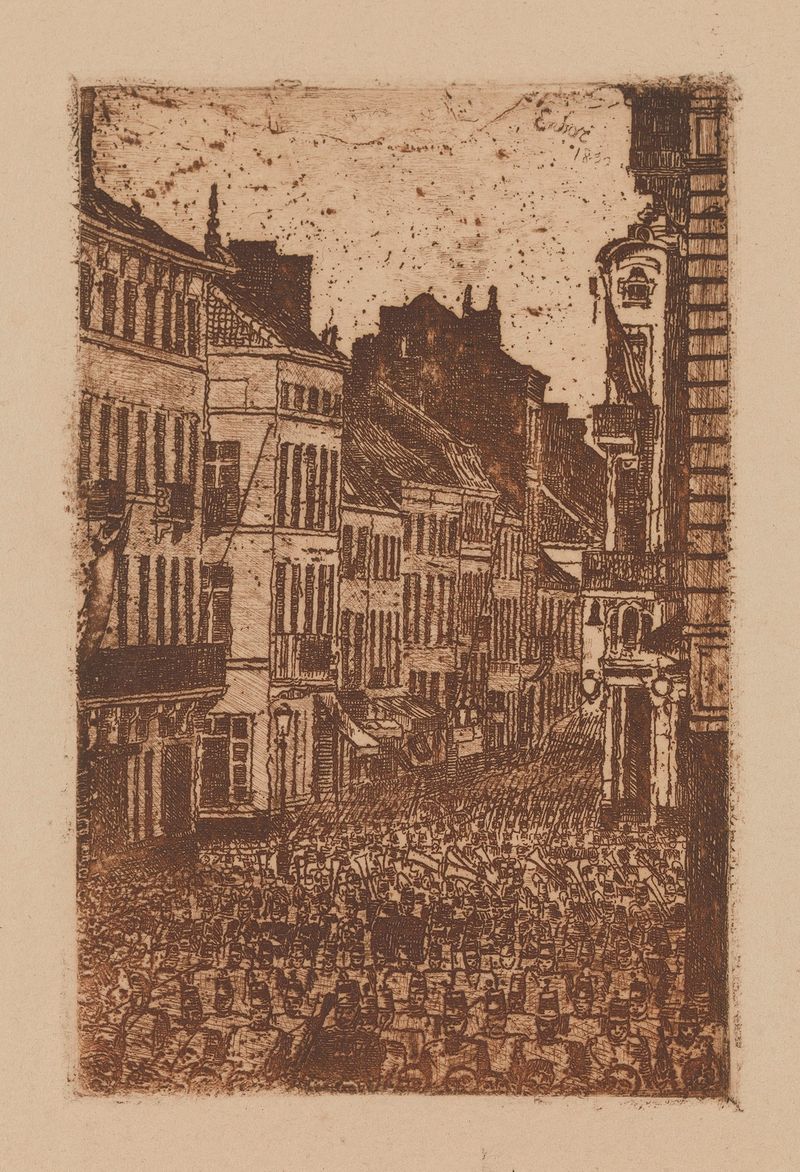
The Music in the rue de Flandre, Ostend
James Ensor
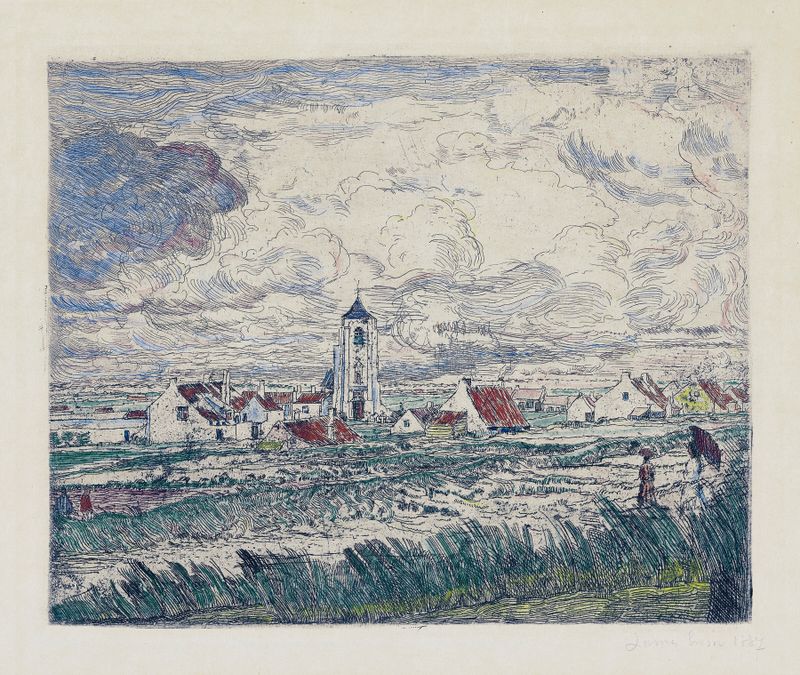
Grande vue de Mariakerke
James Ensor
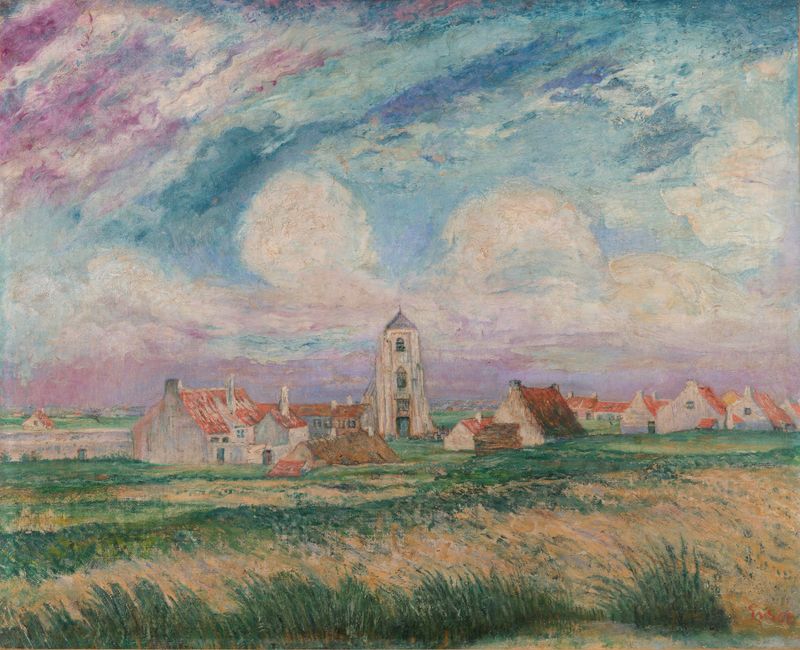
View of Mariakerke
James Ensor
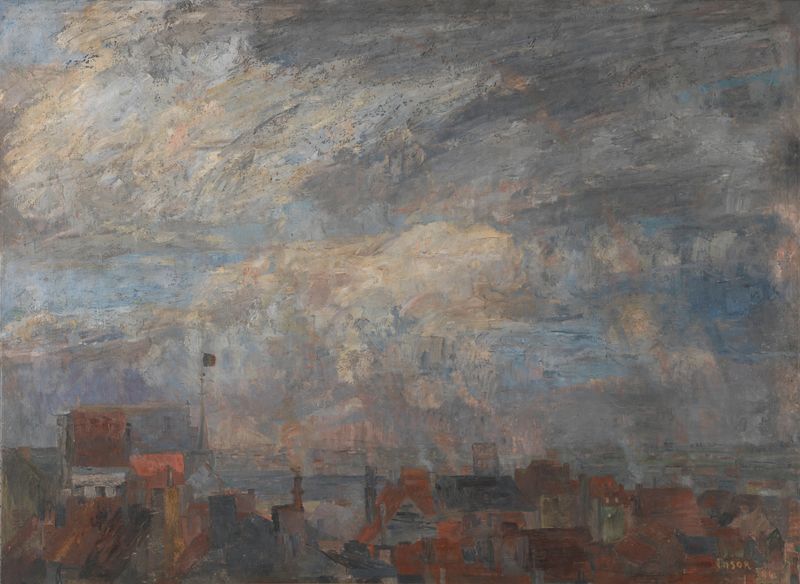
The Rooftops of Ostend
James Ensor
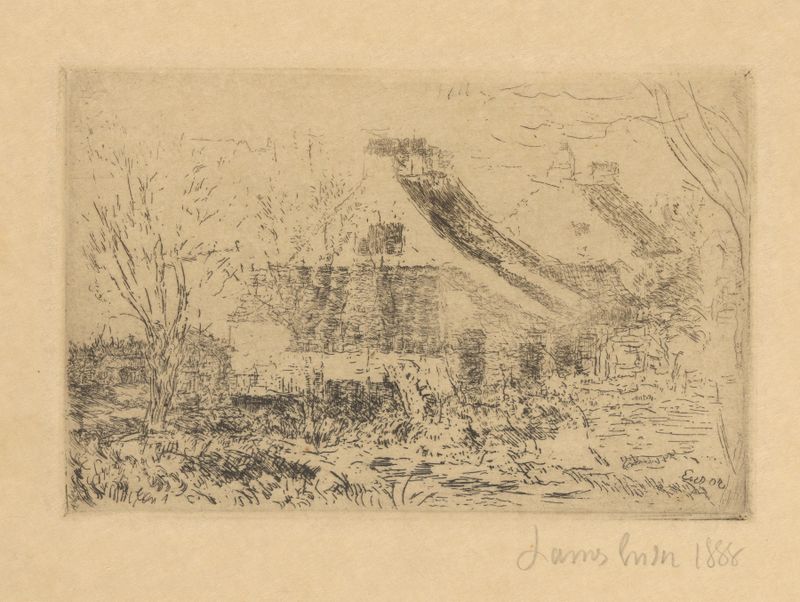
Huisjes in Mariakerke
James Ensor
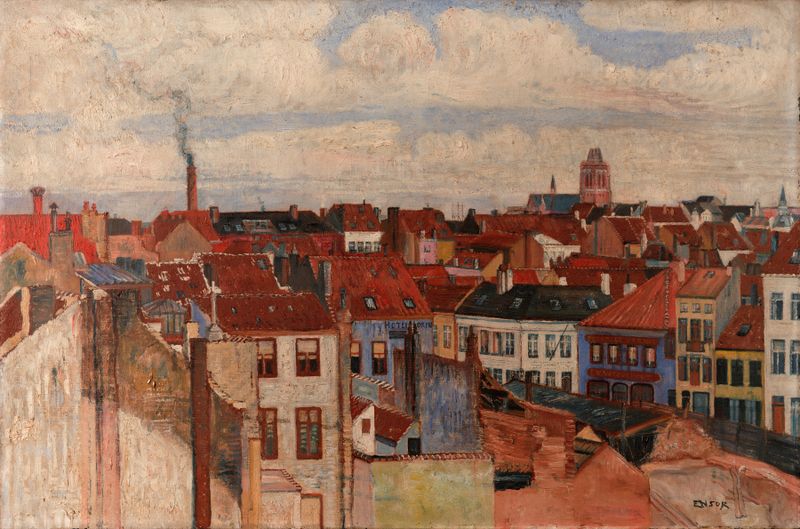
The rooftops of Ostend
James Ensor
The Music in the rue de Flandre, Ostend
James Ensor
Verovering van een vreemde stad
James Ensor





