
Branch of the Seine near Giverny (Mist) — History & Facts
A pale, misty expanse fills the nearly square canvas, with cool blue and lavender tones dominating the scene. At the upper left, a dense cluster of trees appears as a dark, vertical mass, their forms softened and blurred by the surrounding haze. The upper right and lower right areas dissolve into a luminous cloud of pinkish and cream-colored mist, merging gently with the blue of the water below.
Near the bottom edge, faint reflections of trees emerge, their shapes barely distinguishable in the shimmering, rippling surface of the Seine. The composition is carefully balanced, with the main vertical mass of foliage offset by the open, radiant space to the right, creating a sense of both stability and disorientation. There is no clear boundary between water and sky; instead, the landscape is diffused through layers of color and light, half of the scene representing a reflection on the river.
Soft purples, blues, and pinks intermingle across the surface, and the paint is applied in visible, textured strokes that suggest the fleeting quality of morning mist. In the lower left corner, the artist’s signature and the date 97 are visible in red paint. Branch of the Seine near Giverny (Mist) is part of the series "Mornings on the Seine" by Claude Monet, painted in 1897. The Art Institute of Chicago notes that Monet worked on fourteen canvases at once for this series, returning to the same spot on the Seine before dawn to capture the changing light.
Monet custom-ordered the nearly square format of this canvas, an unusual choice that heightens the painting’s sense of ambiguity and immersion. The museum explains that Monet deliberately blurred a previously distinct horizon line, using energetic brushwork to evoke the transience of light and atmosphere. The subject is the river Seine near Giverny, with reflections of trees and clouds dissolving into the water and mist. After its creation, the painting was owned by Jos Hessel in Paris by October 1916, then sold to Durand-Ruel in Paris and later in New York within the same year.
It was acquired by Martin A. Ryerson in Chicago in December 1916, and eventually entered the Art Institute of Chicago through the Ryerson Collection. The museum describes this painting as a result of an energetic creative process, with Monet’s technical choices aimed at capturing the fleeting effects of light and mist—a theme central to his career.
Sources: Art Institute of Chicago, record 1933.1156 · Wikidata Q20269967
More Artworks by Claude Monet
Grainstack (Sunset)
Claude Monet
Impression, Sunrise
Claude Monet
The Poppy Field near Argenteuil
Claude Monet
The Artist's Garden at Giverny
Claude Monet
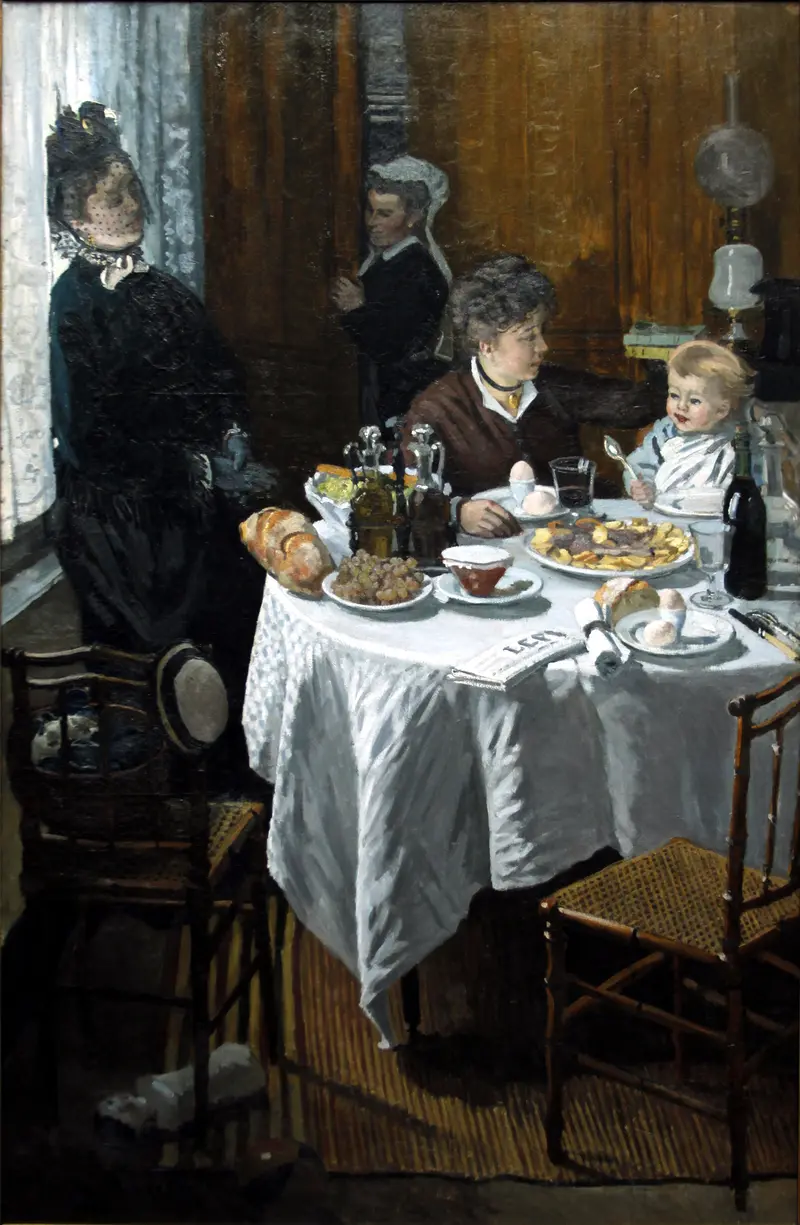
The Luncheon
Claude Monet
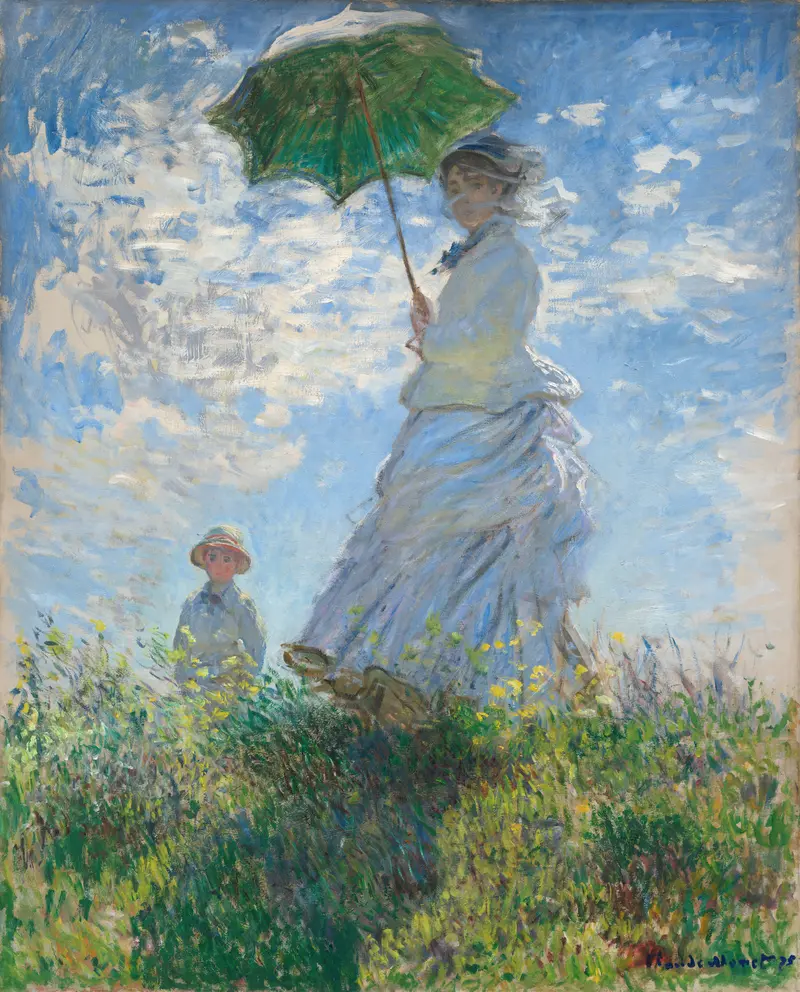
Woman with a Parasol – Madame Monet and Her Son
Claude Monet

The Gare Saint-Lazare
Claude Monet
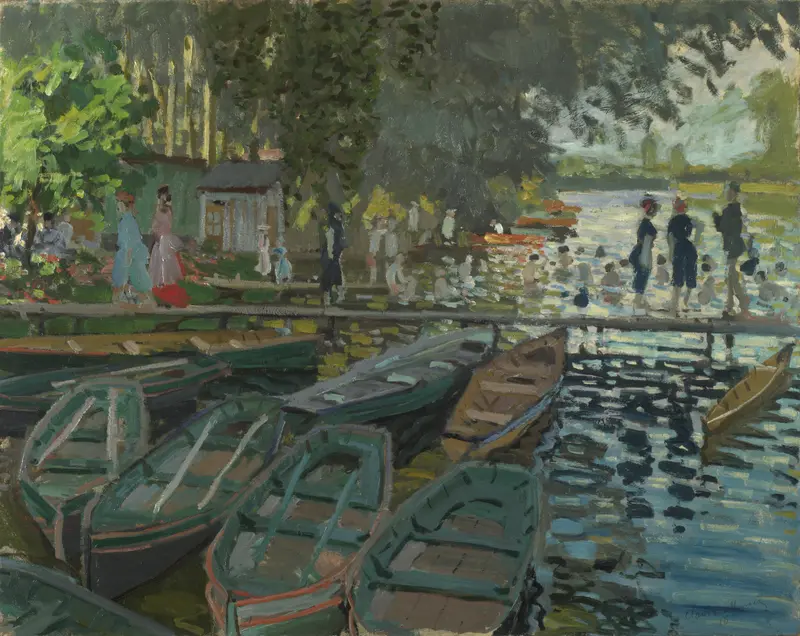
Bathers at La Grenouillère
Claude Monet
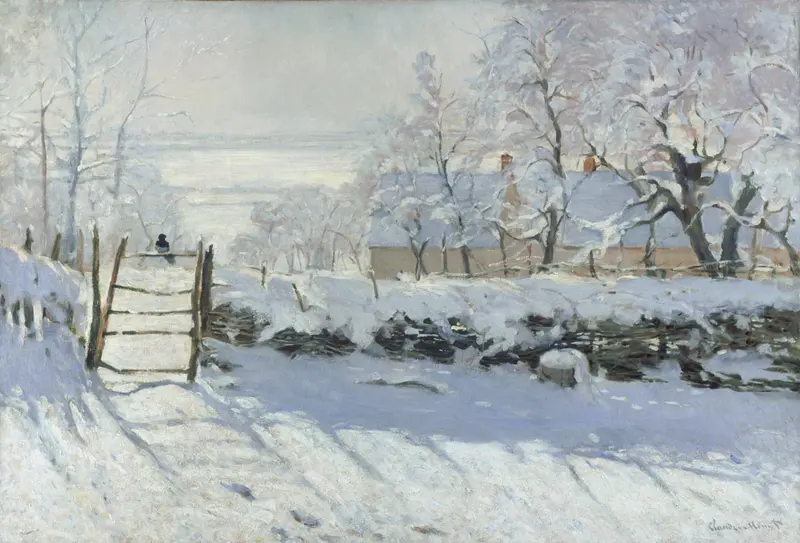
The Magpie
Claude Monet

Water Lilies
Claude Monet
More Landscape Art

The Starry Night
Vincent van Gogh

View of Delft
Johannes Vermeer

Water Lilies
Claude Monet

The Grand Canal, Venice, looking north-west from the Ca' Corner to the Ca' Contarini degli Scrigni, with the campanile of Santa Maria della Carità
Canaletto

Windsor Castle
Canaletto

The Grand Canal looking North-East from the Palazzo Dolfin-Manin to the Rialto Bridge
Canaletto