Brittany Landscape — History & Facts
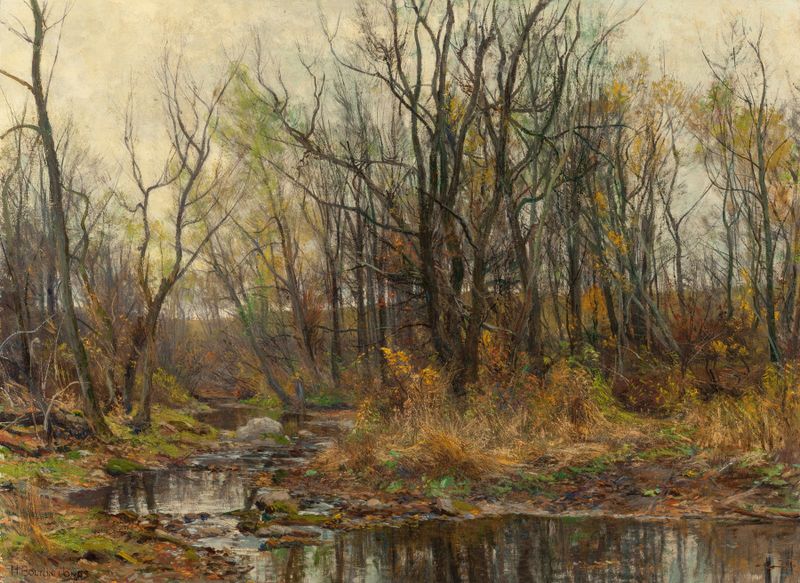
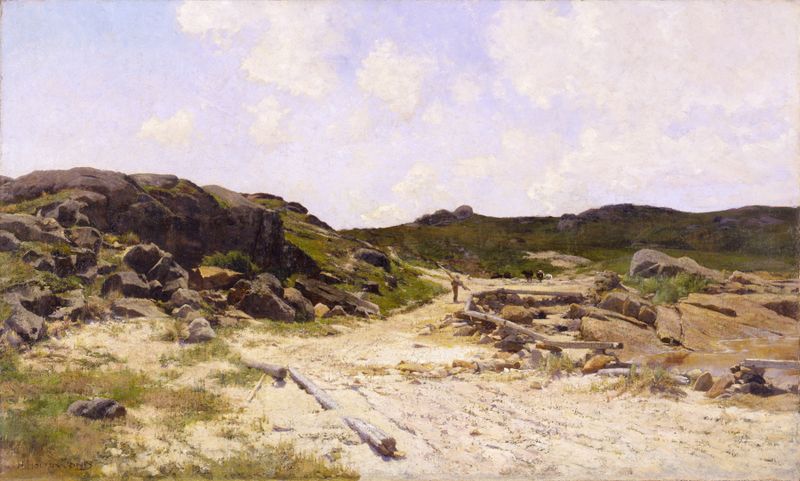
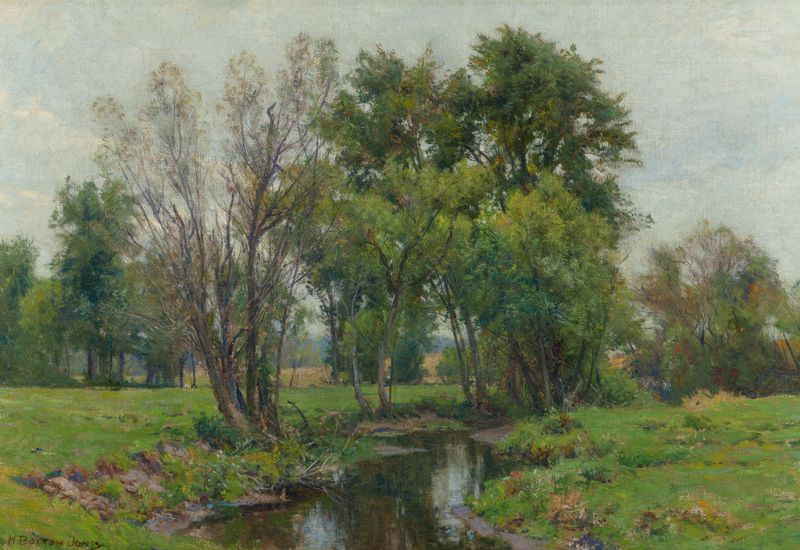
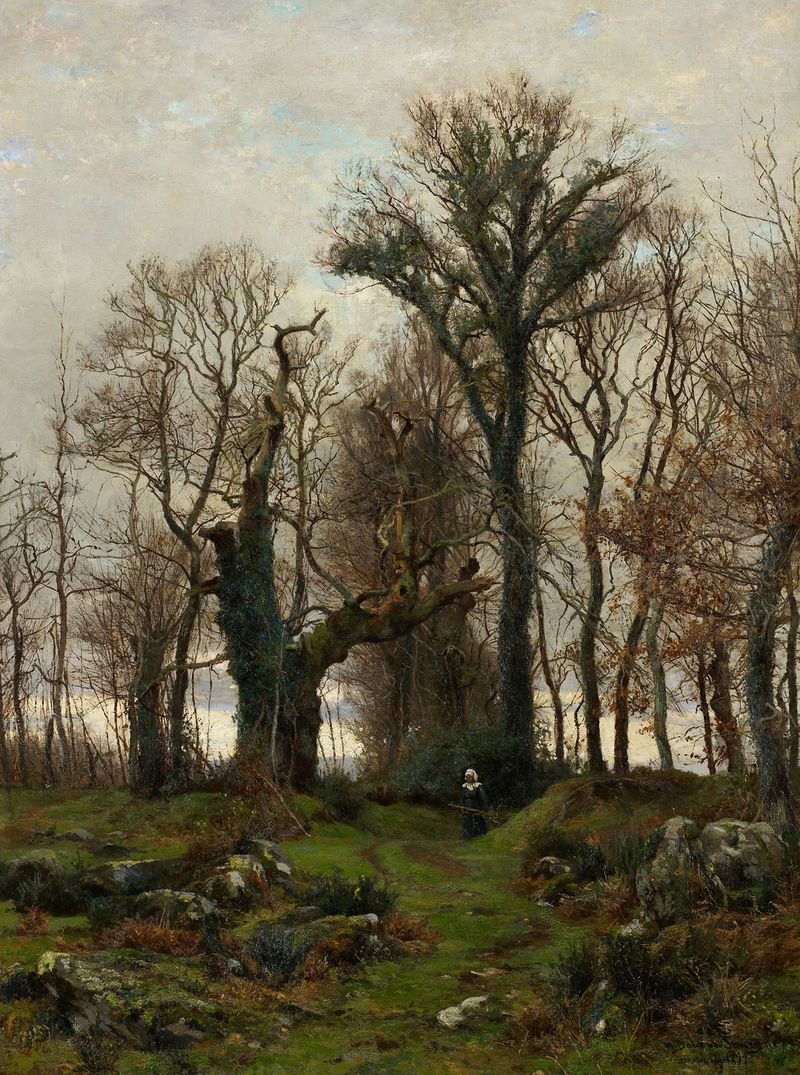
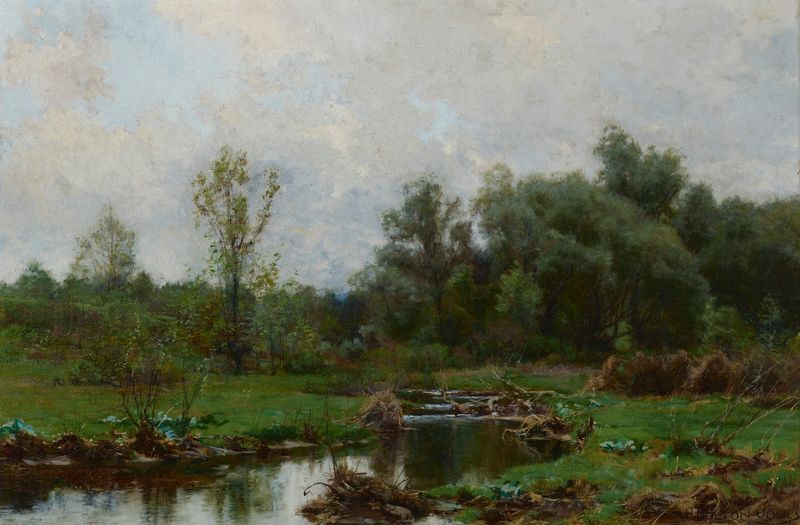
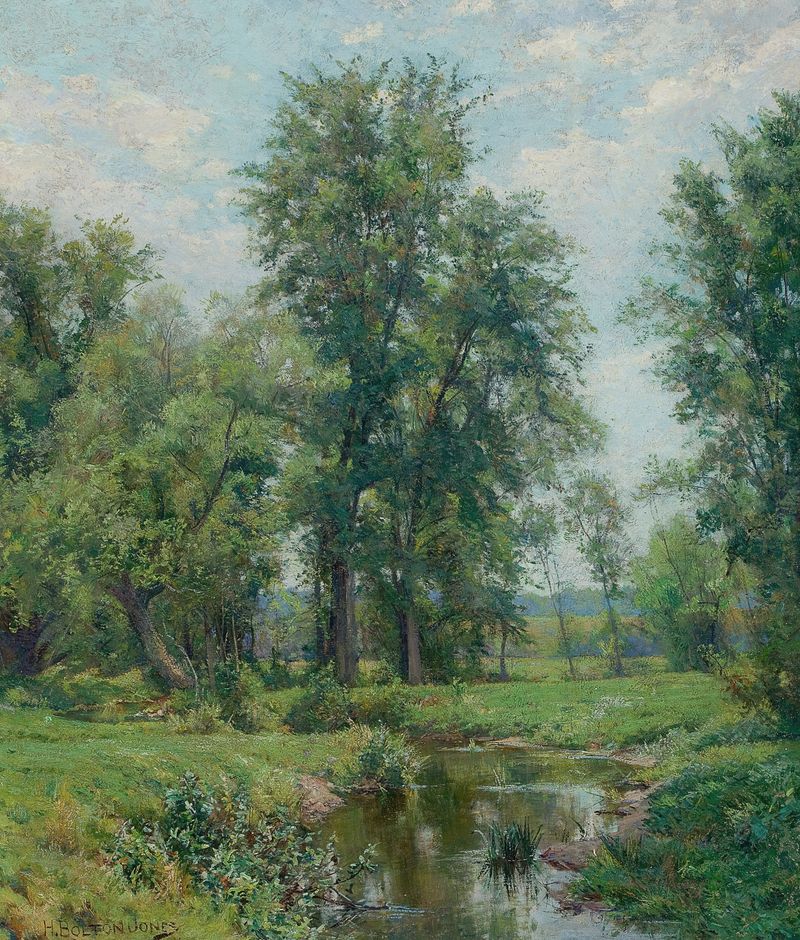
In the interplay of shadow and light, the essence of a fleeting moment is captured eternally on canvas. Focus on the soft, rolling hills that dominate the background, bathed in a gentle, warm light that hints at a sun setting beyond the horizon. To the right, notice how the tall grasses whisper secrets of the breeze, their shadows mimicking the form of the landscape. The colors are muted yet rich, earthy greens merging with golden hues, evoking an intimate connection to the natural world. Within this tranquil scene lies a poignant contrast—the interplay of light and shadow speaks to both the beauty and transience of nature.
The deeper shadows evoke a sense of mystery and introspection, inviting the viewer to ponder what lies beneath the surface. Simultaneously, the sunlit areas remind us of the warmth of day, a fleeting reminder of life's moments that slip away, urging us to cherish them before they vanish. Hugh Bolton Jones painted Brittany Landscape in 1877 during a period marked by his exploration of naturalism and impressionistic techniques. Living in the United States after studying in Europe, Jones was influenced by the vibrant landscapes of both regions.
The world of art was evolving, with a growing emphasis on capturing the ephemeral qualities of light and atmosphere, and Jones was at the forefront of this movement, blending these ideas as he sought to portray the essence of the places he loved.