Edge of the Moor, Brittany — History & Facts
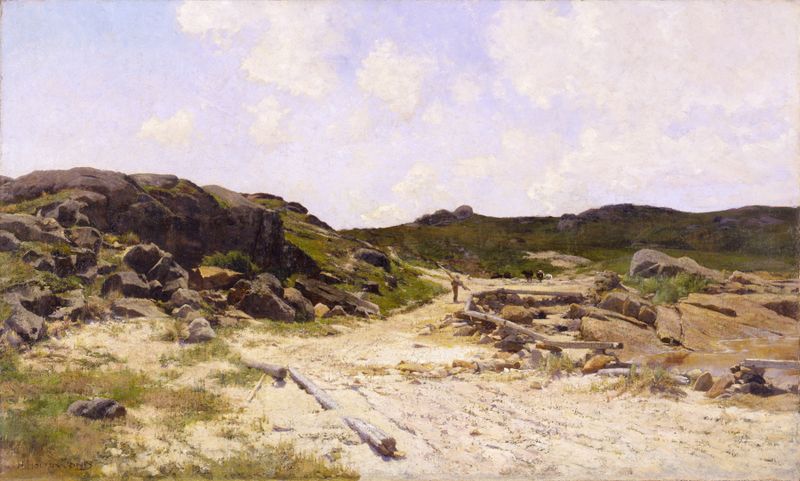
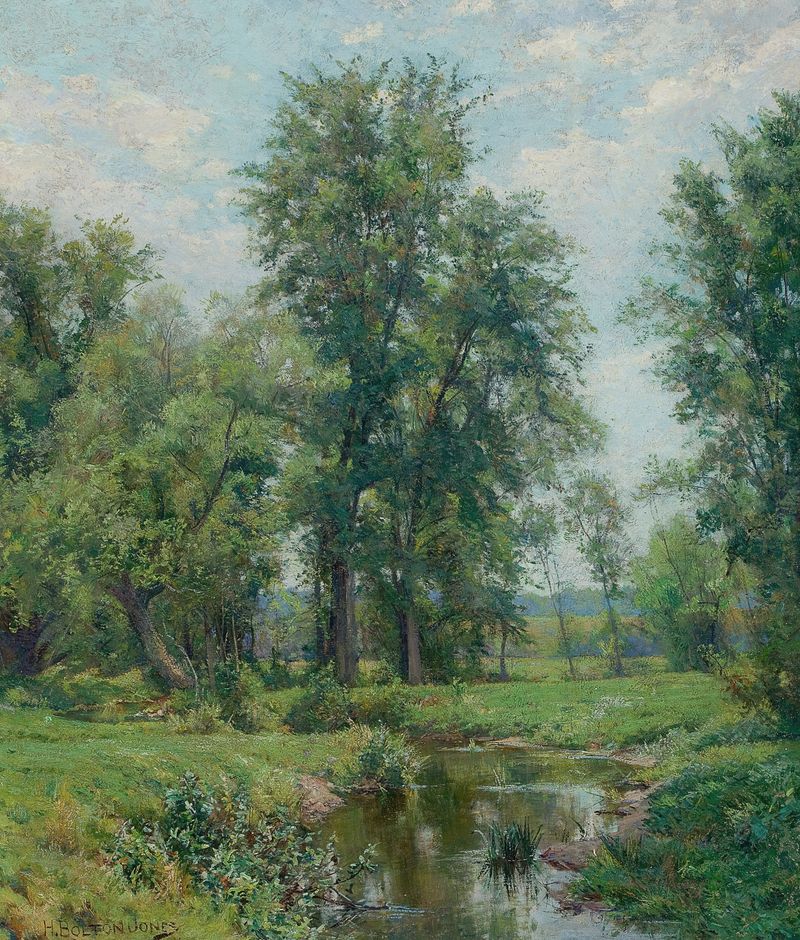
In the stillness of nature, color emerges as a silent witness, revealing the depth of emotion hidden in every brushstroke. Look to the left at the vibrant greens of the moor, where the rich, textured foliage draws you into the scene. Notice how the artist skillfully blends shades of emerald and olive, creating a sense of vitality that ebbs and flows like the gentle breeze. The interplay of light and shadow adds depth, illuminating the subtle curves of the terrain, while the sky above transitions through delicate hues of lavender and peach, suggesting the fleeting moments of dawn or dusk. Beneath the surface, the painting encapsulates a profound exploration of solitude and connection to nature.
The colors evoke not just scenery but the emotional depth that can be found in quiet moments away from society. Here, the rich earth and soft sky communicate an unspoken dialogue between the external landscape and the internal human experience. The contrast between the lush greenery and the expansive horizon serves to emphasize a balance between isolation and belonging, as if inviting the viewer to ponder their own place in the vastness of the world. In 1877, the artist found inspiration in the rugged beauty of Brittany, capturing the essence of the moor during a time of personal exploration and the burgeoning American Impressionist movement.
This period saw a shift in artistic expression, embracing color, light, and the diverse experiences of nature. Jones was influenced by the changing dynamics of art around him, pushing the boundaries of realism while striving to convey the raw emotions that color can evoke.