Lighthouse Beach, Annisquam — History & Facts
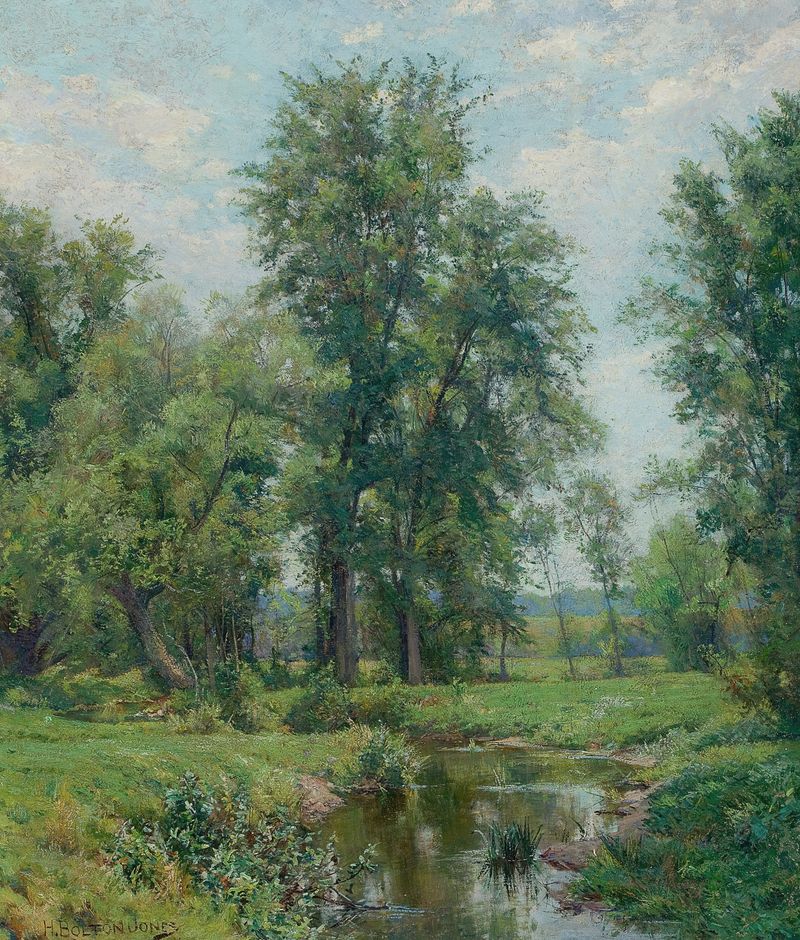
In Lighthouse Beach, Annisquam, this notion resonates deeply as we glimpse a tranquil moment that is far more than it seems. The painting invites us to ponder the layers of experience encapsulated within its serene landscape, where transcendent beauty meets the weight of human emotion. Look to the left at the gentle curve of the shoreline, where soft, golden sands meet the tranquil waters. Notice how the light filters through the clouds, casting dappled reflections upon the surface, creating a rhythm between the earth and sky.
The brushwork is deft and fluid, allowing vibrant greens and warm yellows to dance in harmony, evoking a sense of calm yet underlying tension—an invitation to linger, but a reminder of time's relentless passage. Dive deeper into the contrasts present; the lighthouse stands resolutely against nature's soft embrace, a beacon of safety yet a testament to isolation. The gentle waves lap at the shore, whispering stories of change and nostalgia, while the luminous sky hints at an approaching dusk—an inevitable end. This interplay of light and shadow reflects the duality of existence, where beauty and melancholy coexist, urging the viewer to confront their own complexities. In 1887, Hugh Bolton Jones was immersed in the Hudson River School movement, capturing the American landscape with a nuanced eye.
That year marked a period of artistic experimentation and a growing appreciation for outdoor painting, as artists sought to express emotional depth through nature. Surrounded by natural beauty and artistic camaraderie, he painted this work in Annisquam, Massachusetts, a place that resonated with both serenity and the weight of its history.