Springtime in Old Lyme, Connecticut — History & Facts
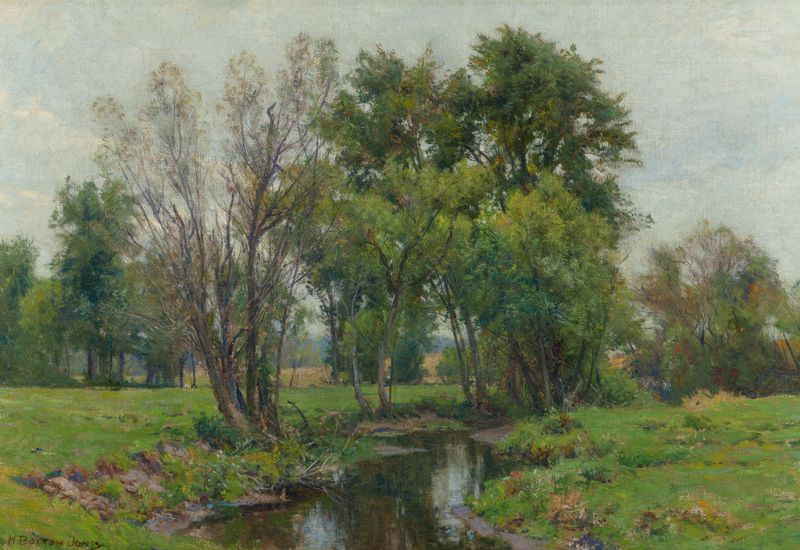
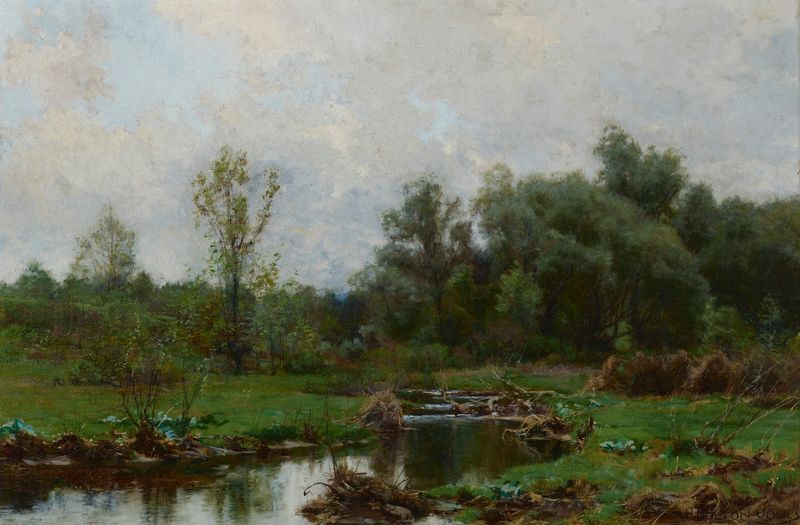
Can paint confess what words never could? In Hugh Bolton Jones’s Springtime in Old Lyme, Connecticut, the artist captures not just a landscape, but a moment of awakening, a revolution of color and life. Look to the foreground where lush green grasses sway gently, beckoning the eye to wander among the dappled shadows. Notice how the light filters through the trees, casting a golden glow upon a blooming meadow. The delicate brushstrokes impart a sense of movement, as if the very air pulses with the vibrancy of spring.
The palette of soft pastels juxtaposed with deeper greens creates a harmonious balance, inviting the viewer to breathe in the fresh air of this tranquil scene. Yet, there is more beneath the surface. The juxtaposition of fleeting beauty against the permanence of the trees hints at the transitory nature of life itself, instilling a tension between joy and melancholy. The vibrant blossoms, with their ephemeral existence, remind us that renewal often comes with the weight of loss.
This interplay between light and shadow deepens the emotional resonance, suggesting that each season carries its own stories of rebirth and remembrance. Painted during a period of artistic exploration and change, this work reflects a time when the American landscape movement blossomed. The artist, active in the late 19th century, found inspiration in the natural beauty of Old Lyme, a hub for impressionist painters. The burgeoning interest in capturing the essence of light and atmosphere marked a pivotal moment in art history, as creators sought to convey the profound impact of nature on the human spirit.