A Meadow Stream — History & Facts
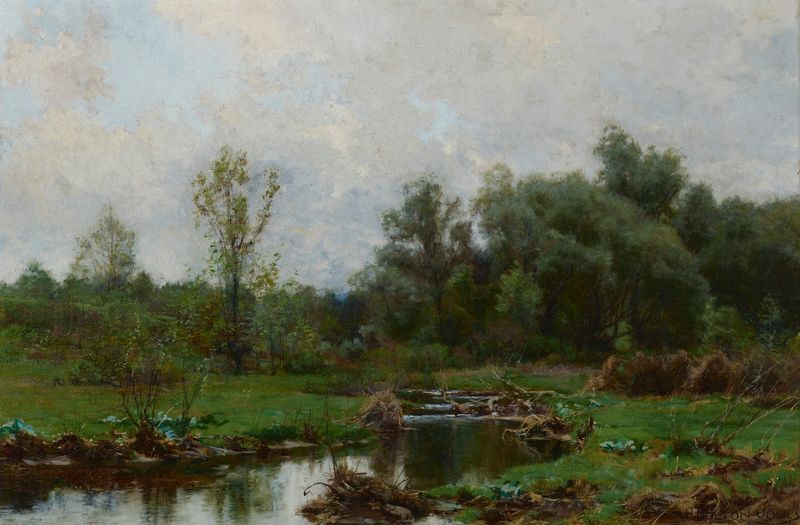
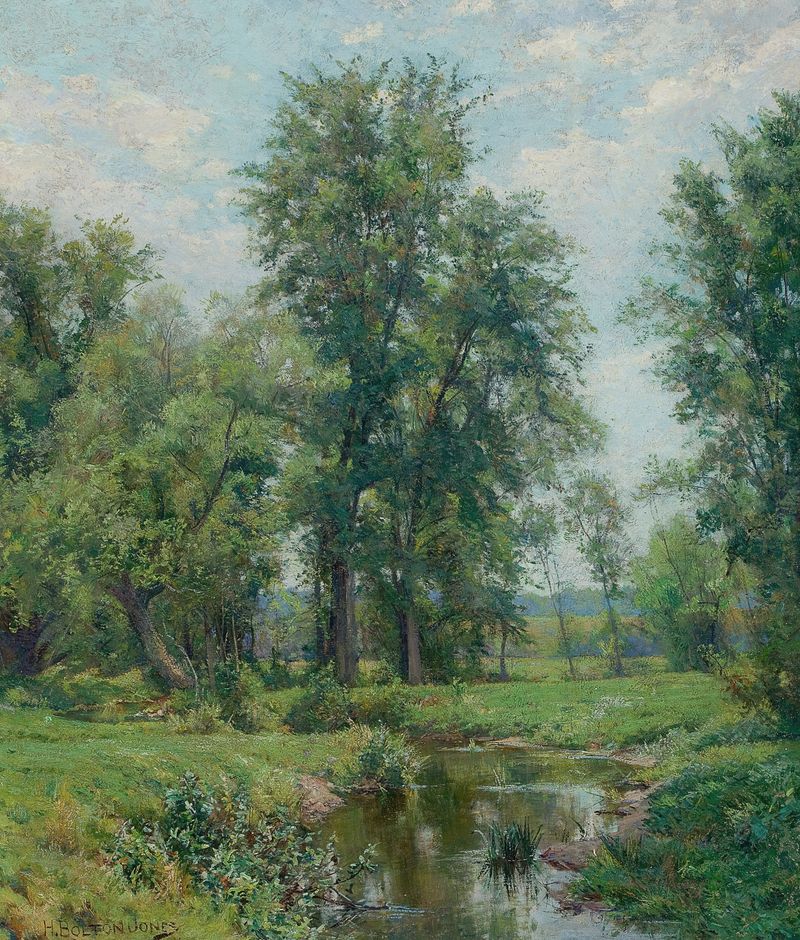
Could a single brushstroke hold eternity? In the delicate flow of A Meadow Stream, the answer resonates profoundly within its tranquil embrace of nature's movement. Look to the foreground where gentle ripples dance across the water's surface, reflecting the lush greenery flanking the stream. Notice how the artist employs a soft palette of greens and blues, inviting a sense of serenity while guiding the viewer’s gaze along the meandering path of the water. The deliberate placement of luminous highlights creates a shimmering effect that captures the essence of sunlight filtering through the trees above, mirroring the dynamic interplay between light and shadow. Beneath the calm exterior lies a tension between stillness and movement; the stream's surface appears to pulse with life, hinting at deeper currents beneath.
Each brushstroke contributes to the overall sense of flow, yet subtle details—like the bending grass and fluttering leaves—speak to the ever-present wind, emphasizing nature's constant evolution. This juxtaposition captures a fleeting moment while implying a broader narrative of life's cyclical journey. During the late 19th century, as an emerging figure in the American landscape tradition, the artist created this piece amid a growing appreciation for plein air painting. The exploration of natural light and landscapes was gaining momentum, as artists sought to encapsulate the beauty and impermanence of their surroundings.
In this context, the work stands as a testament to the era's ideals, blending technical skill with a profound connection to nature.