
Brooklyn Bridge — History & Facts
Where does light end, and longing begin? In Brooklyn Bridge, a striking interplay of shadow and illumination evokes the bittersweet nature of nostalgia intertwined with the pulse of contemporary life. Look to the center of the canvas, where the majestic bridge stretches defiantly against a backdrop of delicate hues. The painter’s brushstrokes delineate the steel cables with meticulous precision, while the soft blues and warm oranges of the sky form a harmonious gradient above. Notice how Ranger employs light to guide your gaze; the sun’s golden rays reflect off the water, creating a path that invites you into the scene.
This dance of color and composition captures not just a physical structure but also an emotional bridge, connecting past and present. Beneath the surface, the painting resonates with the tension between stability and transience. The solid, unwavering structure of the bridge contrasts with the fluidity of the water beneath, symbolizing the contrasts between permanence and change. Even the figures in the foreground—small and almost ghostly—seem caught in a moment of reflection, embodying a collective yearning for connection and belonging.
This bittersweet essence of longing permeates the work, as it captures both the promise of progress and the weight of memory. In 1899, Ranger crafted this piece during a period of rapid urbanization and technological advancement in America. Working in the United States, he found inspiration in the iconic architectural marvels of New York City, which represented a shift in both landscape and identity. As American Impressionism gained traction, he embraced the interplay of light and atmosphere, reflecting the evolving world around him through his unique lens.
More Artworks by Henry Ward Ranger
Browse all →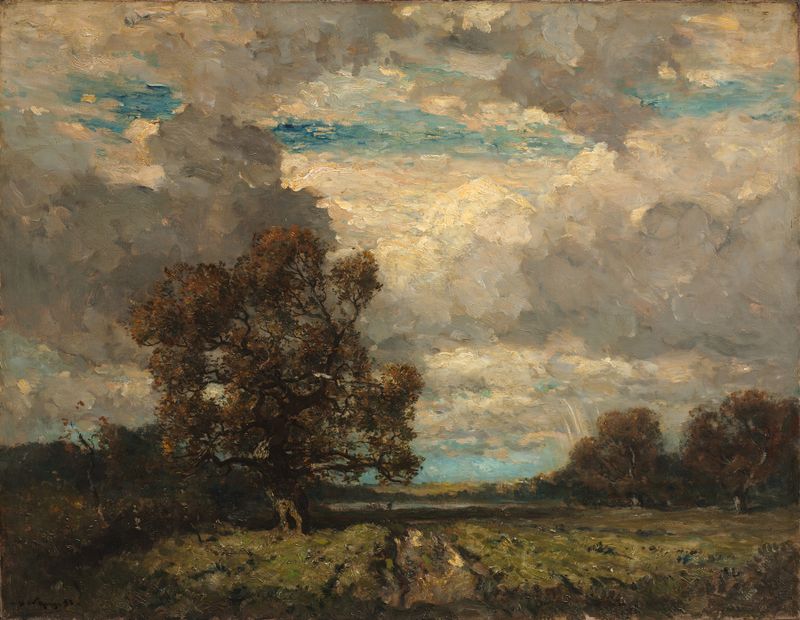
The Lone Sentinel
Henry Ward Ranger
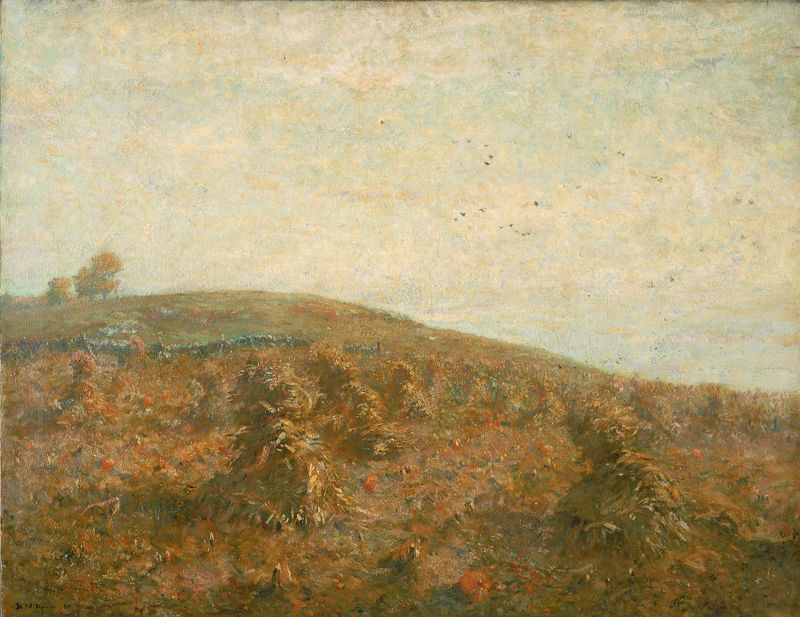
The Cornfield
Henry Ward Ranger
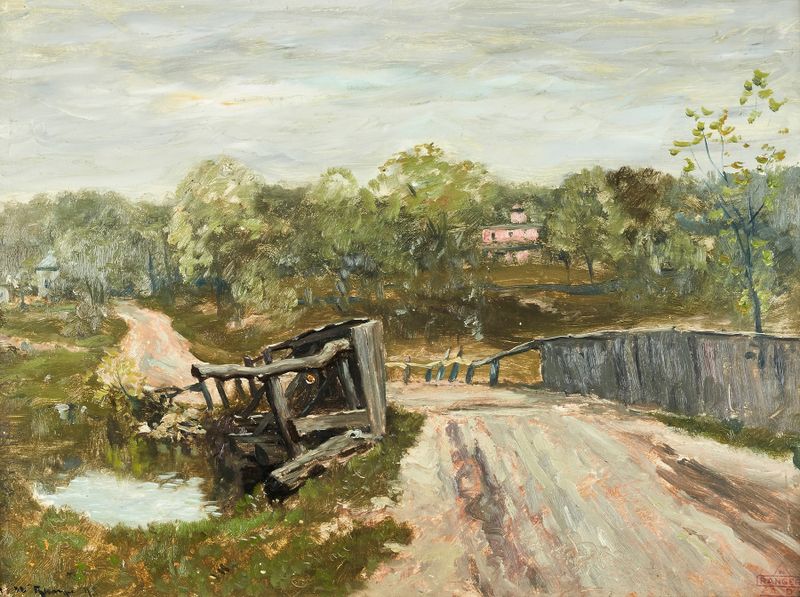
The Stone Fence
Henry Ward Ranger
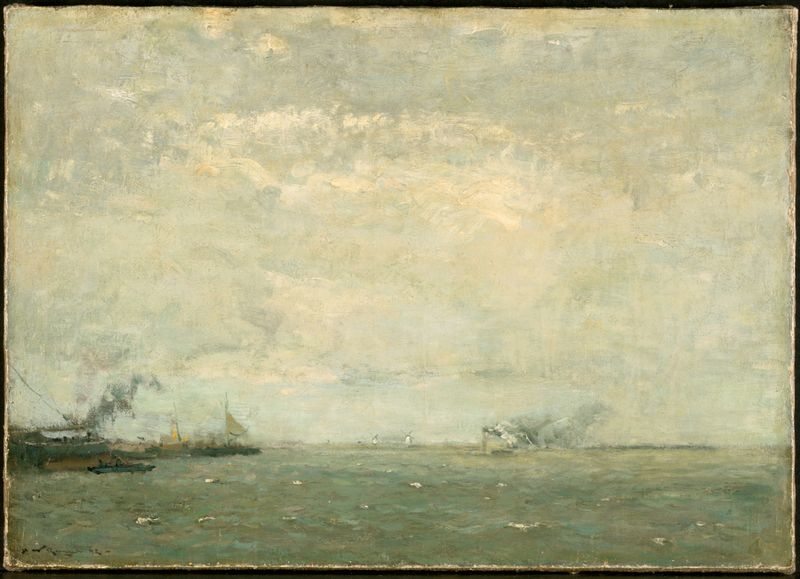
Seascape
Henry Ward Ranger
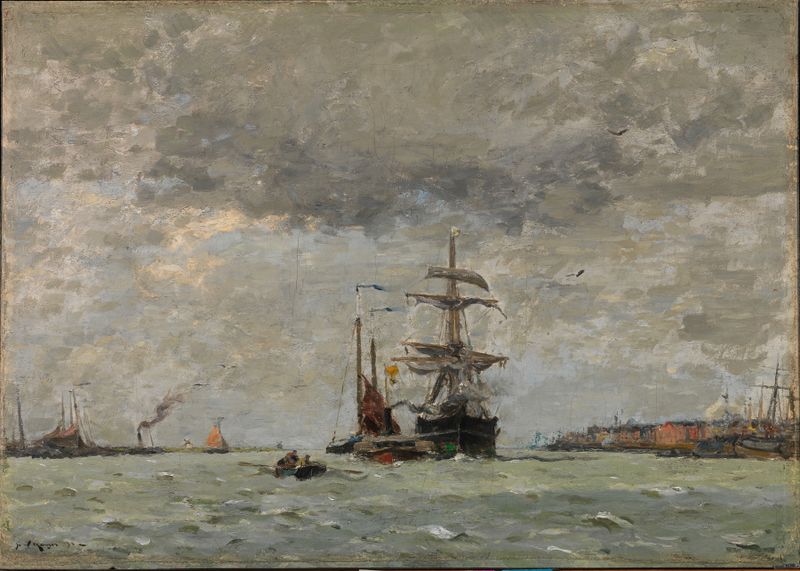
Entrance To The Harbor
Henry Ward Ranger
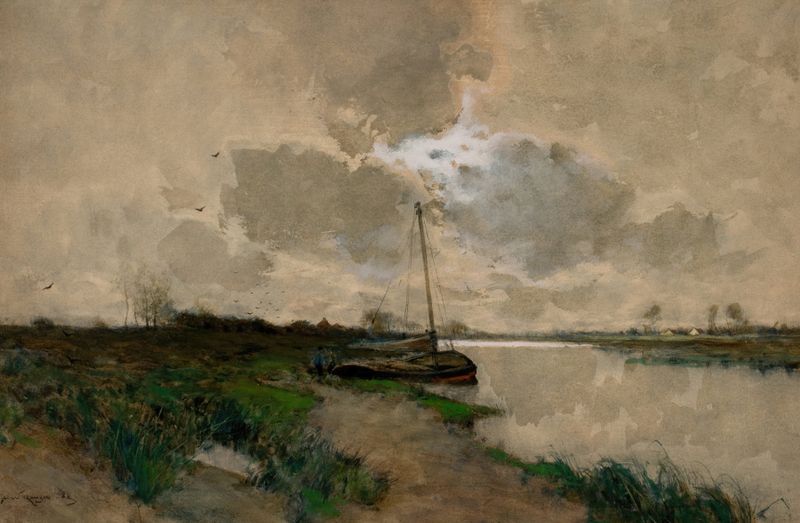
On the Scheldt, Holland
Henry Ward Ranger
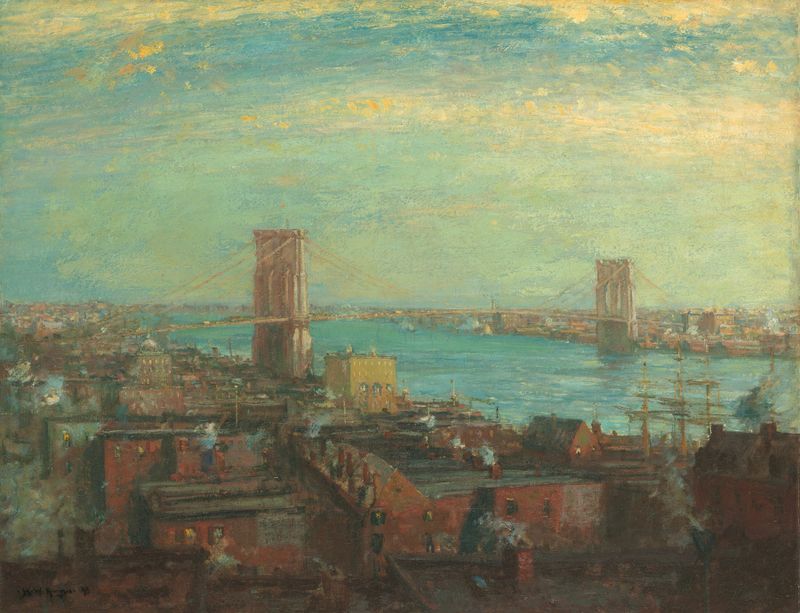
Brooklyn Bridge
Henry Ward Ranger
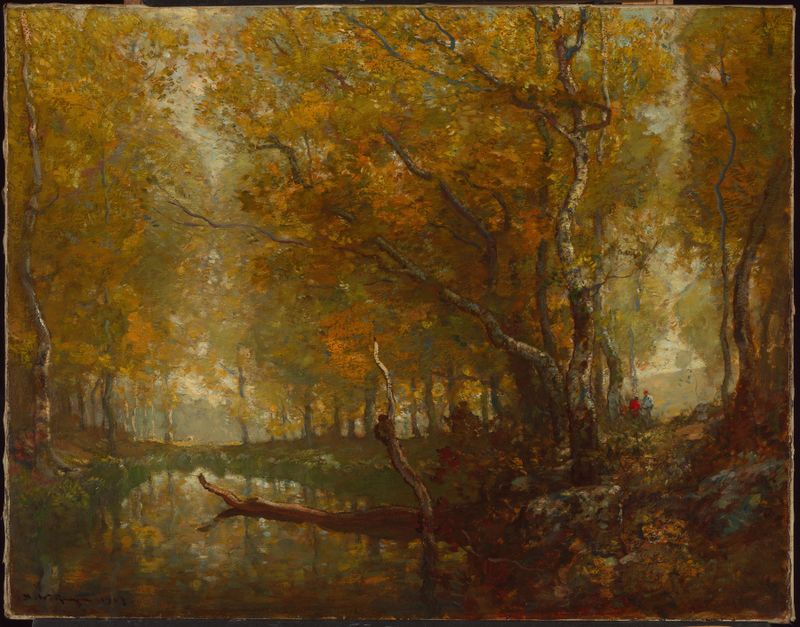
Bradbury’s Mill Pond, No. 2
Henry Ward Ranger
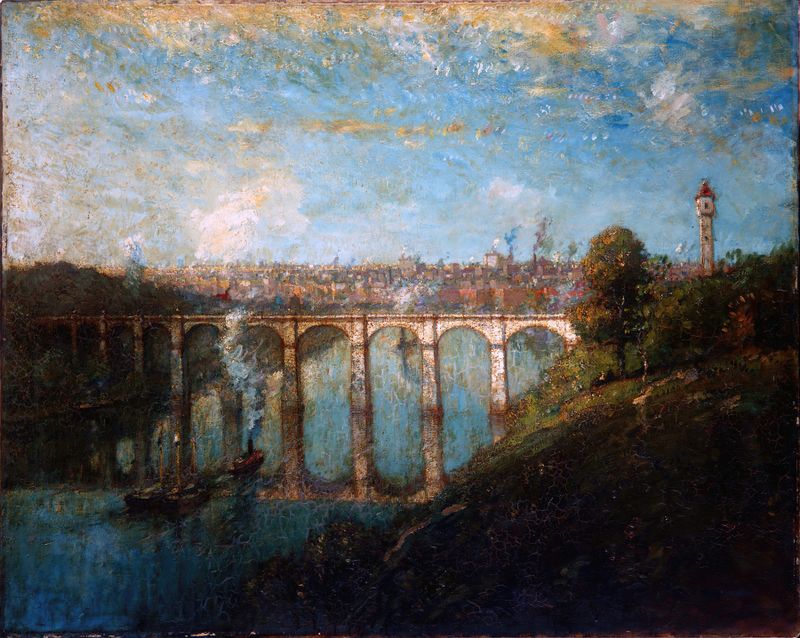
High Bridge, New York
Henry Ward Ranger
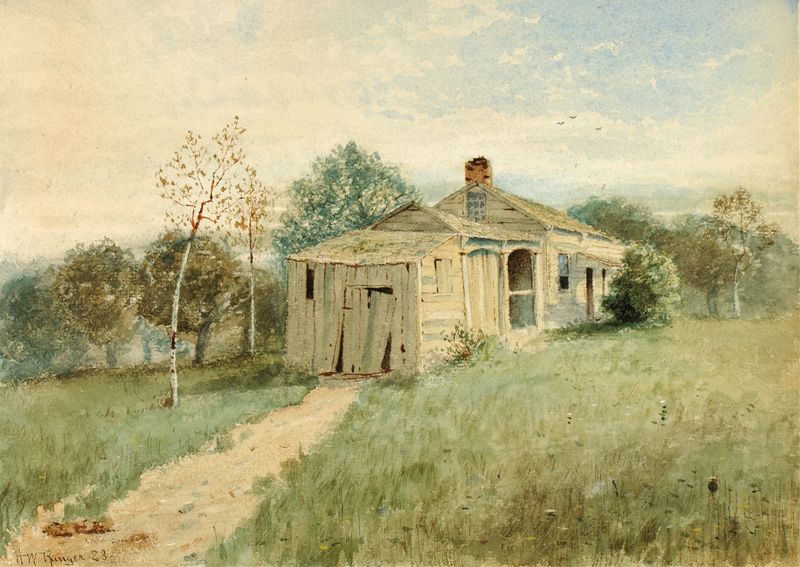
Untitled
Henry Ward Ranger
More Architecture Art
Browse all →
The statue of Liberty
Frédéric Auguste Bartholdi

View of Houses in Delft, Known as ‘The Little Street’
Johannes Vermeer

View of Houses in Delft, Known as ‘The Little Street’
Johannes Vermeer

The Cathedral in Rouen. The portal, Grey Weather
Claude Monet

The yellow house
Vincent van Gogh

The Church in Auvers-sur-Oise, View from the Chevet
Vincent van Gogh