
The Stone Fence — History & Facts
In The Stone Fence, this sentiment resonates deeply, revealing the illusion of permanence against the inevitability of change. Focus on the foreground where the textured stones rise resolutely, their weathered surfaces catching the soft, dappled light of an autumn afternoon. Each stone tells a story, layered with hues of gray and warmth from the surrounding foliage. The warm yellows and deep greens blend harmoniously, guiding your gaze toward the distant horizon, where the landscape fades into a gentle blur of color, emphasizing the boundary between the tangible and the ephemeral. In this work, the contrast between the rough stone and the delicate foliage captures the tension between nature and the vestiges of human endeavor.
The fence symbolizes both a physical and emotional barrier, evoking themes of separation and protection. Look closely at how the light interacts with different textures; it creates an illusion of depth that suggests time’s relentless passage, reminding us of the fragility of our constructed defenses against nature's whims. Henry Ward Ranger painted The Stone Fence in 1898, during a period marked by the American Impressionism movement's rise. In this era, artists sought to capture the essence of the moment, reflecting a growing appreciation for the natural world amid the rapid industrial changes of society.
Ranger, living and working primarily in New York, embraced these ideals, infusing his landscapes with a sensitivity to light and atmosphere that defined his and his contemporaries’ work.
More Artworks by Henry Ward Ranger
Browse all →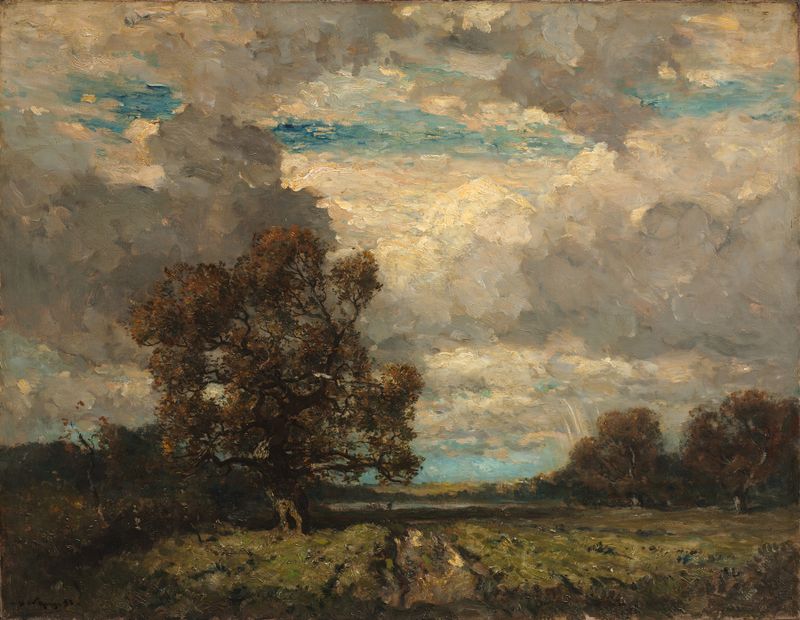
The Lone Sentinel
Henry Ward Ranger
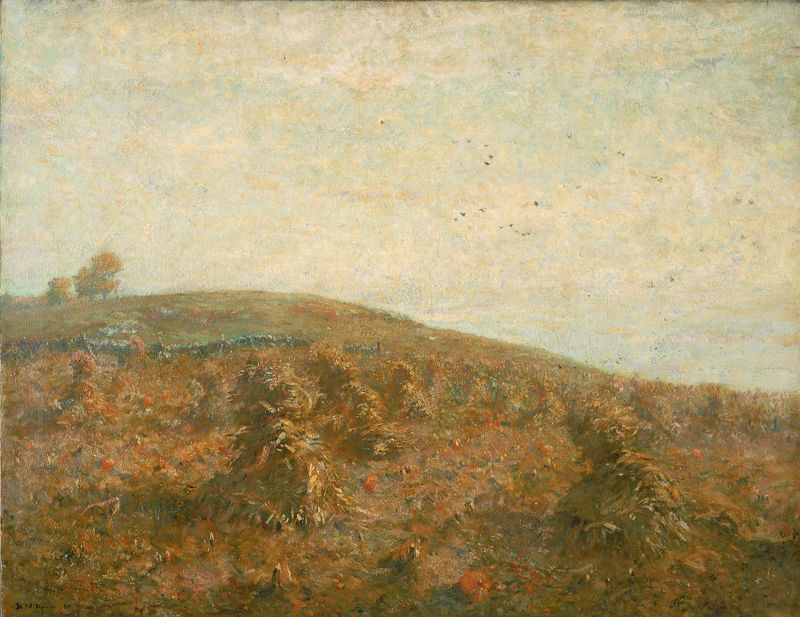
The Cornfield
Henry Ward Ranger

Brooklyn Bridge
Henry Ward Ranger
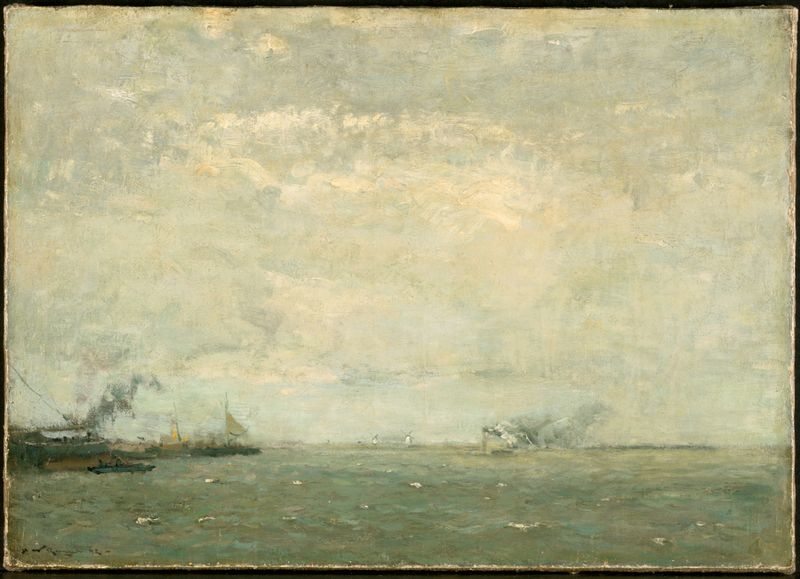
Seascape
Henry Ward Ranger
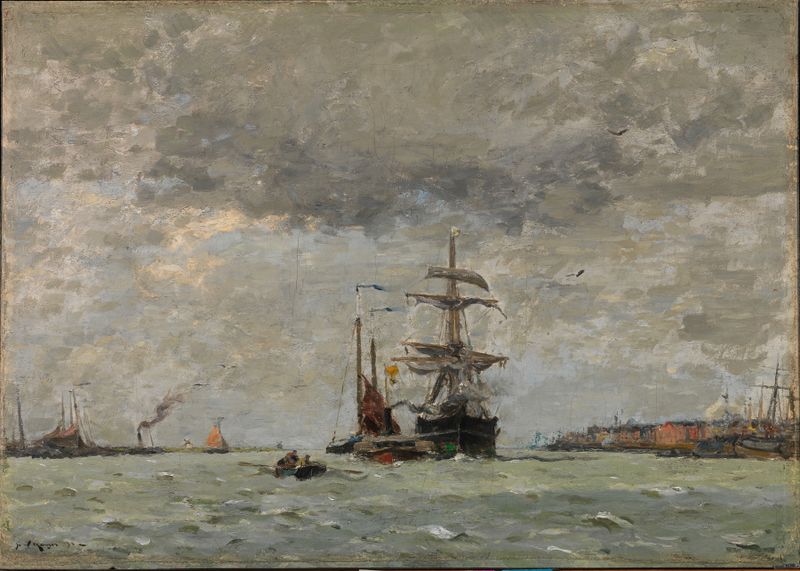
Entrance To The Harbor
Henry Ward Ranger
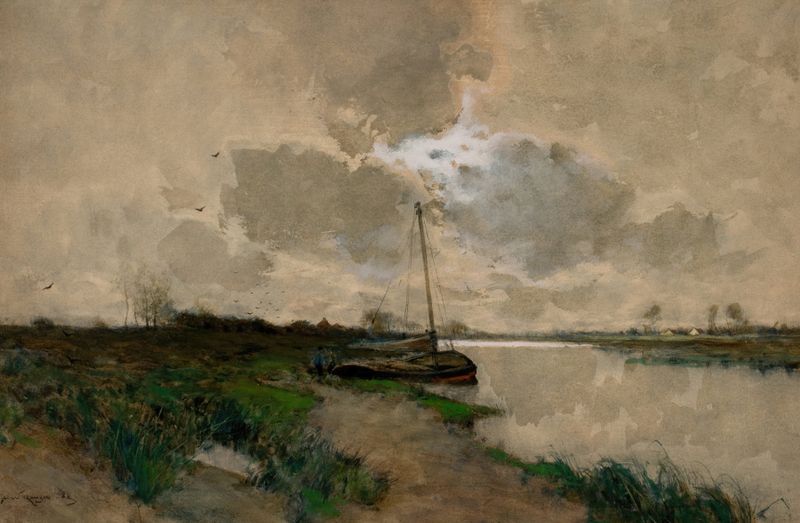
On the Scheldt, Holland
Henry Ward Ranger
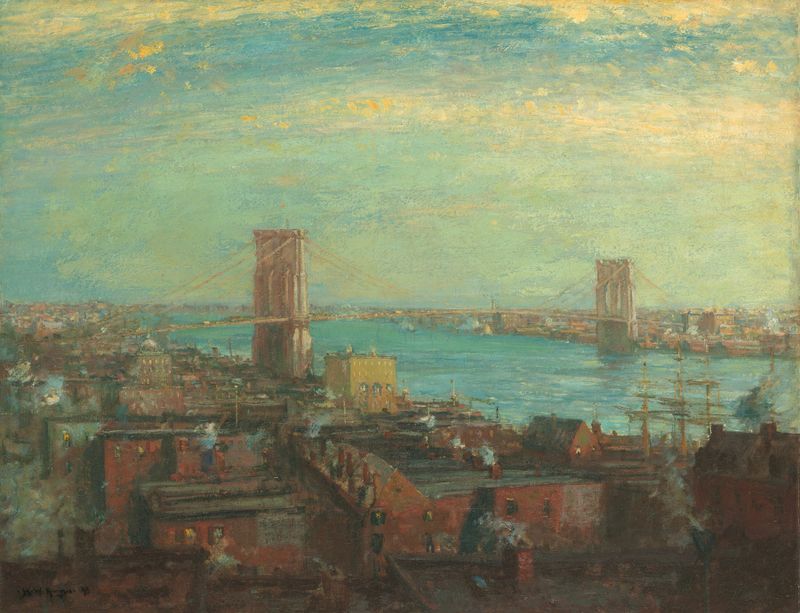
Brooklyn Bridge
Henry Ward Ranger
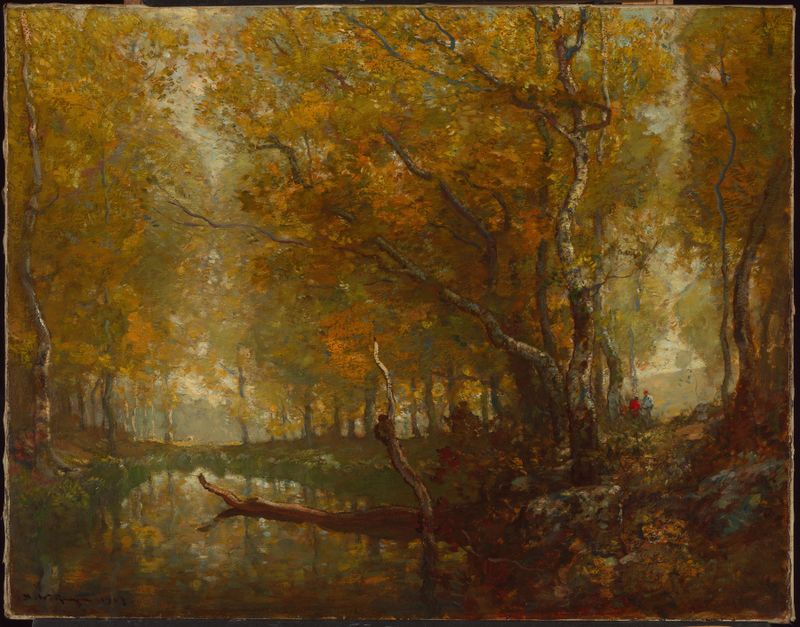
Bradbury’s Mill Pond, No. 2
Henry Ward Ranger
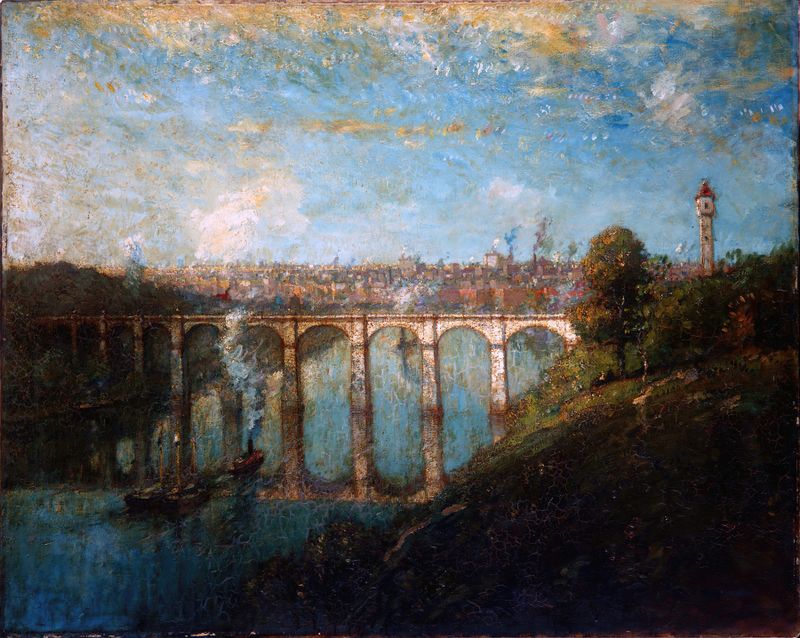
High Bridge, New York
Henry Ward Ranger
Untitled
Henry Ward Ranger





