Brooklyn Etchers’ Gift Plate — History & Facts
When did color learn to lie? The layers of a single hue can sometimes mask a deeper truth, revealing a divinity that transcends the surface. Focus first on the intricate engravings that dance across the plate’s surface, where each line tells a story of craftsmanship and intention. Haskell's mastery of light and shadow draws your eye to the delicate interplay of forms, inviting you to explore the borders between reality and abstraction. The soft palette, dominated by muted blues and earthy tones, conveys a sense of calm while also hinting at something more profound lurking beneath. As you examine the delicate flowers and intertwining vines, consider how each detail resonates with themes of connection and continuity.
The juxtaposition of the natural elements with the circular form of the plate suggests a harmony between humanity and nature, an invitation to appreciate the beauty of stillness. Yet, there's an underlying tension between the fragility of the depicted life and the permanence of the medium, raising questions about the transience of existence. Created in 1923, this piece was born from Haskell's experimentation within the arts and crafts movement, where he sought to elevate everyday objects to the realm of art. Living in New Jersey at the time, he was influenced by the burgeoning interest in printmaking and craftsmanship that characterized the period.
This plate is not merely a decorative object; it embodies a philosophy of artistry rooted in the connection between the artist, the medium, and the viewer, reflecting the cultural shifting tides of the early 20th century.
More Artworks by Ernest Haskell
Browse all →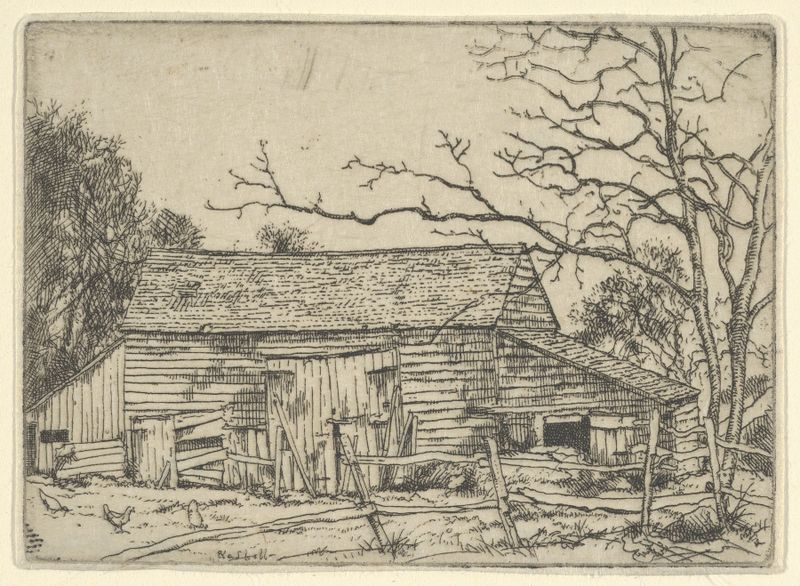
The Barn–Staten Island, N.Y.
Ernest Haskell

Four Live Oaks
Ernest Haskell
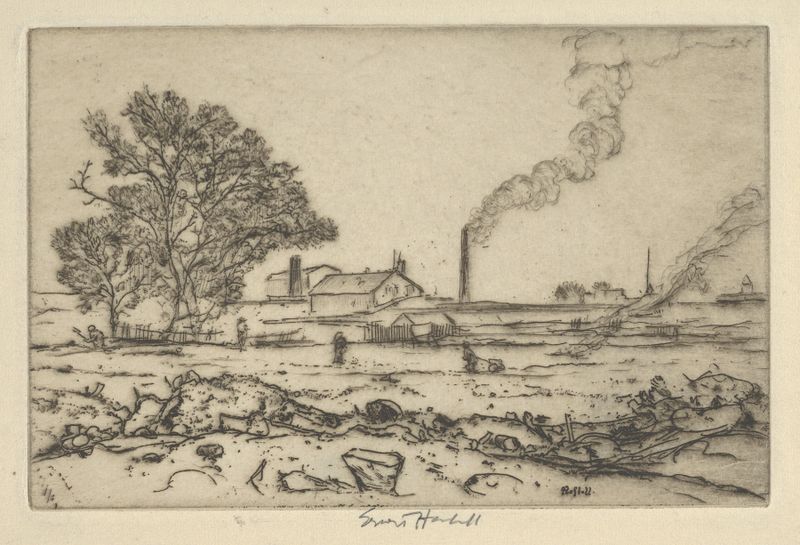
Outskirts of Boston
Ernest Haskell
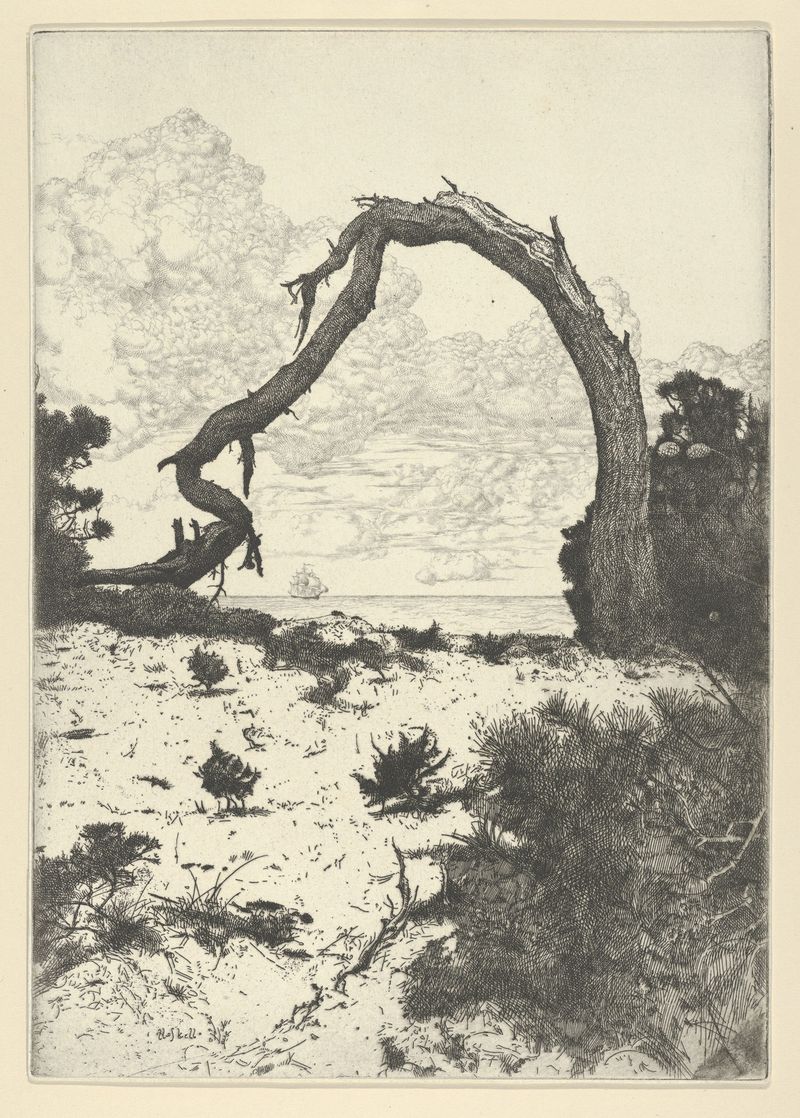
Pine Arch
Ernest Haskell

General Sherman
Ernest Haskell
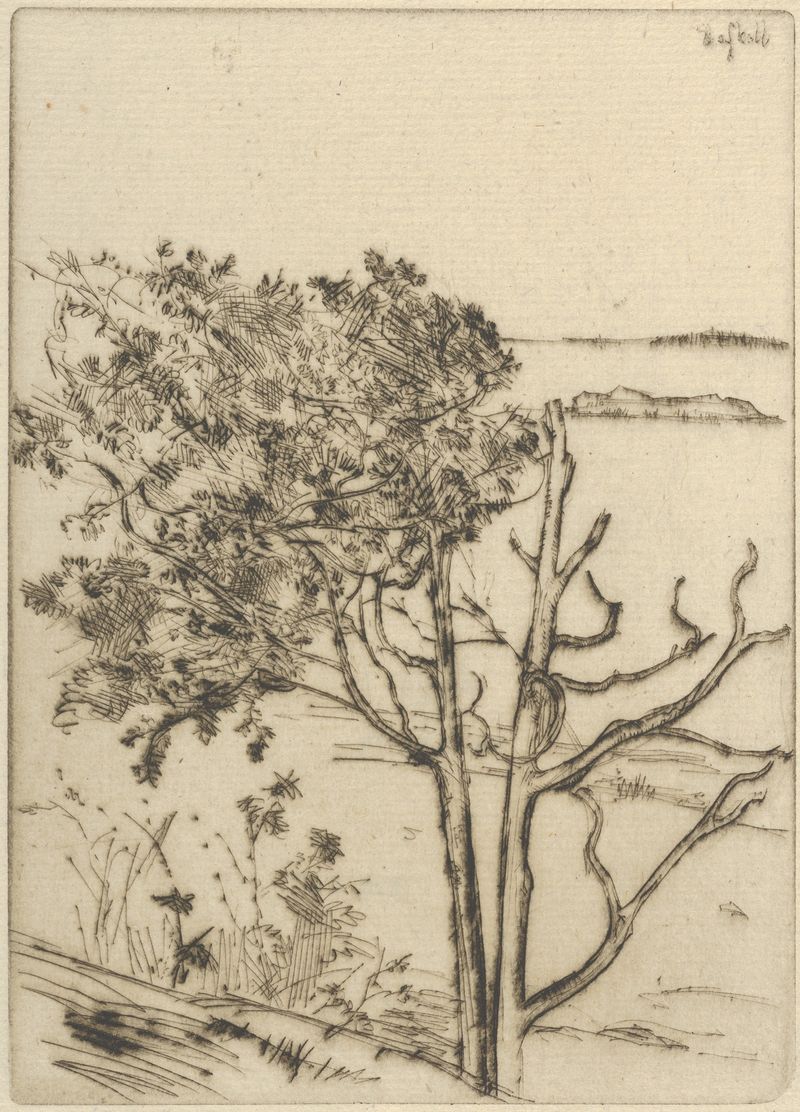
Ragged Tree – Maine
Ernest Haskell

Tide Mill
Ernest Haskell

Ship Building
Ernest Haskell
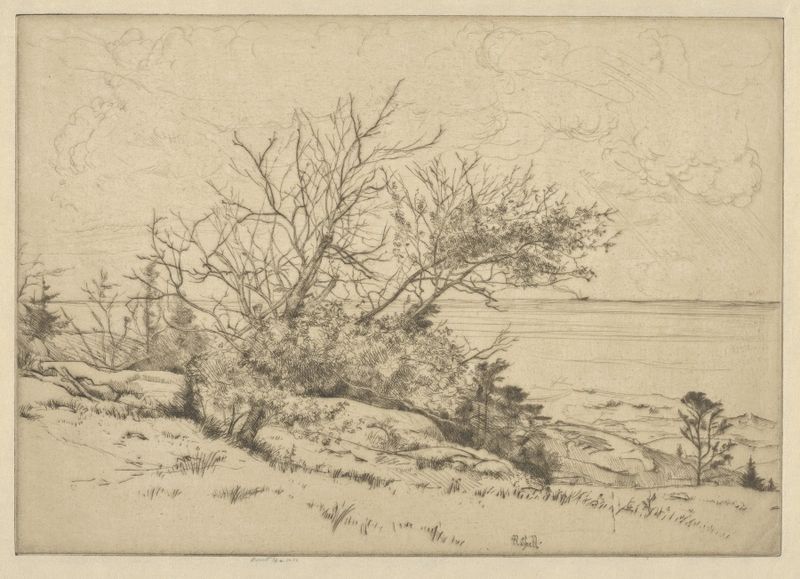
To the Southward – Ragged Island, Me.
Ernest Haskell
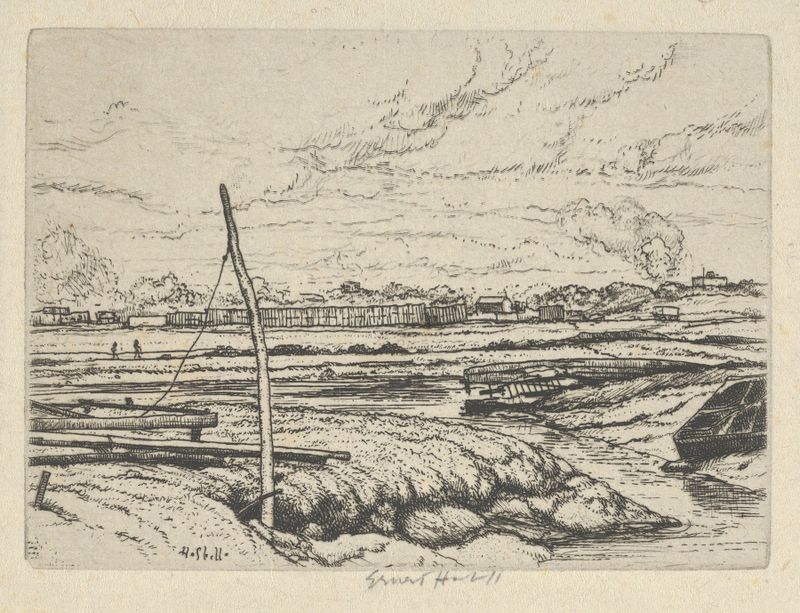
Long Island Marshes
Ernest Haskell