
Buckingham Palace — History & Facts
In this stillness, time stands poised, inviting endless movement and narrative. How do the whispers of history echo within the grand walls of a palace? Focus on the vibrant hues of blue and gold that dominate the foreground, drawing your eye to the majestic façade of Buckingham Palace. Notice how the luminous clouds above seem to dance across the canvas, casting shadows that suggest a fleeting moment in nature.
The meticulous brushwork reveals layers of texture, allowing each stroke to pulse with life, harmonizing the static architecture with the vibrancy of the sky. Yet beneath the serene beauty lies an emotional tension. The palace, a symbol of authority and tradition, stands stoic, while the lively clouds hint at the ever-present motion of time and change. The play between stillness and the suggestion of breeze or approaching storm creates a dialogue about the impermanence of power, suggesting that even the strongest foundations are subject to the whims of nature and fate. Edmund Walker created this work in 1852, a period marked by a rigid social structure and the expanding influence of the British Empire.
As he painted in London, the city was undergoing significant transformation, reflecting both growth and unrest, as well as a burgeoning fascination with capturing the essence of place through art. This piece encapsulates both the grandeur and the inevitable evolution of a city that had long been a focal point of power and culture.
More Artworks by Edmund Walker
Browse all →
A View of London Bridge
Edmund Walker
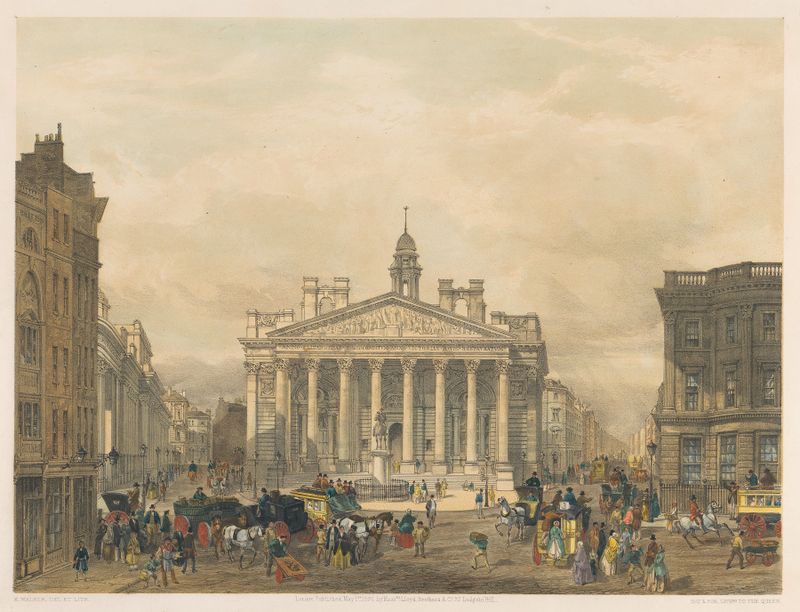
The Royal Exchange and the Bank of England
Edmund Walker
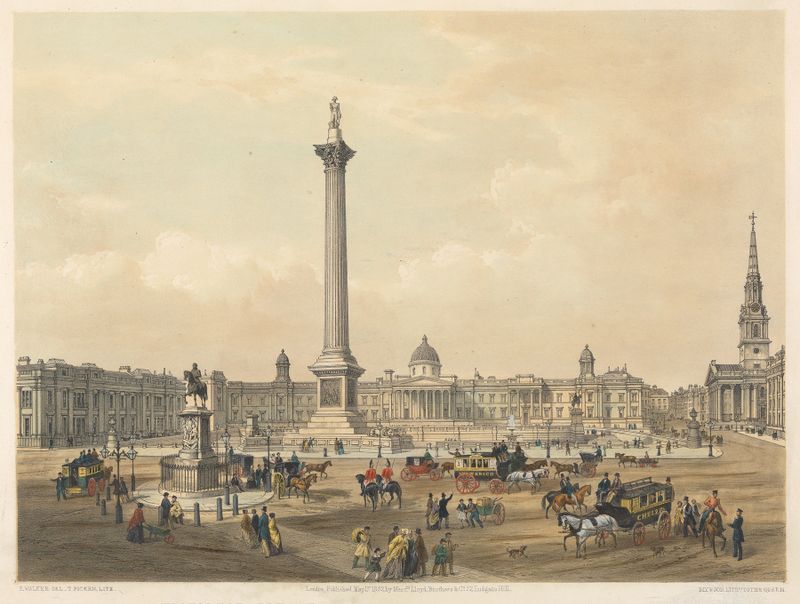
Trafalgar Square, with the National Gallery and St. Martin’s Church
Edmund Walker
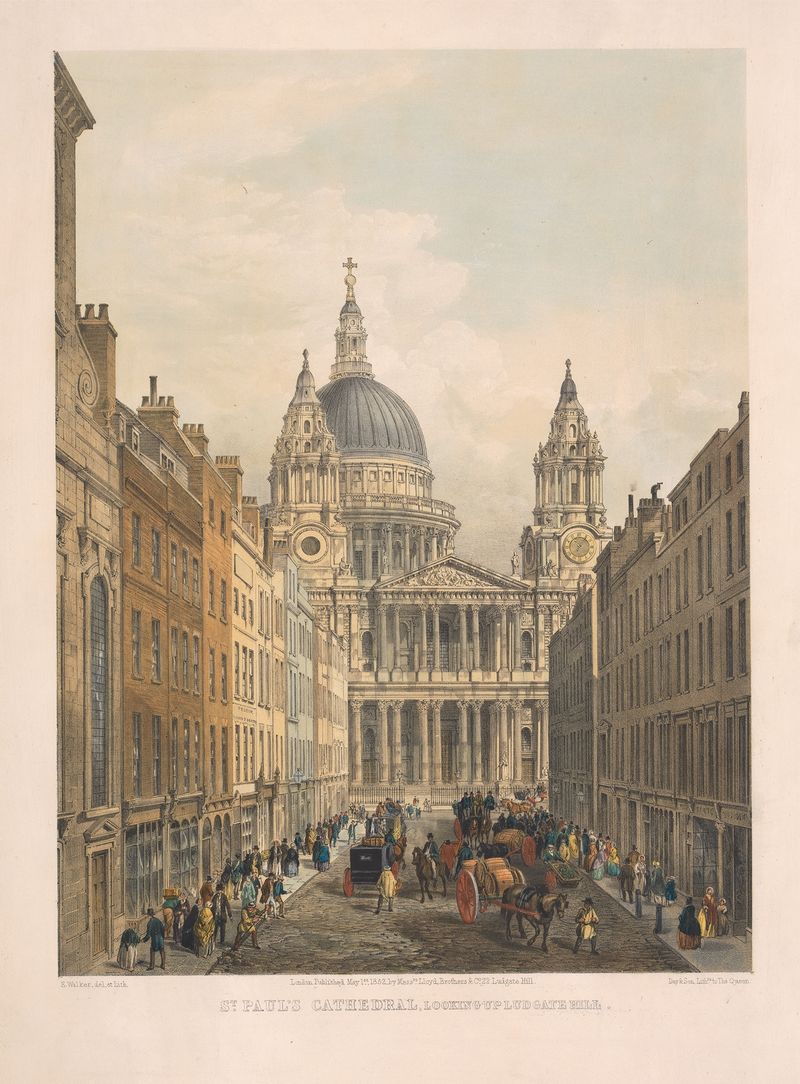
St. Paul’s Cathedral, looking up Ludgate Hill
Edmund Walker
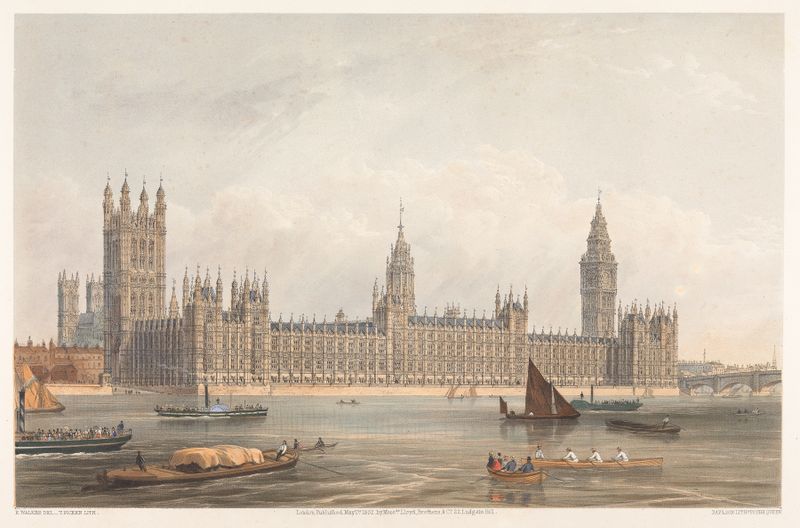
The New Houses of Parliament
Edmund Walker
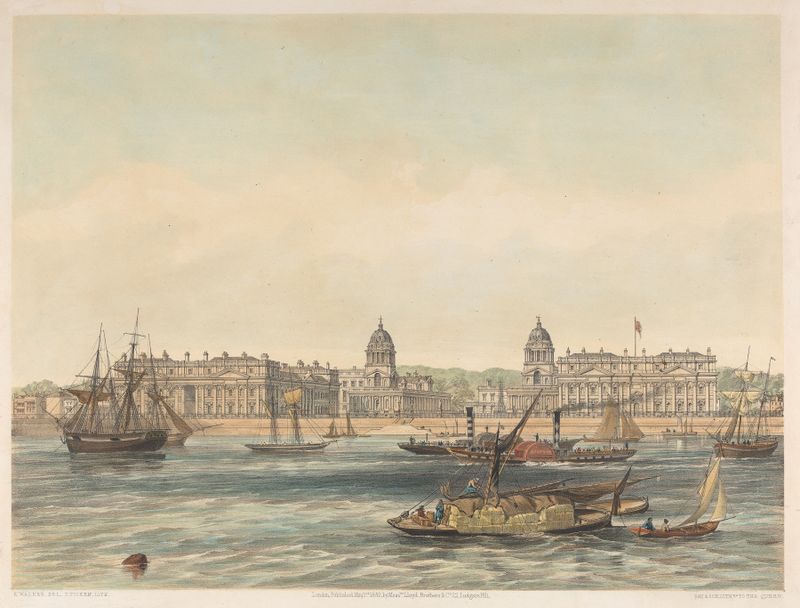
Greenwich Hospital
Edmund Walker
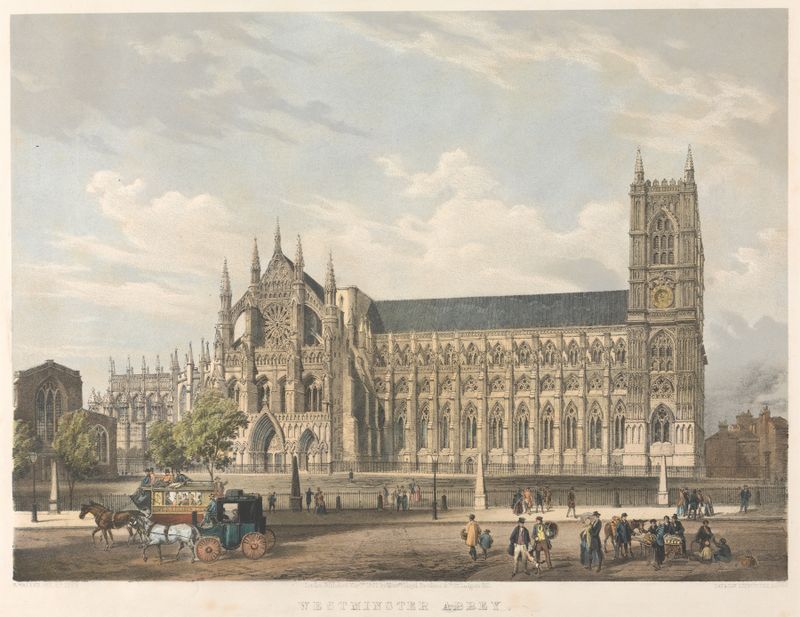
Westminster Abbey
Edmund Walker

London Bridge from above Bridge
Edmund Walker

The British Museum
Edmund Walker
More Architecture Art
Browse all →
The statue of Liberty
Frédéric Auguste Bartholdi

View of Houses in Delft, Known as ‘The Little Street’
Johannes Vermeer

View of Houses in Delft, Known as ‘The Little Street’
Johannes Vermeer

The Cathedral in Rouen. The portal, Grey Weather
Claude Monet

The yellow house
Vincent van Gogh

The Church in Auvers-sur-Oise, View from the Chevet
Vincent van Gogh