
By the River — History & Facts
In By the River, vibrant hues dance across the canvas, transforming the ordinary into the extraordinary. The interplay of color invites deeper reflection, echoing the whispers of nature’s serenity captured by the artist’s hand. Look to the left at the soft, dappled sunlight filtering through the leaves, creating an ethereal glow upon the water’s surface. Notice how the artist employs subtle greens and blues, blending them with warm browns to evoke a sense of harmony and balance.
The gentle curves of the river lead the eye through the composition, encouraging contemplation of the tranquil scene while drawing attention to the richly textured foliage that frames it. Beneath the calm exterior lies a tension between stability and transience. The fleeting moment captured in time suggests an intimacy with nature, where the river flows ceaselessly, yet the moment is frozen forever. The juxtaposition of the vibrant colors against the tranquil blues reflects both the vitality of life and the inevitable passage of time, prompting viewers to consider their own relationship with nature and the moments that define their existence. In the 1870s, when this piece was completed, Jean-Baptiste-Camille Corot was deeply entrenched in the Barbizon school movement, embracing plein air painting to evoke raw, natural beauty.
Living in France during a period of artistic transition, he sought to harmonize the natural world with emotional resonance, a theme that is palpably present in this work. Europe was grappling with both industrialization and the lingering influence of Romanticism, shaping Corot’s vision and his connection to the landscape before him.
More Artworks by Jean-Baptiste-Camille Corot
Browse all →
View of Genoa
Jean-Baptiste-Camille Corot
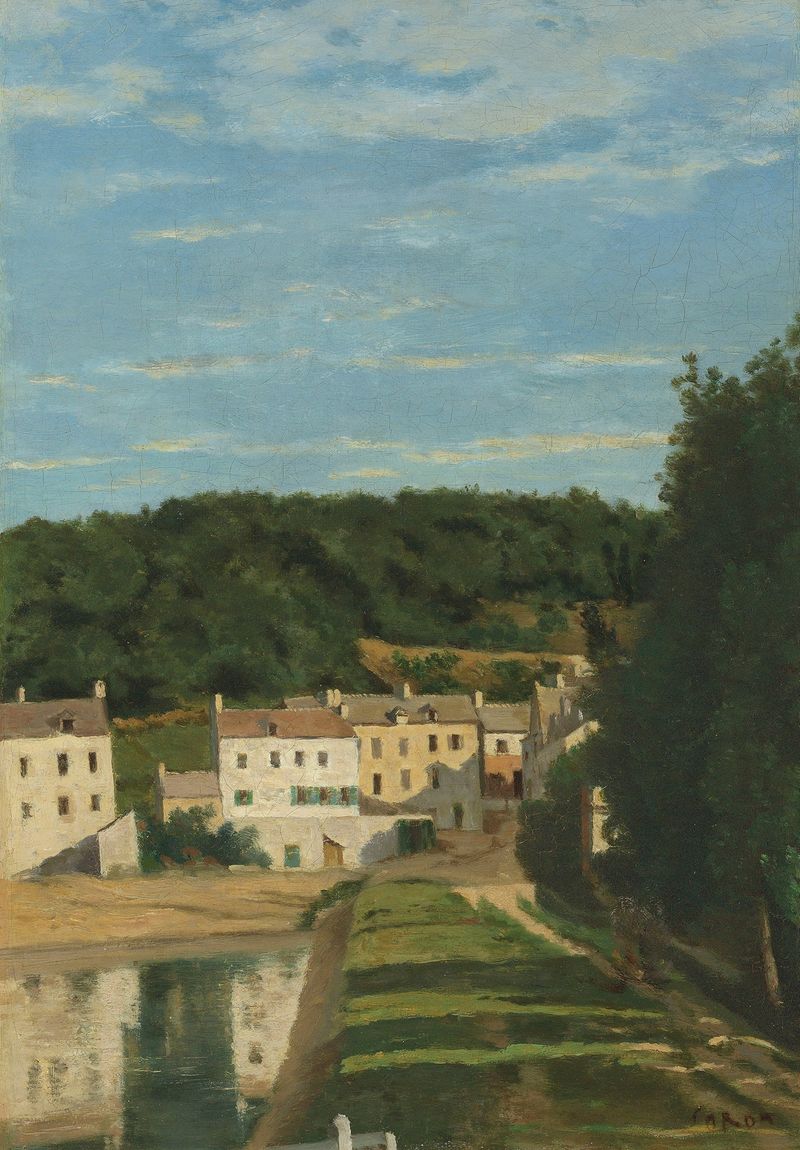
Les Maisons Cabassud À Ville D’avray
Jean-Baptiste-Camille Corot

La solitude. Souvenir de Vigen (Limousin)
Jean-Baptiste-Camille Corot
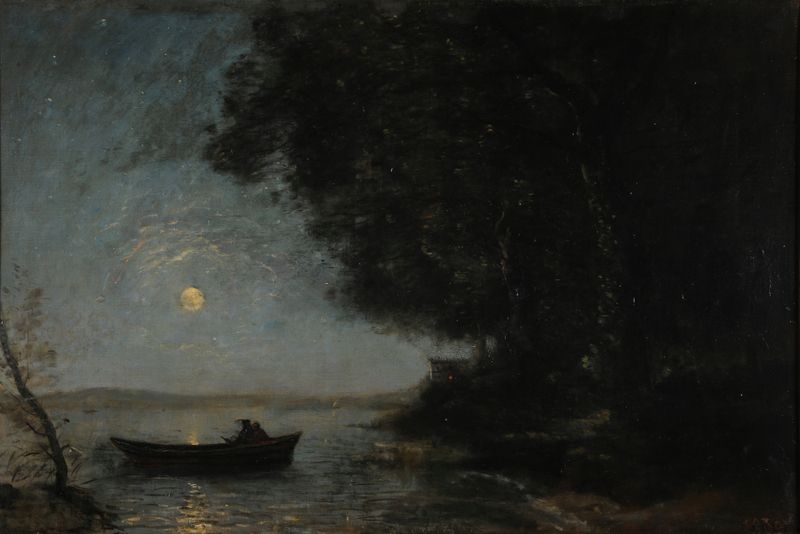
Le lac ; effet de nuit
Jean-Baptiste-Camille Corot
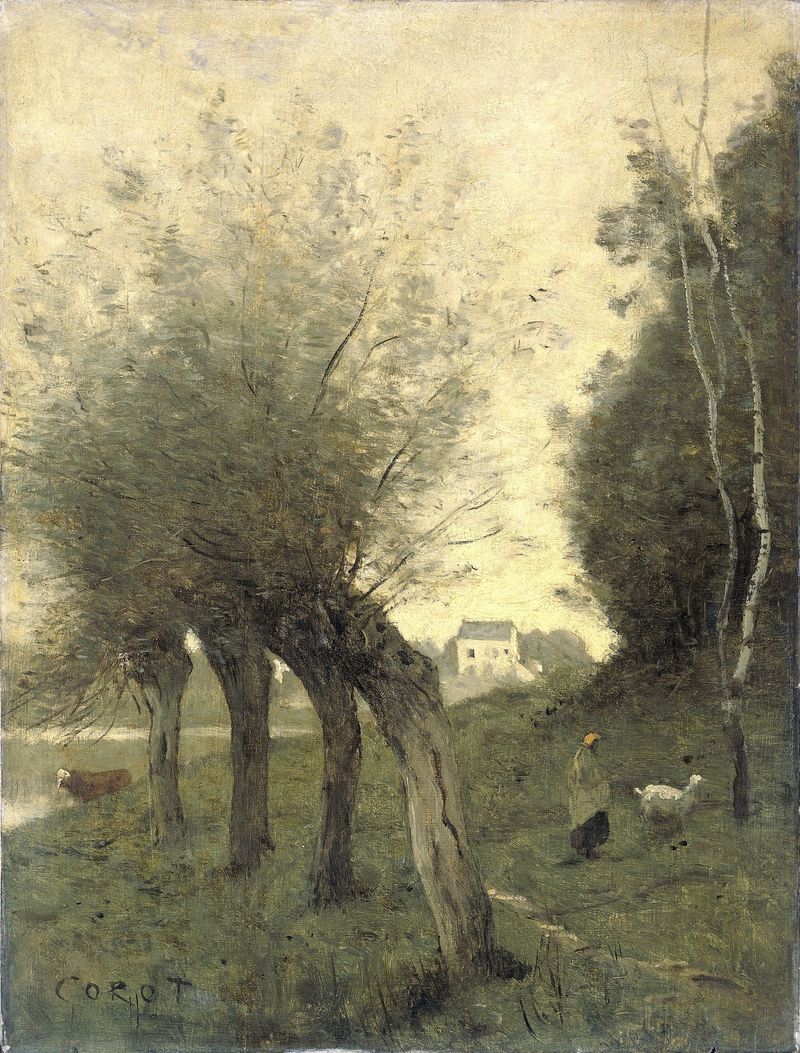
Landscape with Pollard Willows
Jean-Baptiste-Camille Corot
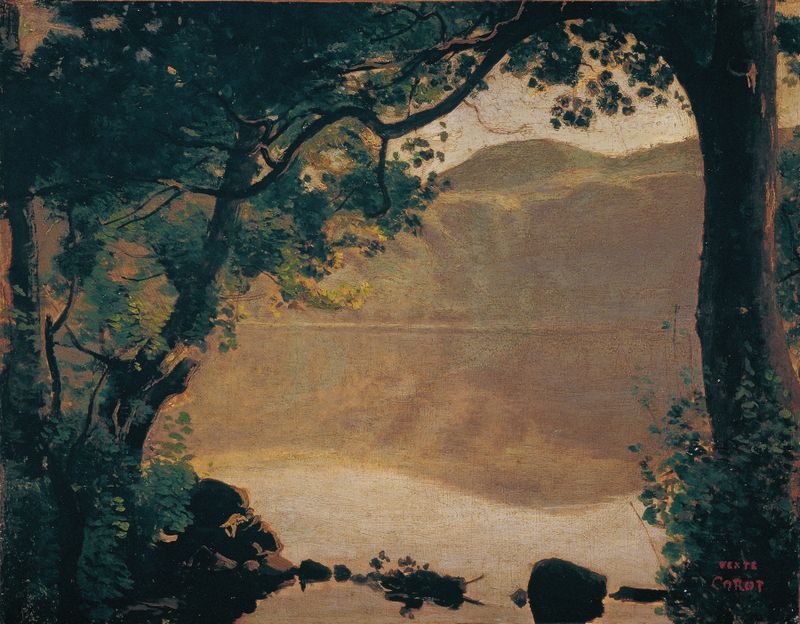
Der Nemisee
Jean-Baptiste-Camille Corot
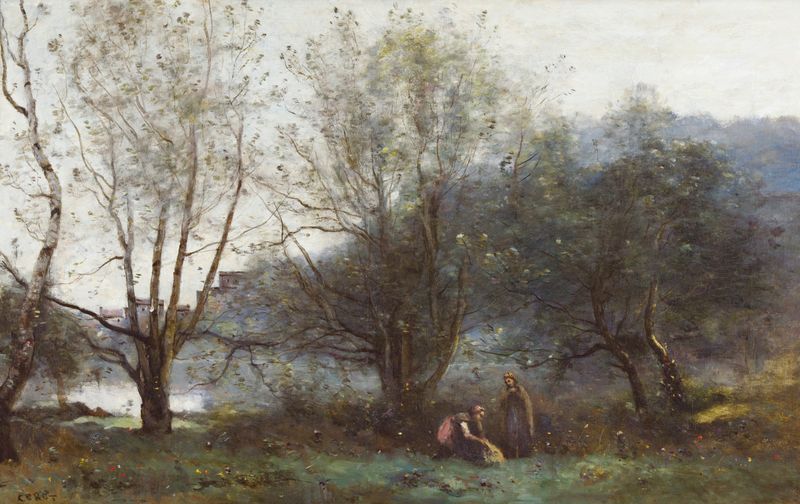
Les Étangs De Ville D’avray
Jean-Baptiste-Camille Corot
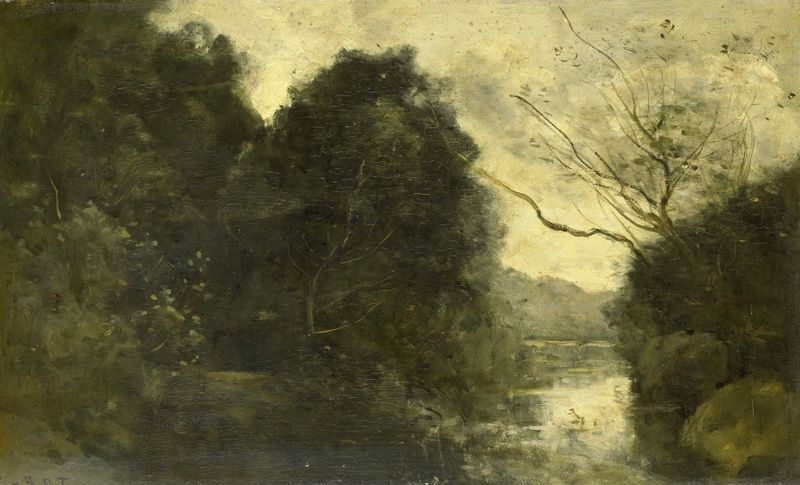
Pond in the Woods
Jean-Baptiste-Camille Corot
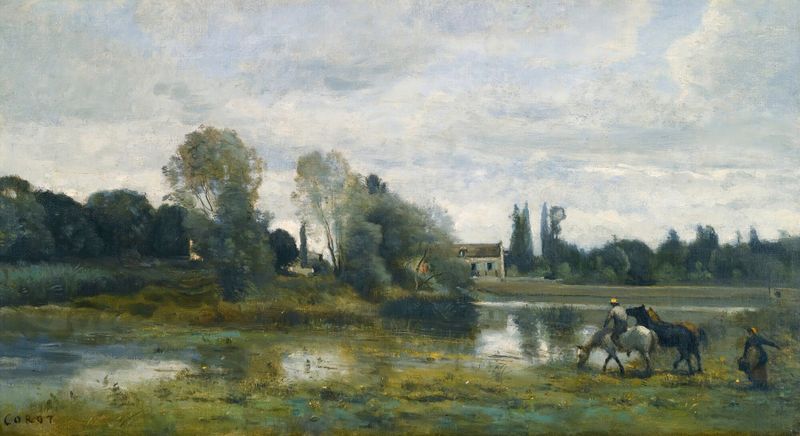
Ville D’avray; L’abreuvoir Des Chevaux
Jean-Baptiste-Camille Corot
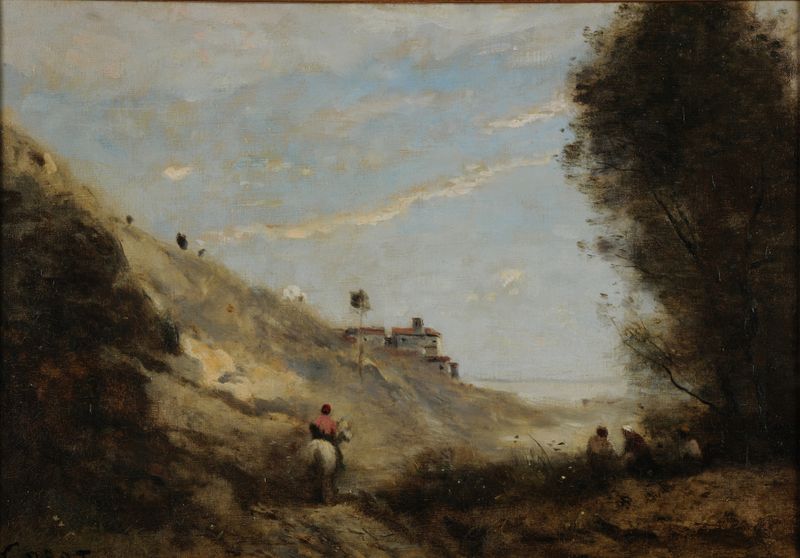
Le vallon au cavalier
Jean-Baptiste-Camille Corot





