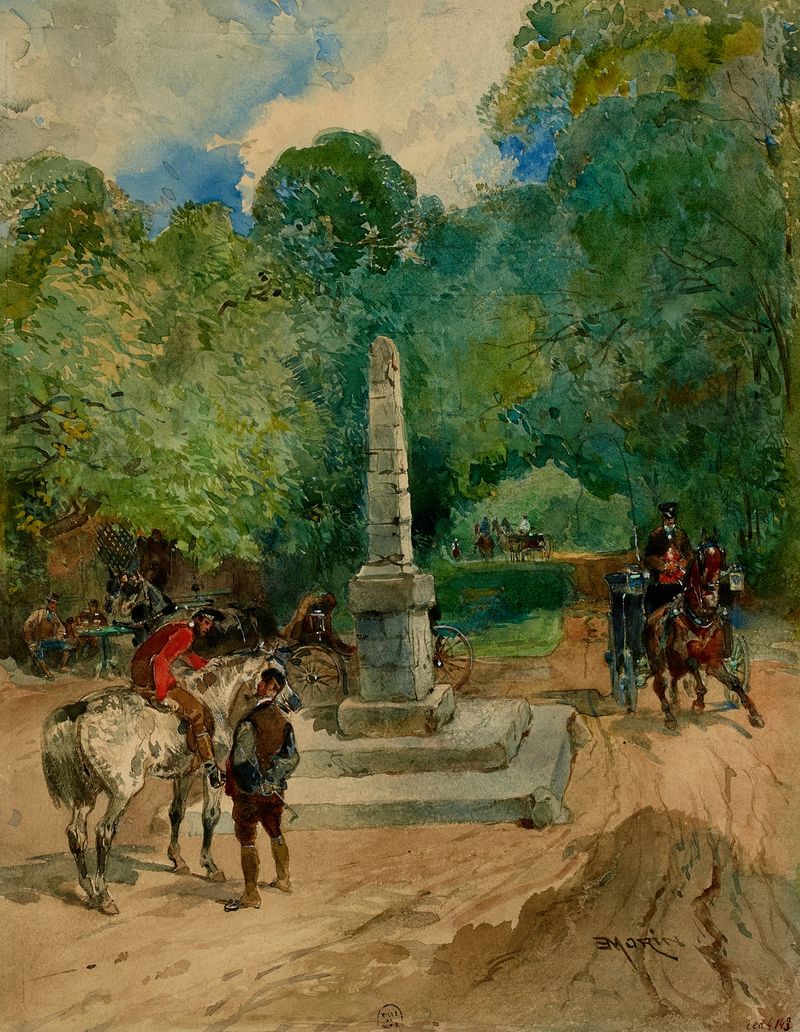
Calèches et soldats devant l’Opéra Garnier à Paris — History & Facts
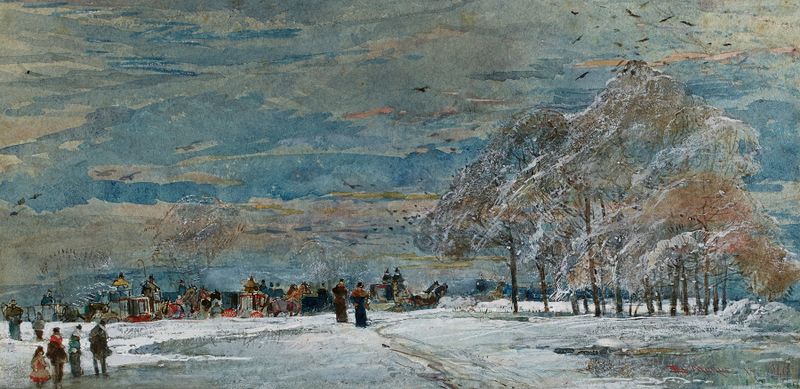
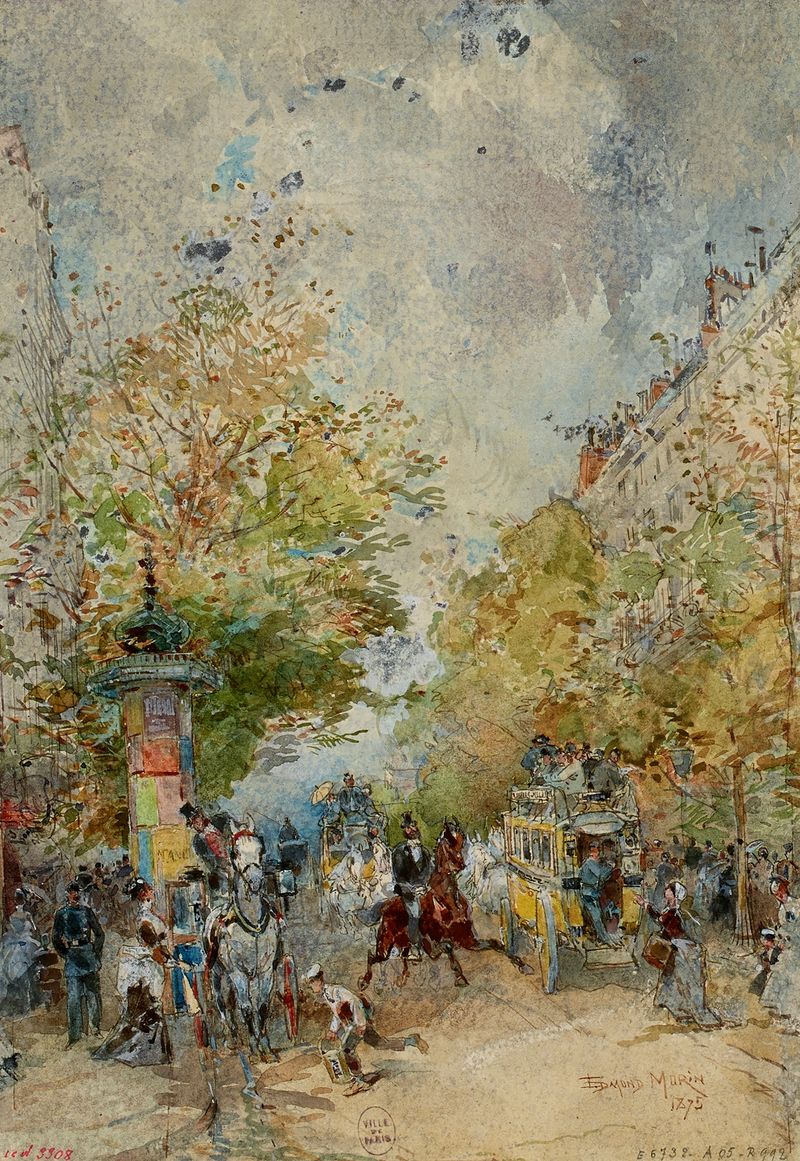
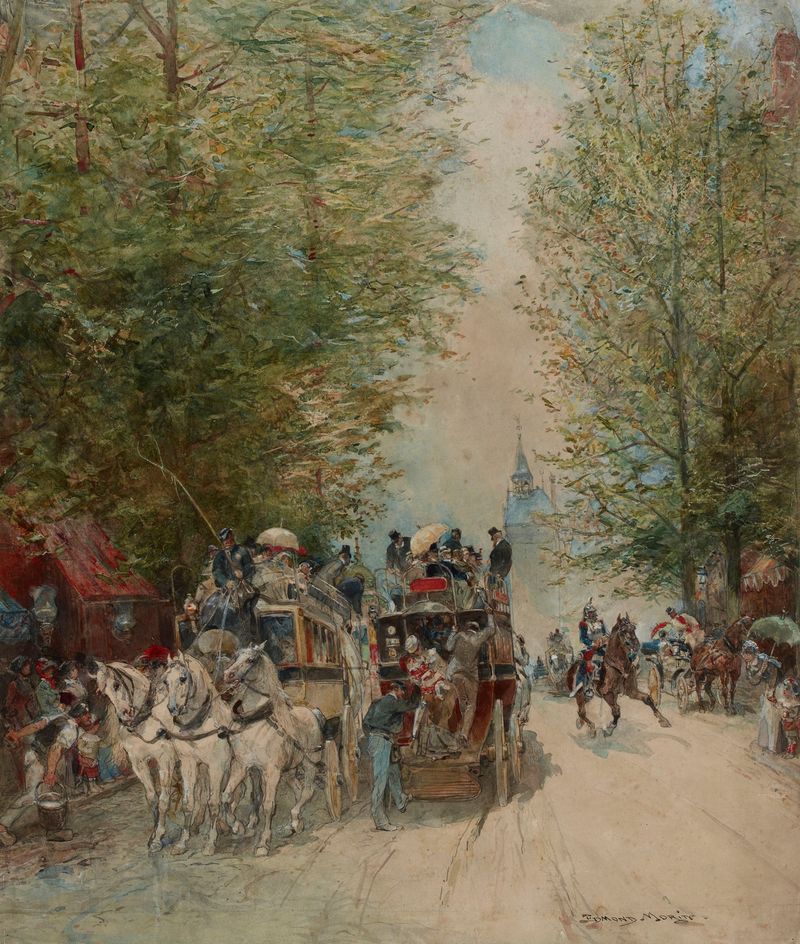
When did color learn to lie? In a world brimming with vibrant hues and the allure of the grand, the heart often aches for the truth hidden beneath the surface. Look to the left at the ornate façade of the Opéra Garnier, where intricate details intertwine with the bustling street life. The warm, golden tones of the building’s exterior seem to glow against the cooler shadows cast by the trees, inviting you to explore the scene. Notice how the carriages, in their deep reds and blues, cut through the muted backdrop, their wheels a blur of motion captured in time.
Each character, from the uniformed soldiers to elegantly dressed patrons, breathes life into the canvas, hinting at intersecting stories waiting to be told. Yet amidst the vivid colors and lively gestures lies a palpable tension. The soldiers, standing guard, evoke a sense of duty and restraint, contrasting with the carefree demeanor of the horse-drawn carriages. This dichotomy reveals a longing for connection, as the everyday hustle of life teeters on the edge of something deeper—a yearning for freedom amid societal constraints.
The play of light and shadow becomes a metaphor for the complexities of existence, where appearances can both illuminate and conceal. Edmond Morin painted this scene during a time when Paris was a hub of artistic innovation, although the exact date remains unknown. He was part of a dynamic community that sought to capture the essence of modern life through impressionistic techniques. With the Opéra Garnier symbolizing both cultural aspiration and social hierarchy, Morin’s work reflects the intricate relationship between art, society, and the historical moment he inhabited.