Scène de rue omnibus au Pont-au-Change — History & Facts
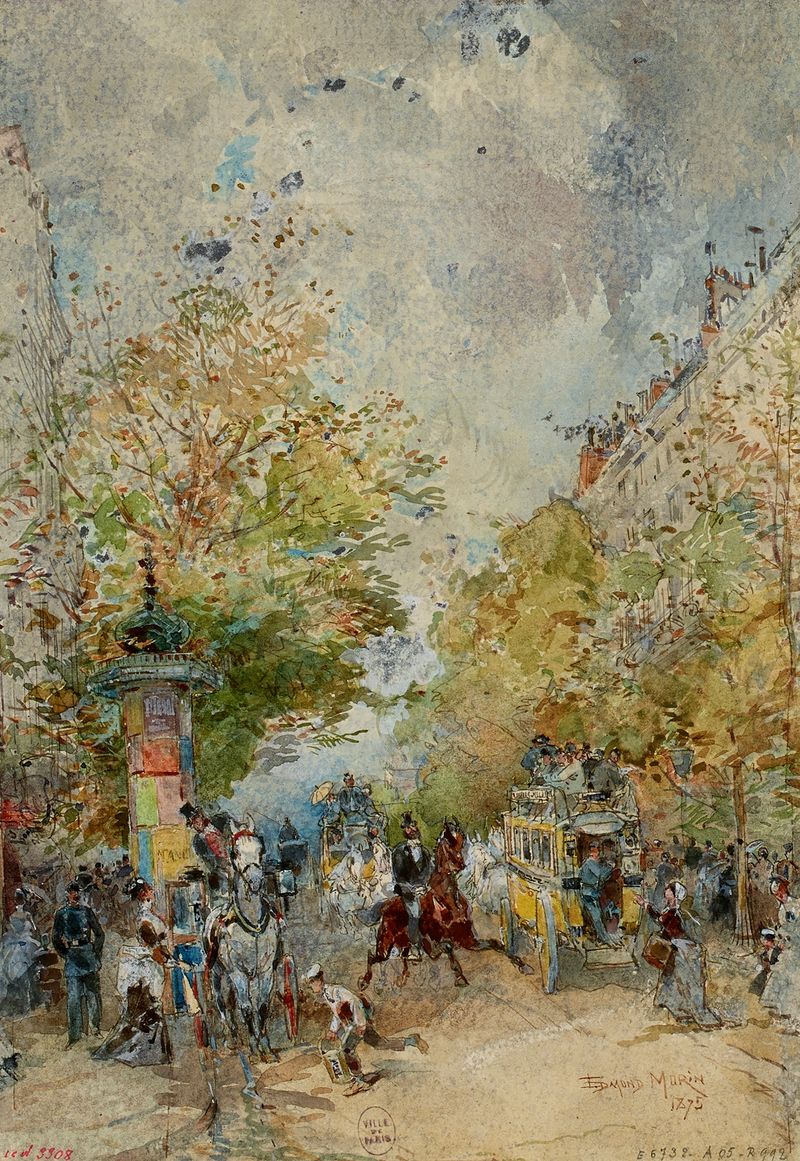
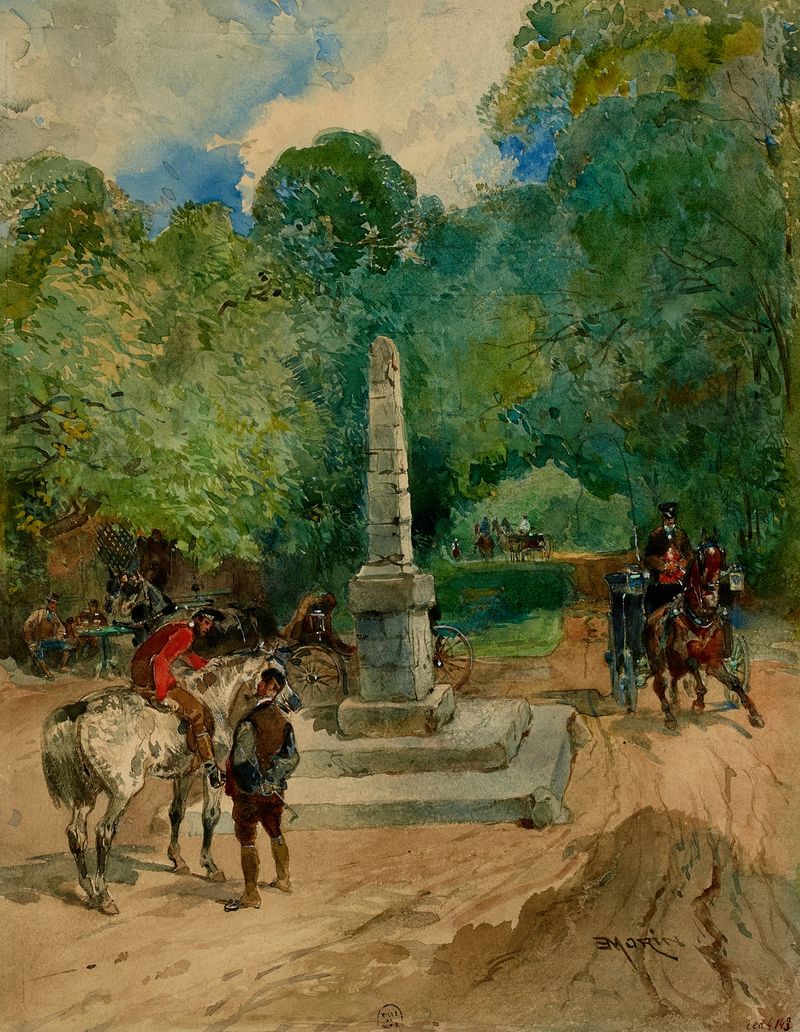
Did the painter know this moment would outlive them? The scene captured in Scène de rue omnibus au Pont-au-Change vibrates with the pulse of life, each brushstroke an echo of movement that transcends time. Focus on the bustling street, where figures meld with the omnibuses, their forms swaying in rhythm with the city's heartbeat. Notice how light dances across the scene, casting shadows that stretch with the afternoon sun, while vibrant color contrasts—the deep reds of a passing bus against the muted greys of the cobblestones—bring urgency to the moment. The composition invites the eye to wander, to feel the momentum of this lively Parisian thoroughfare. Yet, beneath the vivacity lies a profound tension.
Each character, caught in a moment of motion, embodies a story—a fleeting glance, a hurried step, a pause in conversation. The layered interactions hint at the clash between individual lives and the relentless pace of urban existence, underscoring both connection and isolation. The uprising of a city, celebrating life and struggle, reflects broader societal movements of the time, revealing the artist’s awareness of history unfolding around him. Edmond Morin painted this work amidst the tumult of the early 20th century, a period marked by both innovation and upheaval.
Between 1915 and 1945, Paris was a canvas of change—war, cultural shifts, and the rise of modernity shaped the artistic landscape. Morin’s keen observations of urban life and the dynamics of movement in Scène de rue omnibus au Pont-au-Change capture a moment that resonates with the chaos and beauty of his era, forever immortalized on canvas.