Canal bank — History & Facts
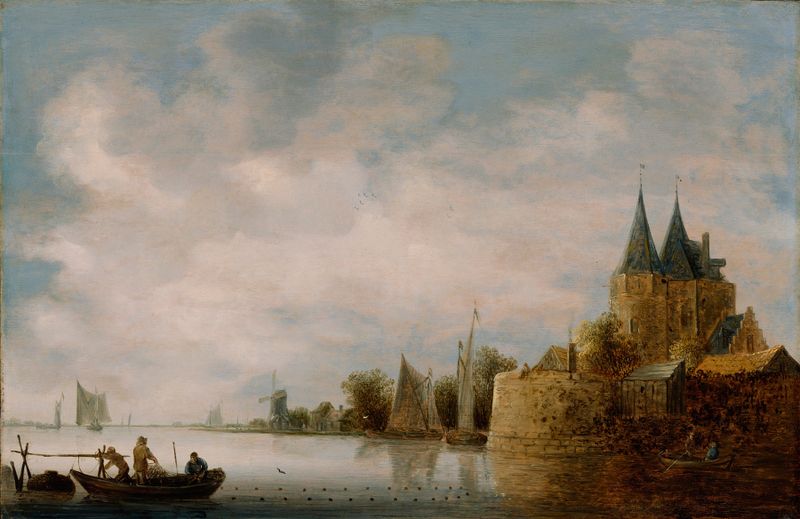
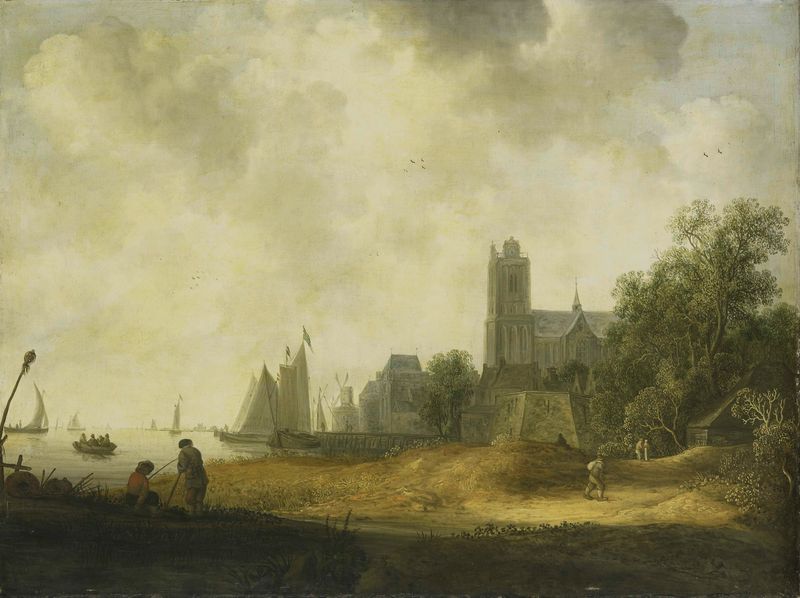
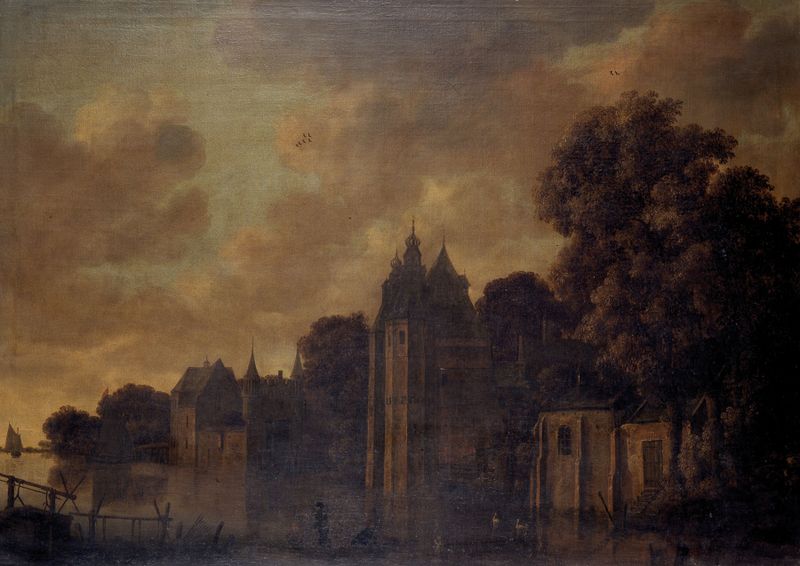
Did the painter know this moment would outlive them? In Canal bank, we encounter a slice of life that invites us to ponder the fleeting nature of existence, juxtaposed with the permanence of artistic expression. Focus your gaze on the left where a group of figures, seemingly lost in conversation, commands attention. The gentle ripples of the canal reflect the soft hues of twilight, bathing the scene in a warm glow. Notice how the artist captures the fluidity of water with masterful brushstrokes, its surface mirroring not just the sky but the subtle emotions of the characters.
The composition draws your eye in a circular motion, gracefully connecting the people, the water, and the surrounding nature, creating a harmonious yet intricate balance. A tension lies beneath this serene façade; each figure embodies a different emotion—joy, contemplation, and perhaps even madness. The juxtaposition of the lively interaction against the tranquil backdrop hints at the chaos of human experience, a delicate reminder that even moments of joy can harbor depths of despair. The rich blues and greens contrast with the earthy browns, evoking themes of both stability and transience, urging viewers to reflect on their own fleeting experiences. Wouter Knijff painted Canal bank in 1644 during the Dutch Golden Age, a period characterized by prosperity and artistic flourishing.
Living in a tumultuous time marked by social and political changes, he captured the essence of daily life, rivaling the grand historical narratives of his contemporaries. As a rising figure in the genre of landscape painting, he sought to immortalize the simple yet profound moments that define our human experience.