Fortified Town on a River — History & Facts
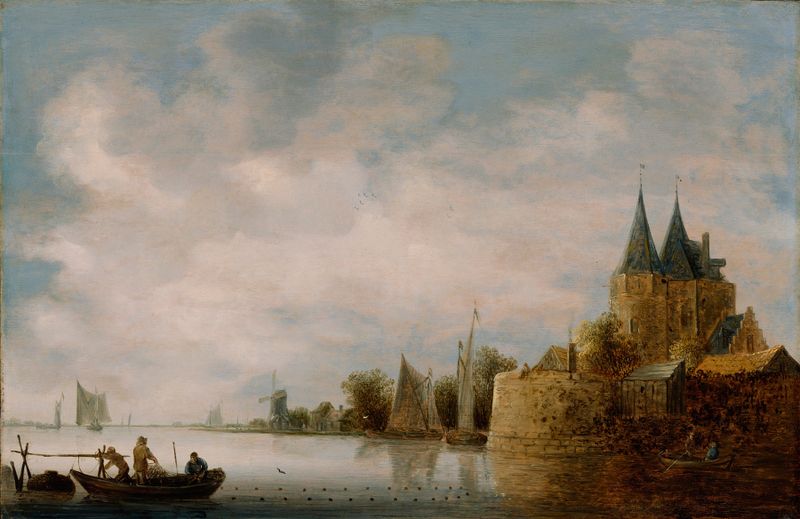
In the delicate interplay of hues and shadows, memories linger, echoing the past within the layers of paint. Focus first on the fortified walls that rise robustly in the foreground, acting as sentinels guarding the tranquil river. Notice how the artist employs a soft palette, with earthy browns and greens blending into the serene blues of the water. The intricate details of the town’s architecture draw the eye, while the gentle strokes of the landscape convey a sense of peace juxtaposed with the stronghold’s stark presence. Upon deeper inspection, you may discover subtle contrasts in the artwork.
The river, a symbol of life and flow, juxtaposes the rigidity of the fortifications, hinting at the tension between nature and human endeavor. Additionally, the distant mountains envelop the scene, suggesting both isolation and protection, while the stillness of the water reflects a moment frozen in time, inviting contemplation of what once was. Wouter Knijff created this piece in the 17th century, a time when Europe was grappling with political turmoil and the rise of fortified cities. Working in the Dutch Republic, he was influenced by the emerging genre of landscape painting, which celebrated the beauty of the natural world while often referencing human intervention.
This artwork stands as a testament to both the era’s artistic advancements and the enduring legacy of memory enshrined within its painted confines.