View of the North Port at Hoorn — History & Facts
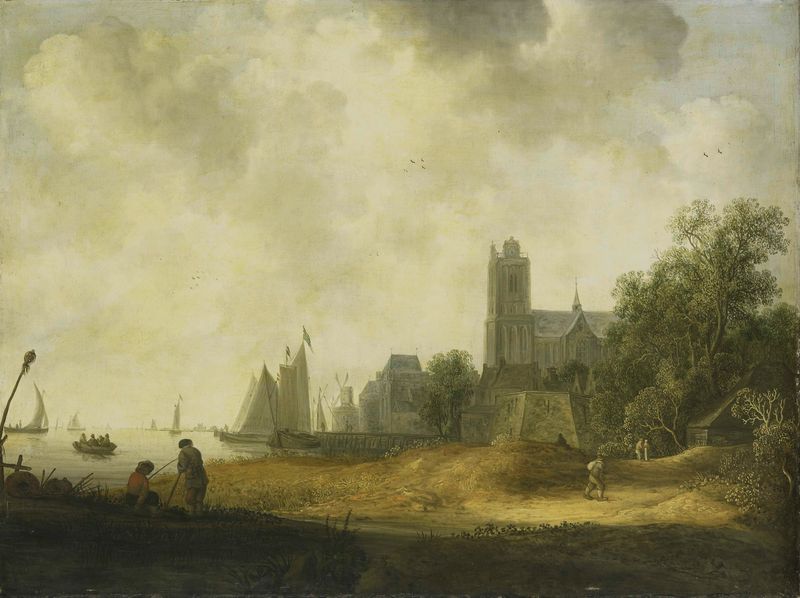
Could a single brushstroke hold eternity? In View of the North Port at Hoorn, the fleeting moments of life intertwine with the permanence of the landscape, inviting contemplation on our mortality amidst the ever-changing world. Look to the left at the placid waters, where gentle ripples dance in the sunlight, their shimmer captivating the viewer's gaze. The soft blues and greens dominate the palette, contrasting with the warm golden hues of the buildings that rise majestically from the shore. Notice how the artist employs a delicate touch to illustrate the billowing sails of the boats, their sails taut against the breeze, creating a sense of movement that breathes life into the scene.
Each stroke feels intentional, guiding the eye to the harmonious blend of nature and architecture. As you delve deeper, reflect on the juxtaposition of the vibrant activity by the port and the stillness of the distant horizon. The fishermen and merchants bustle with purpose, yet the looming clouds hint at a transient existence, a reminder of nature's dominion over human endeavors. The painting captures a moment in time, but it also whispers of impermanence, evoking questions about what we leave behind as we navigate the currents of life. In 1648, Wouter Knijff crafted this piece during a time of burgeoning maritime trade in the Netherlands.
The economy was flourishing, and artists were increasingly focusing on landscapes that celebrated both the beauty of nature and human achievement. Knijff's work reflects this cultural shift, as the North Port at Hoorn stands as a testament to the interplay of life, commerce, and the ephemeral nature of existence.