View of Dordrecht — History & Facts
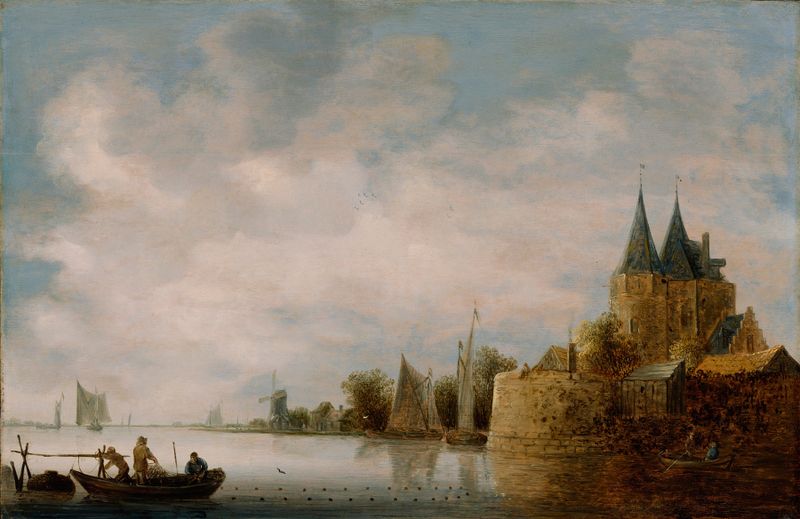
Could a single brushstroke hold eternity? In the gentle embrace of Wouter Knijff's View of Dordrecht, a moment suspended in time speaks to the heart's deep melancholy, revealing layers of emotion within the shimmering landscape. Look closely at the horizon where the sky meets the water, a delicate blend of soft blues and grays. The ethereal clouds curl lazily overhead, their reflections rippling on the tranquil surface below. Notice how the light dances across the scene, illuminating the houses that line the riverbanks, each one a silent witness to the unfolding story of a city caught in both beauty and transience.
The subtle play of light and shadow reveals the artist's skillful hand, inviting you deeper into this serene yet poignant panorama. As you explore this work, consider the contrast between the fleeting cloud formations and the steadfast buildings. The transient nature of the clouds embodies the essence of time, while the sturdy structures symbolize the persistence of memory and place. The stillness of the scene is filled with an unspoken sadness, evoking the passing of time and the inevitable changes that come with it.
Each element in the painting contributes to an overarching sense of longing, as if the landscape yearns for the vibrancy of lives once lived within it. In 1643, Knijff painted this piece in the backdrop of a flourishing Dutch Golden Age, a time marked by advancements in trade and artistic expression. The artist captured Dordrecht, a vital port city, during a period of economic prosperity, juxtaposing its lively past with the serene stillness of the present. His work reflects not just the environment around him, but also the intricate dance of life, memory, and the passing of time that resonated deeply in both his life and the collective consciousness of his era.