
Canal en Hollande — History & Facts
Can beauty exist without sorrow? In the serene embrace of nature, Canal en Hollande invites us to ponder the bittersweet essence of existence, where divine landscapes coexist with profound emotional depths. Look to the center, where the gentle curve of the canal captures your gaze, guiding it through sublime reflections of the sky above. The soft pastels of dawn mingle with deeper blues, creating a harmonious palette that breathes life into the scene. Notice how the light dances across the water's surface, illuminating the edges of the boats moored peacefully.
The brushstrokes are loose yet intentional, lending an air of spontaneity that speaks to the fleeting moments of beauty in everyday life. As you delve deeper, consider the juxtaposition of tranquility and the undercurrents of melancholy. The stillness of the water belies the impending rush of time, suggesting that these moments, however lovely, are ephemeral. The distant figures along the banks evoke a sense of isolation, hinting at the longing that often accompanies beauty.
Each detail becomes a reminder that even in the most picturesque scenes, sorrow can lurk close, enriching our appreciation for the divine. In 1875, Johan Barthold Jongkind painted this work while living in France, amidst the rise of Impressionism. This period marked a shift in artistic expression, as artists began to focus on capturing light and atmosphere rather than strict realism. Jongkind, often considered a precursor to the movement, was influenced by both Dutch landscapes and French techniques, forging a unique path that sought to reveal the emotional truths hidden within nature.
More Artworks by Johan Barthold Jongkind
Browse all →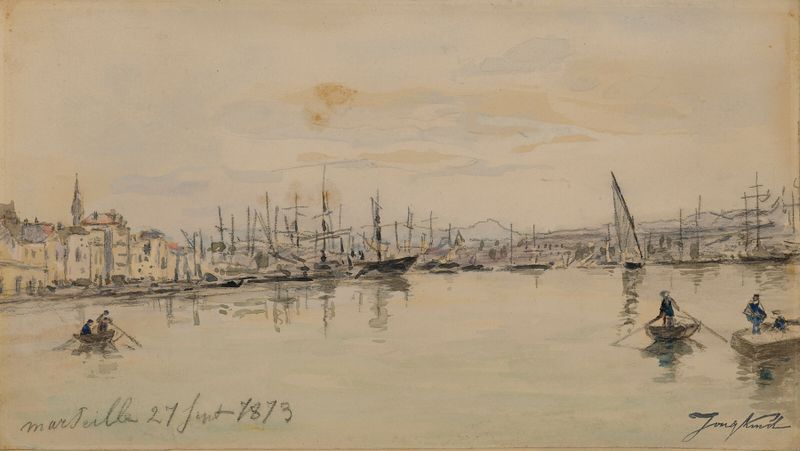
Le Port de Marseille
Johan Barthold Jongkind

Canal Saint-Martin
Johan Barthold Jongkind

Countryside near Brezins, between Grenoble and Vienne
Johan Barthold Jongkind

Notre-Dame vue du quai de la Tournelle
Johan Barthold Jongkind

Environs de Grenoble
Johan Barthold Jongkind

Clair de lune à Overschie (environs de Rotterdam)
Johan Barthold Jongkind

Port de Honfleur
Johan Barthold Jongkind
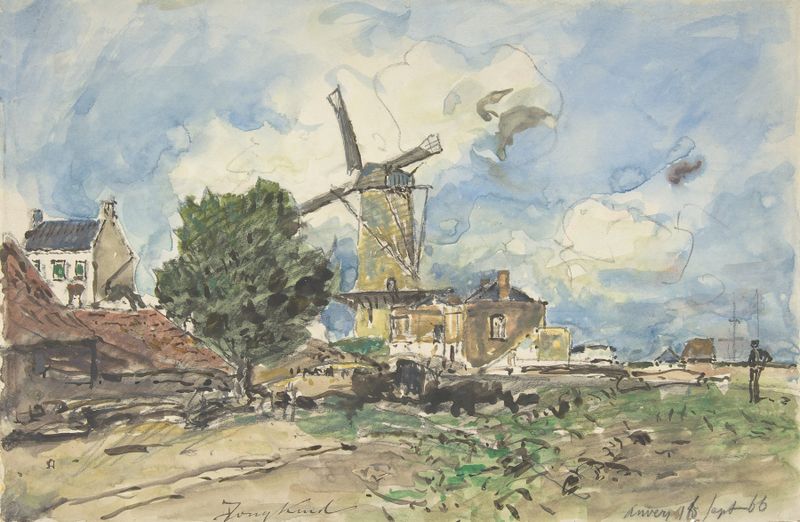
Wind Mill at Antwerp
Johan Barthold Jongkind

Le Havre
Johan Barthold Jongkind

The Church of Overschie
Johan Barthold Jongkind





