
Die Casa de Meleagro in Pompeji — History & Facts
Did the painter know this moment would outlive them? In Die Casa de Meleagro in Pompeji, a connection between the past and present unfolds, inviting contemplation on the inexorable passage of time. Look to the foreground, where the ruins of a once-grand structure emerge from the soft, sunlit haze. The artist employs delicate brushwork to depict crumbling walls adorned with fragments of ancient mosaics, their colors still vibrant against the muted earth tones. The interplay of light and shadow accentuates the textures of stone, eliciting a sense of nostalgia for a world lost to the ages.
Notice how Werner composes the scene, guiding the viewer's gaze upwards, as if beckoning us to witness the upper remnants of the dwelling reaching towards a cloud-streaked sky. Beneath this serene beauty lies a poignant tension: the juxtaposition of decay and resilience. The ruins stand testament not only to human achievement but also to its fragility, a reminder that even grandeur is subject to the relentless march of time. The stillness of the landscape invites reflection on the stories embedded within the stones, the lives that once thrived here, now echoing only in silence and memory. In 1839, while creating this piece, the artist was immersed in the Romantic fascination with history and nature.
Working in Germany, he sought to convey the sublime qualities of ancient civilization, a period marked by a renewed interest in classical themes and archaeological discoveries. This painting emerged amidst a surge of archaeological enthusiasm, tapping into the collective reverence for the past, even as the modern world began to surge forward.
More Artworks by Carl Friedrich Heinrich Werner
Browse all →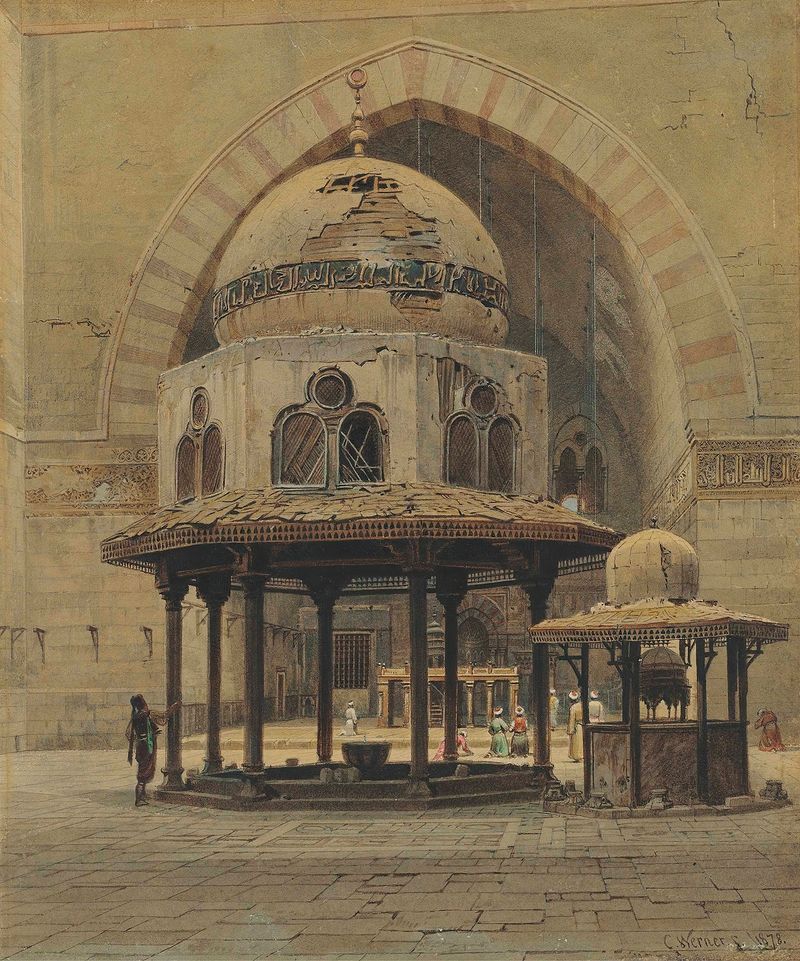
Mosque of Sultan Hassan, Cairo
Carl Friedrich Heinrich Werner
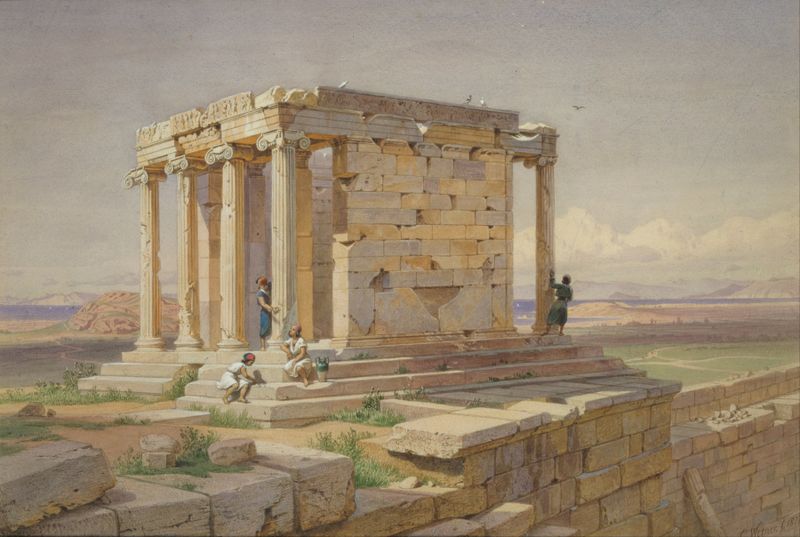
The Temple of Athena Nike. View from the North-East
Carl Friedrich Heinrich Werner
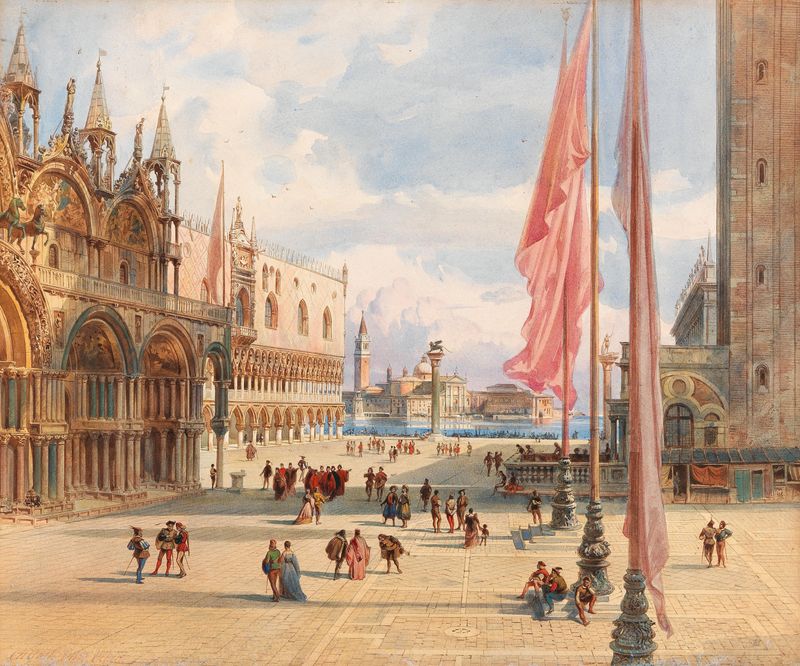
Marcus Square In Venice
Carl Friedrich Heinrich Werner

Canal Grande and Rialto Bridge
Carl Friedrich Heinrich Werner
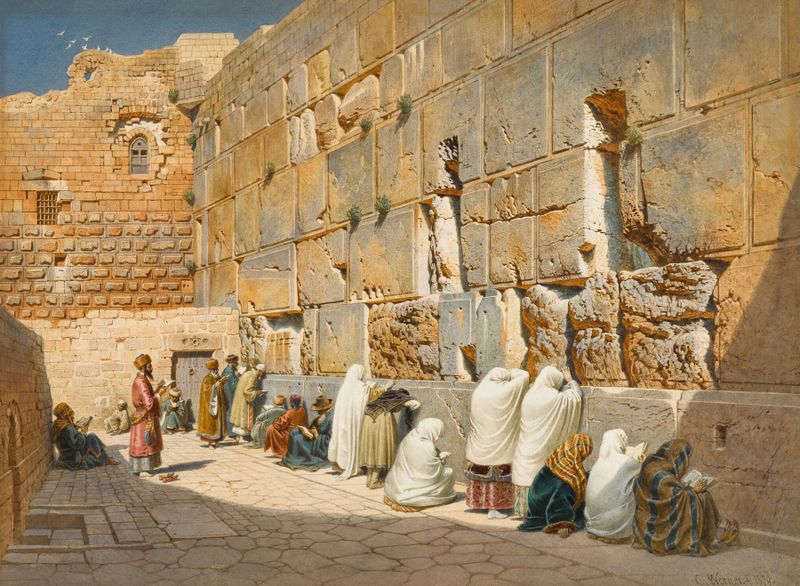
The Wailing Wall, Jerusalem
Carl Friedrich Heinrich Werner
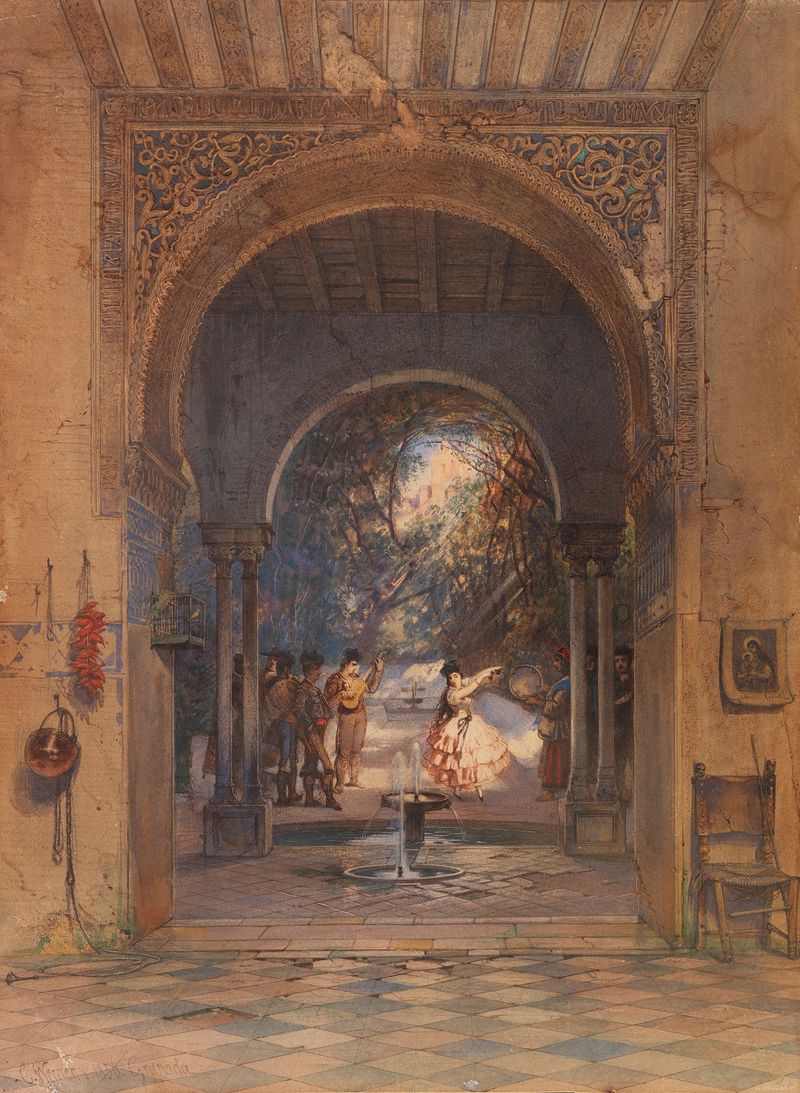
Kastagnettentänzerin in der Alhambra in Granada
Carl Friedrich Heinrich Werner
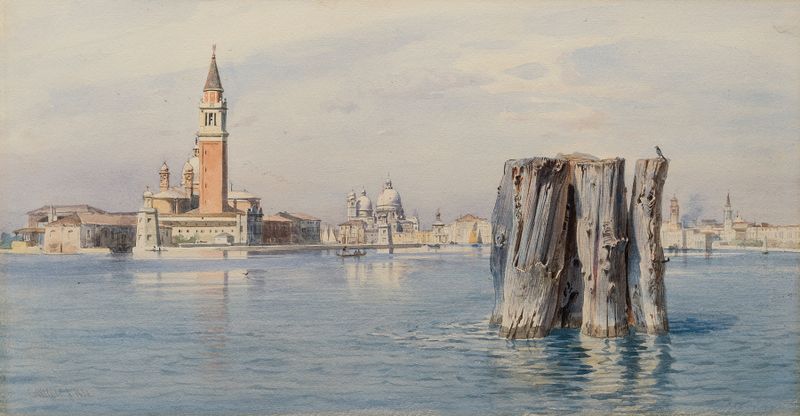
Ansicht von San Giorgio Maggiore und Santa Maria della Salute in Venedig
Carl Friedrich Heinrich Werner
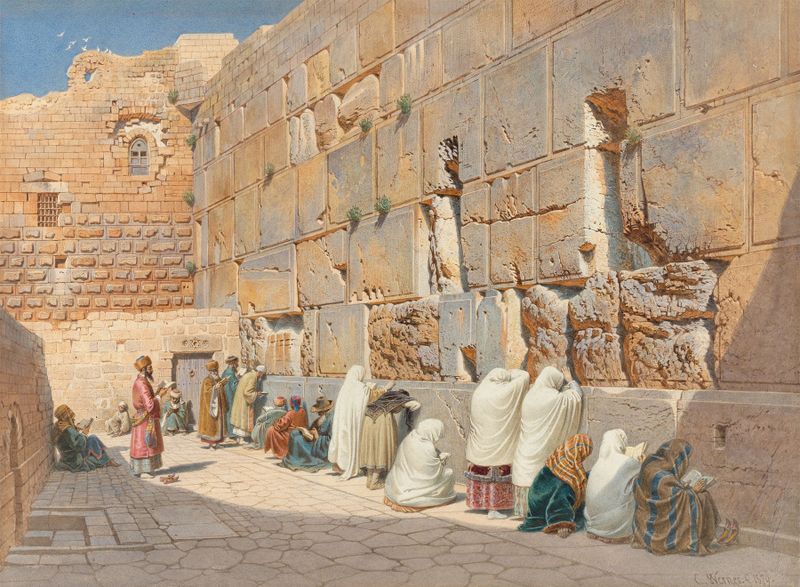
The Wailing Wall in Jerusalem
Carl Friedrich Heinrich Werner
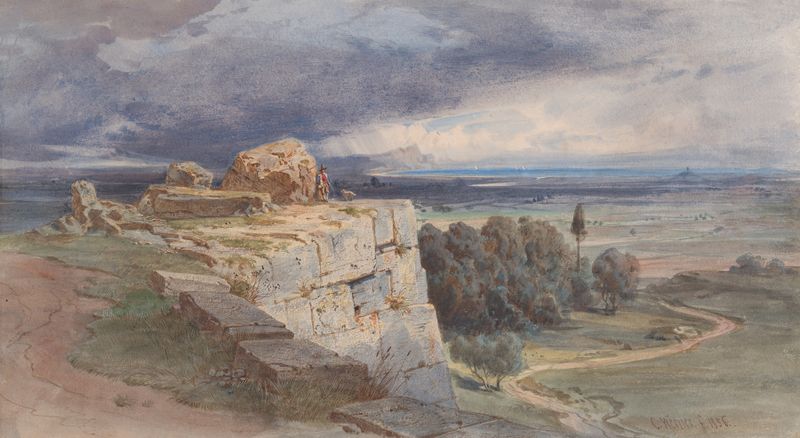
View of Norba from the North, towards San Felice Circeo
Carl Friedrich Heinrich Werner
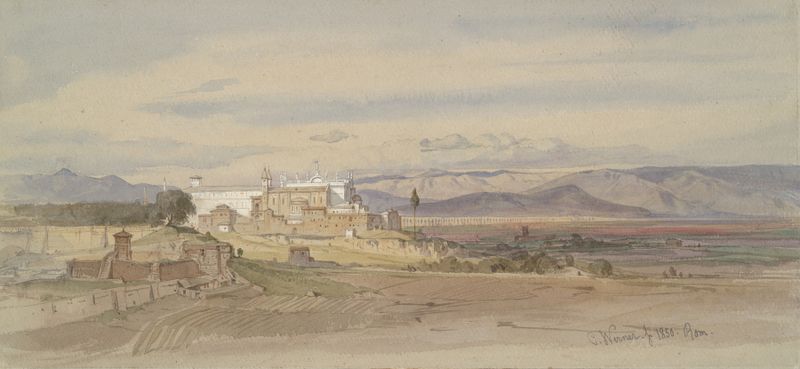
Roman Landscape with San Giovanni in Laterano
Carl Friedrich Heinrich Werner
More Architecture Art
Browse all →
The statue of Liberty
Frédéric Auguste Bartholdi

View of Houses in Delft, Known as ‘The Little Street’
Johannes Vermeer

View of Houses in Delft, Known as ‘The Little Street’
Johannes Vermeer

The Cathedral in Rouen. The portal, Grey Weather
Claude Monet

The yellow house
Vincent van Gogh

The Church in Auvers-sur-Oise, View from the Chevet
Vincent van Gogh