
Caravan at the gates of Constantinople — History & Facts
The eye is first caught by the crisp geometry of tents, their pale greens and yellows echoing the sun-bleached walls behind them, as if the city itself had spilled out onto the dusty plain. In Caravan at the gates of Constantinople, the painter leads us not to a moment of drama, but to a pause: horses and camels stand tethered, their shadows sharp in the morning light, while figures in loose robes go about the unhurried rituals of arrival. The low horizon grants the sky a commanding presence, making the domes and minarets of the city rise like a promise in the distance.
Every gesture is purposeful—the man seated by the tent, the merchant adjusting a load, the animals calmly feeding—each detail a quiet signal of the rhythms of travel and trade. Painted in 1881 by Alberto Pasini, this work belongs to the world of late nineteenth-century Orientalism, when European artists, fascinated by the Ottoman Empire and the lands beyond, sought to capture scenes both exotic and everyday. Such paintings were often commissioned by collectors eager for glimpses of distant places, their accuracy filtered through Western eyes. Pasini, known for his travels and sharp observation, brings a sense of order and clarity to the bustling threshold of Constantinople, a city then at the crossroads of empires and commerce.
History has kept few traces of this specific canvas, now in the ponteonline.com collection, but its calm surface invites us to linger—imagining the stories that gathered at the city’s edge, beneath the vast blue sky.
More Artworks by Alberto Pasini

Mercato in Oriente
Alberto Pasini
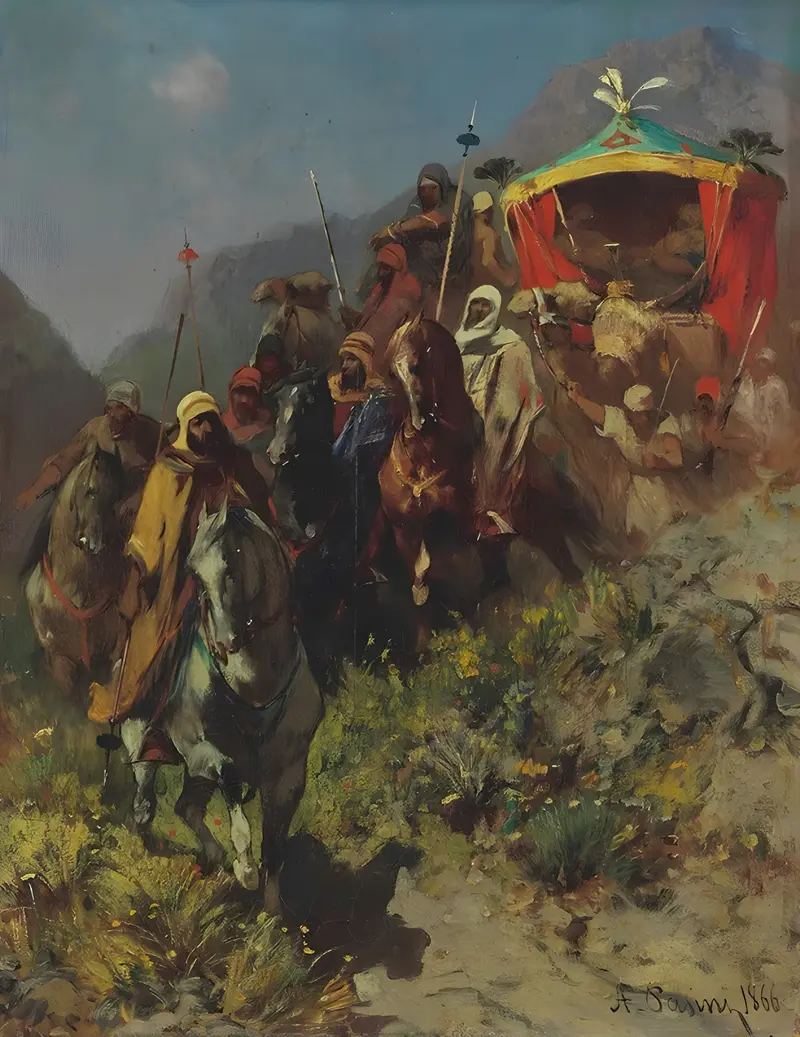
A Caravan on a Mountain Pass
Alberto Pasini

The blacksmith’s shop
Alberto Pasini
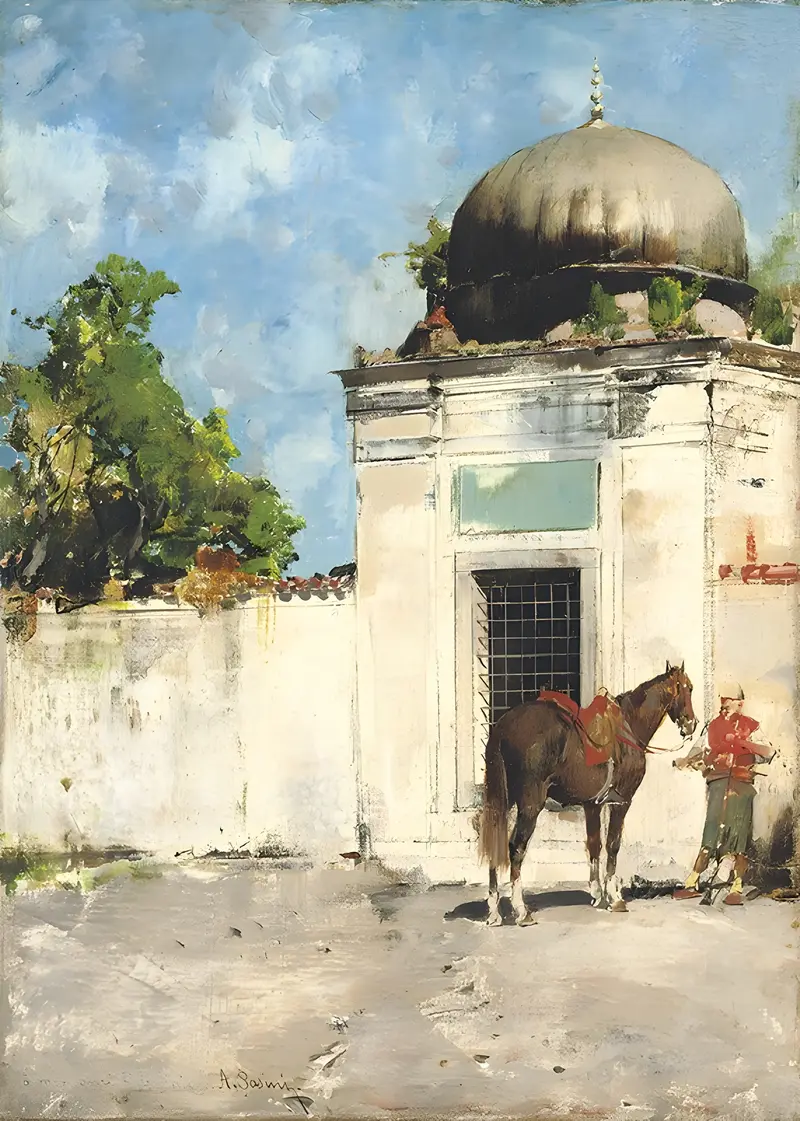
The Sentinel
Alberto Pasini
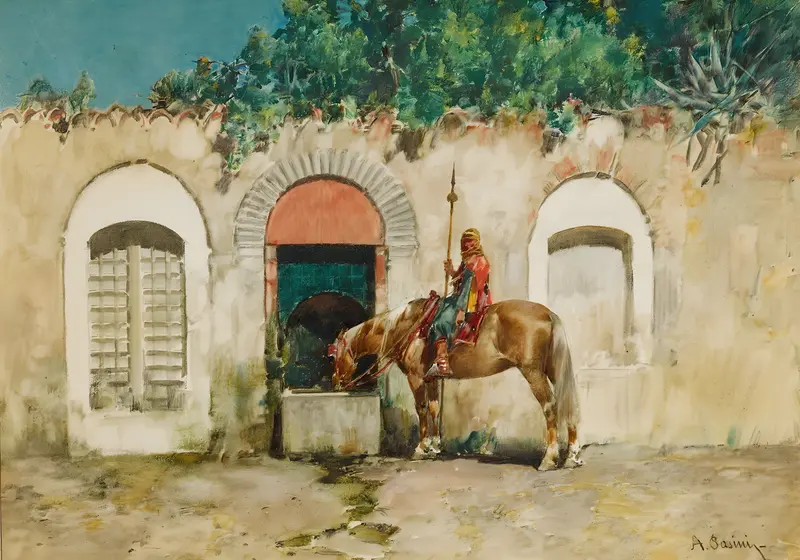
Horseman At A Fountain
Alberto Pasini
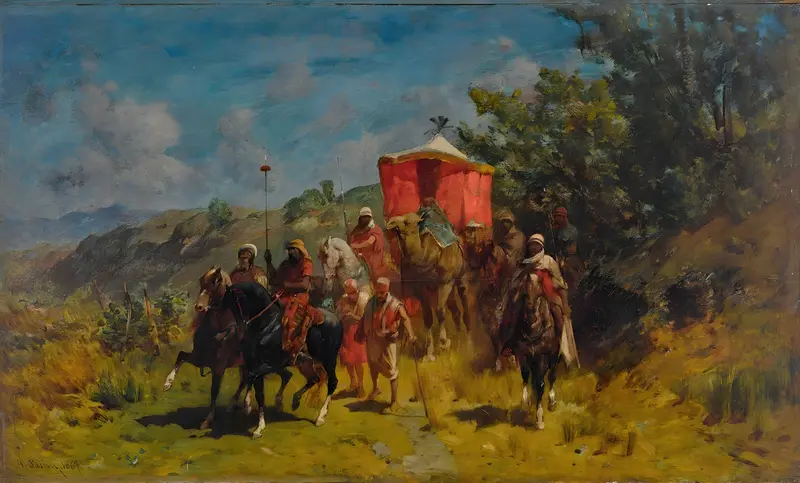
An Arab Caravan
Alberto Pasini
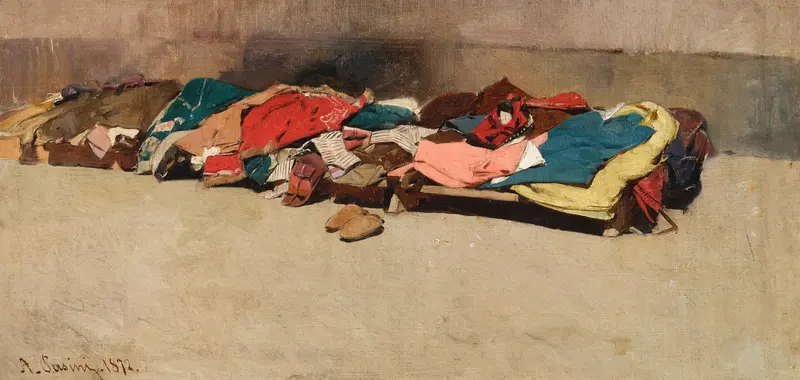
Mercato
Alberto Pasini
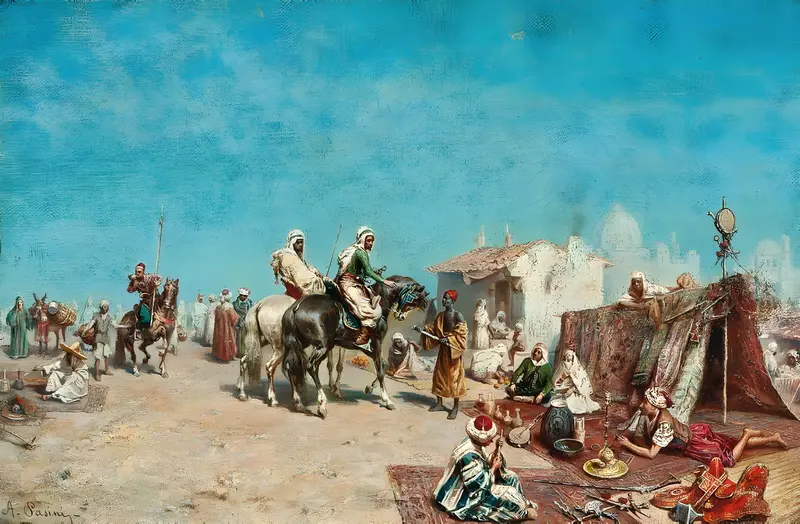
Arab merchants at a market by the city walls
Alberto Pasini
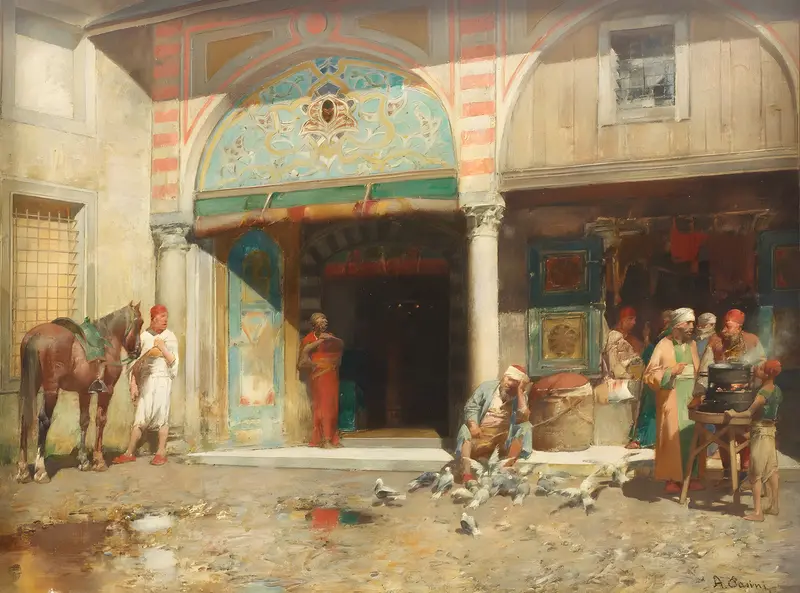
Outside the mosque
Alberto Pasini
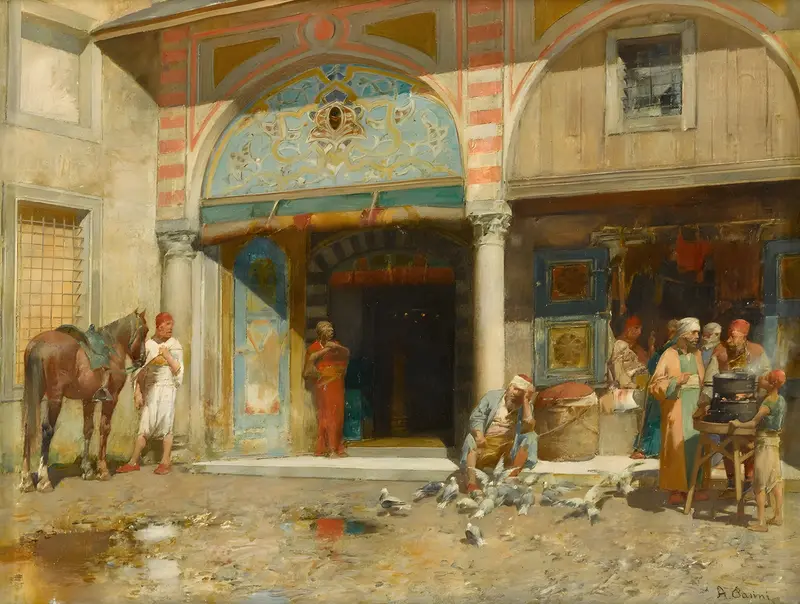
Outside the Mosque
Alberto Pasini
More Genre Scene Art

Banquet of the Officers of the St George Civic Guard
Frans Hals

Rembrandt and Saskia in the Scene of the Prodigal Son
Rembrandt van Rijn

Bal du moulin de la Galette
Pierre-Auguste Renoir

Quadrille at the Moulin Rouge
Henri de Toulouse-Lautrec

A Burial at Ornans
Gustave Courbet

When Will You Marry?
Paul Gauguin