
Castle by Lake Geneva — History & Facts
When did color learn to lie? In the intricate play of light and hue, dreams become memories, blurring the line between reality and illusion. Look to the serene lake that dominates the foreground, its surface shimmering with ethereal blues and soft greens. The gentle reflections of the castle, nestled among the trees, draw the eye upward, creating a seamless connection between water and sky. Notice how the artist employs delicate brushwork to evoke a sense of tranquility, with dappled sunlight filtering through the foliage, painting the scene with an ephemeral glow. Beneath this serene exterior lies a deeper tension.
The castle, grand yet isolated, symbolizes both beauty and solitude, inviting contemplation of its hidden stories. The juxtaposition of the vibrant color palette against the stillness of the lake suggests a dreamlike quality, where the boundaries of imagination and reality intertwine. Each stroke holds a whisper of nostalgia, as if the landscape itself is a fleeting memory caught in the embrace of twilight. In 1876, Janus la Cour created this masterpiece while living in Switzerland, a time when the Romantic movement was deeply influencing the art scene.
Trained in the classical tradition, he began to explore the interplay of light and color, reflecting the cultural shift toward individual expression. This period heralded an evolution in landscape painting, with artists seeking to capture not just the physical world, but also the emotional resonance it evokes.
More Artworks by Janus la Cour
Browse all →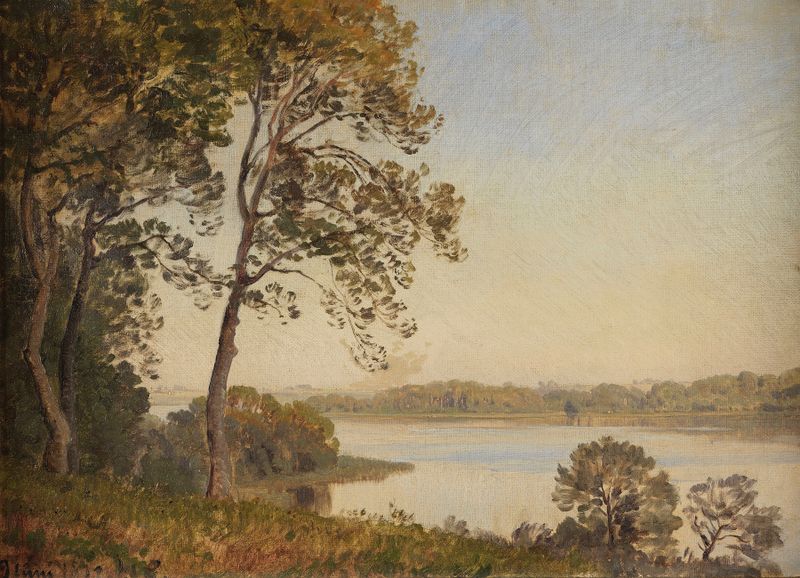
Dänische Landschaft mit Blick über einen Fjord
Janus la Cour
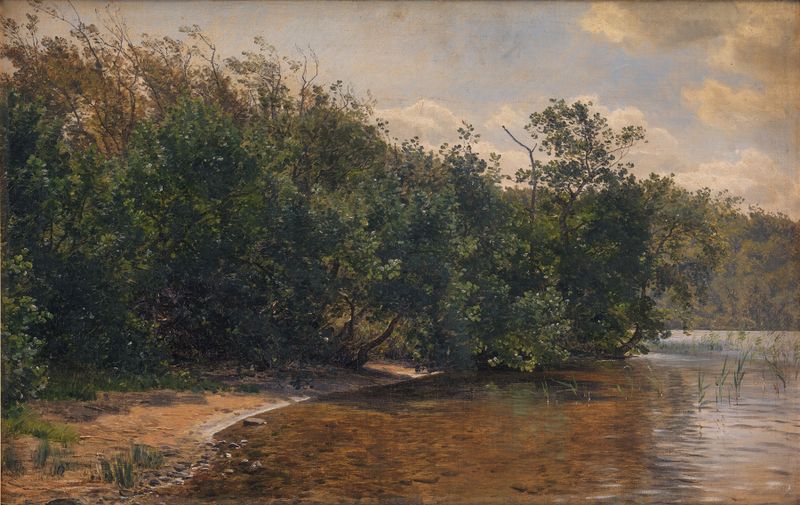
Ellebuske ved Almind Sø
Janus la Cour

The Path
Janus la Cour
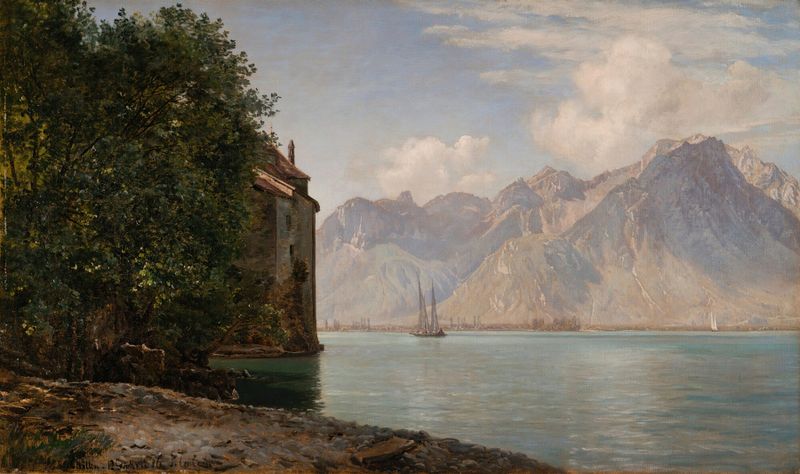
Château De Chillon, Lake Geneva
Janus la Cour

A View towards Castel Gandolfo, Italy
Janus la Cour
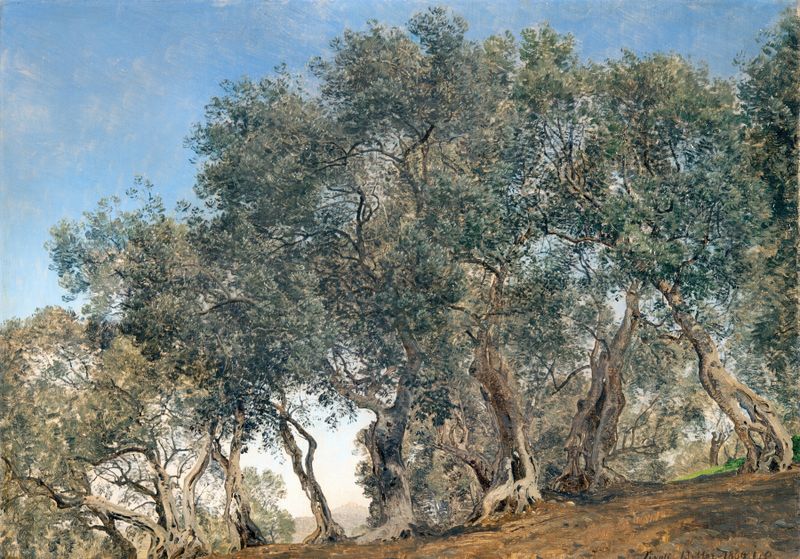
Olive Grove at Tivoly, Italy
Janus la Cour

The Gardens of the Villa d’Este, Tivoli
Janus la Cour





