
Château De Chillon, Lake Geneva — History & Facts
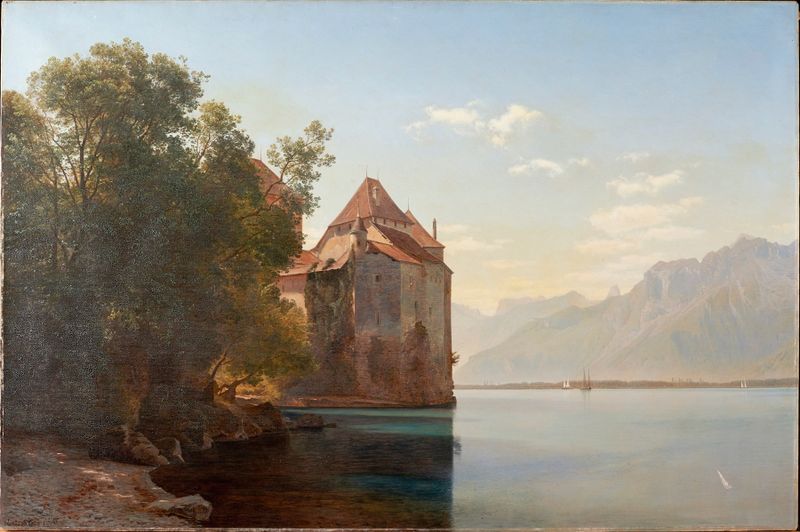
Who listens when art speaks of silence? In Château De Chillon, Lake Geneva, the stillness seems to echo with forgotten whispers and profound loss. Look to the left at the castle’s imposing structure, rising majestically from the rocky shore. Notice how the warm hues of ochre and sienna contrast against the cool blues of the lake, creating a palpable tension between land and water. The soft ripples on the lake's surface reflect the cloud-strewn sky, inviting the viewer's gaze to drift into the serene yet foreboding environment.
The meticulous brushwork captures every stone, every wave, enhancing the sense of timelessness inherent in the scene. Yet, the true depth lies beneath the surface; the very stillness of this landscape is laden with nostalgia. The castle, a relic of a bygone era, stands as a testament to the passage of time and the loneliness that accompanies it. The absence of human figures amplifies this solitude, urging contemplation on the lives once lived within those thick walls and the stories that have been lost to history.
In the contrast between the castle's permanence and the fleeting nature of the clouds above, we sense the weight of history pressing upon the present. In 1876, while residing in Switzerland, Janus la Cour painted this evocative piece amidst a growing appreciation for Romanticism in the art world. Recent movements were shifting perspectives toward nature and emotion, reflecting the societal upheavals of the time. As Europe transitioned through industrialization, the artist captured a moment where the past remained etched in stone, inviting viewers to ponder the stories locked within its silent embrace.
More Artworks by Janus la Cour
Browse all →



More Architecture Art
Browse all →
The statue of Liberty
Frédéric Auguste Bartholdi

View of Houses in Delft, Known as ‘The Little Street’
Johannes Vermeer

View of Houses in Delft, Known as ‘The Little Street’
Johannes Vermeer

The Cathedral in Rouen. The portal, Grey Weather
Claude Monet

The yellow house
Vincent van Gogh

The Church in Auvers-sur-Oise, View from the Chevet
Vincent van Gogh