
Castle Point — History & Facts
This transformative power of light beckons us to pause and reflect, inviting us to witness the delicate interplay between nature and artistry. Look to the foreground, where soft greens and browns blend into one another, creating a rich tapestry that leads the eye toward the horizon. Notice how the light dances on the surface of the water, casting shimmering reflections that hint at a world beyond. The ethereal sky, painted in various hues of blue and gold, frames the scene, enveloping it in an almost dreamlike quality.
The artist’s deft use of brushstrokes suggests movement, as if the breeze is whispering secrets to the leaves. Delve deeper into the composition, and you’ll uncover contrasts that evoke a sense of tranquility amidst tension. The chaotic brushwork of the foliage juxtaposes the calm reflection in the water, symbolizing the balance between nature's volatility and serenity. The distant castle stands as a silent witness, a reminder of human presence within the vastness of the landscape, suggesting both aspiration and isolation.
Each element in this tableau resonates with unspoken emotions, drawing the viewer into a contemplative state. During the late 18th century, the artist created this work while navigating the burgeoning Romantic movement, marked by an increasing fascination with nature and emotion. Living in England, Smith was influenced by his contemporaries and surroundings, creating landscapes that evoke a sense of place and memory. This period was characterized by a desire to express the sublime, as artists sought to capture not just the physical realm, but the profound feelings it inspired.
More Artworks by John Warwick Smith
Browse all →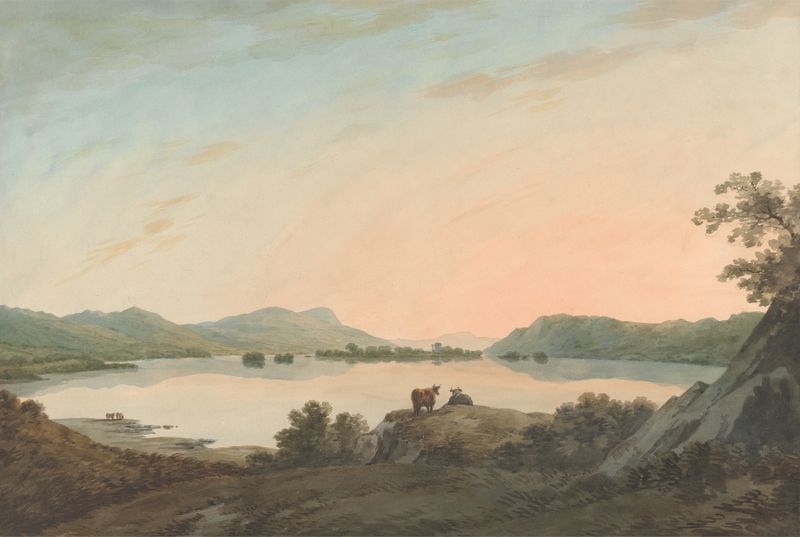
Lake Windermere from Calgarth with Belle Isle
John Warwick Smith
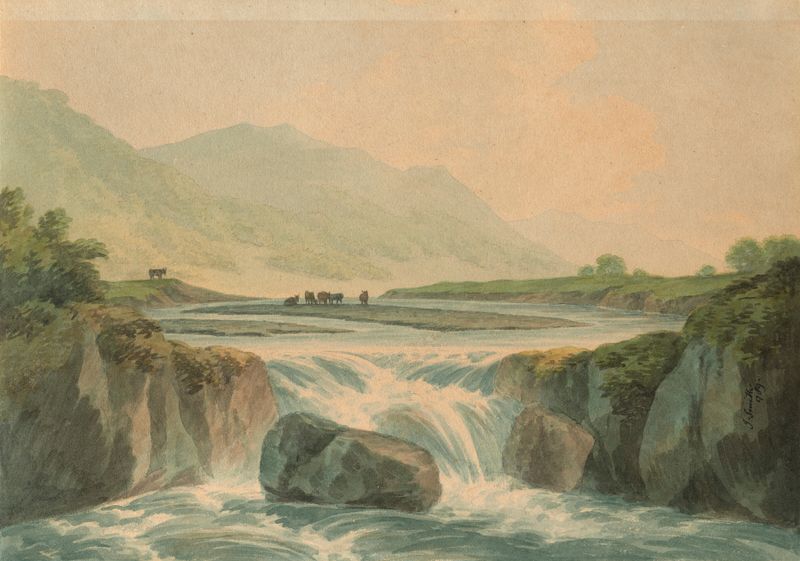
A waterfall on the River Rheidol, with cattle in the distance, North Wales
John Warwick Smith
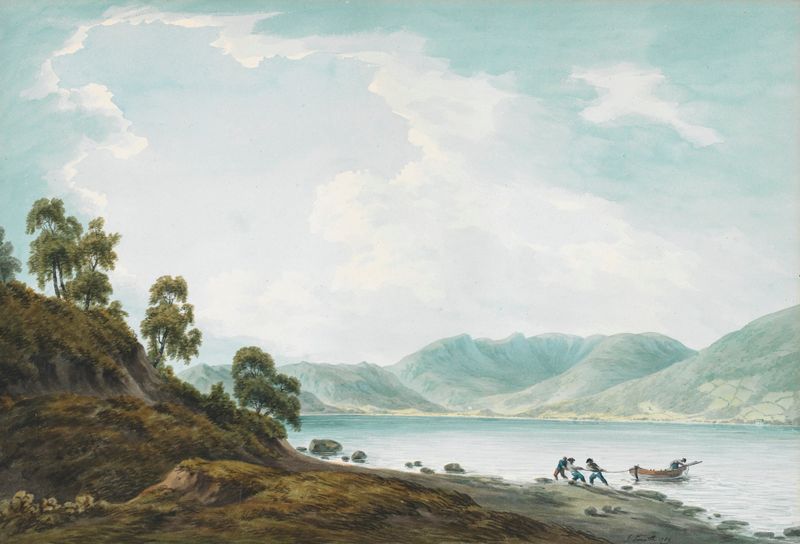
Head of Windermere from Belle Grange Farm
John Warwick Smith
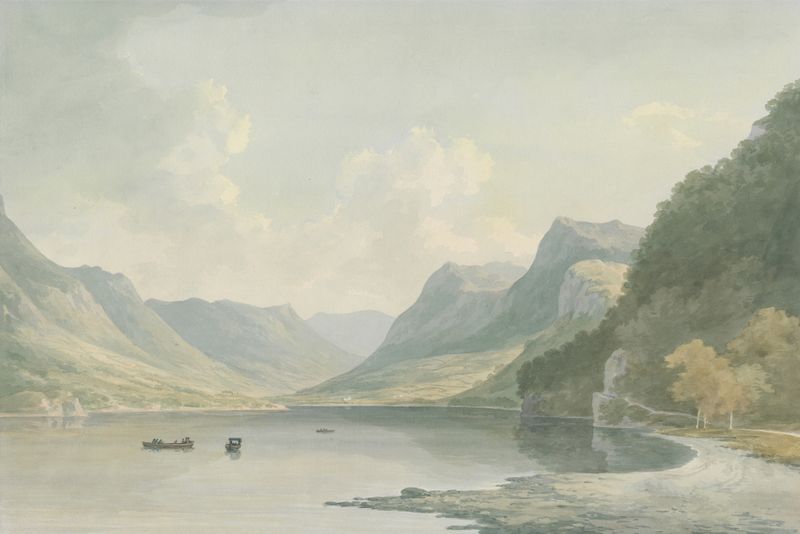
Ullswater, Looking toward Patterdale
John Warwick Smith
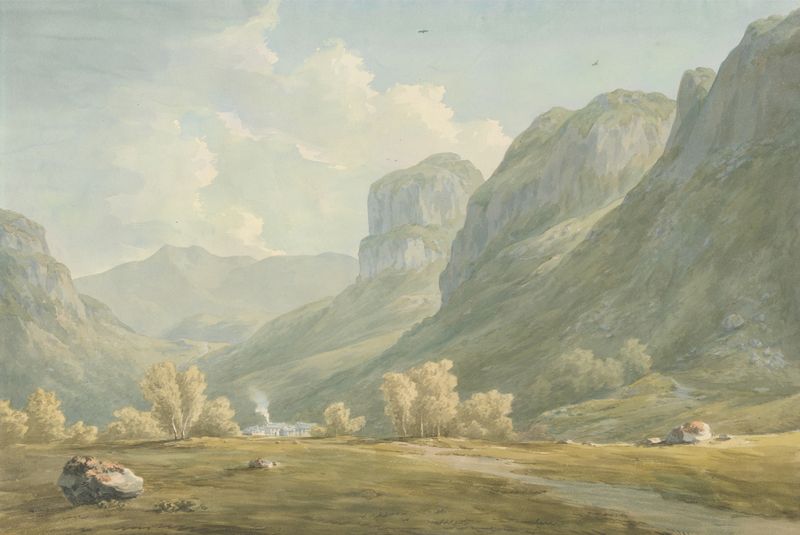
Village of Stonethwaite and Eagle Cragg, Borrowdale
John Warwick Smith
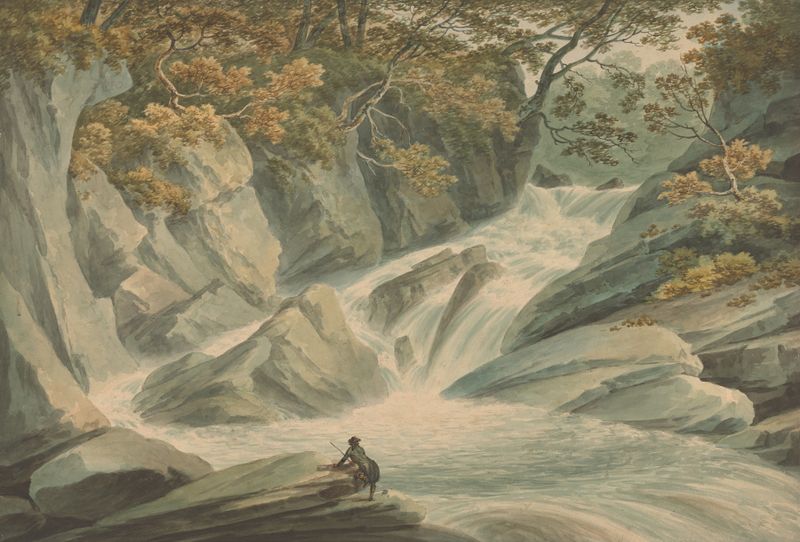
Hafod; Upper Part of Cascade
John Warwick Smith
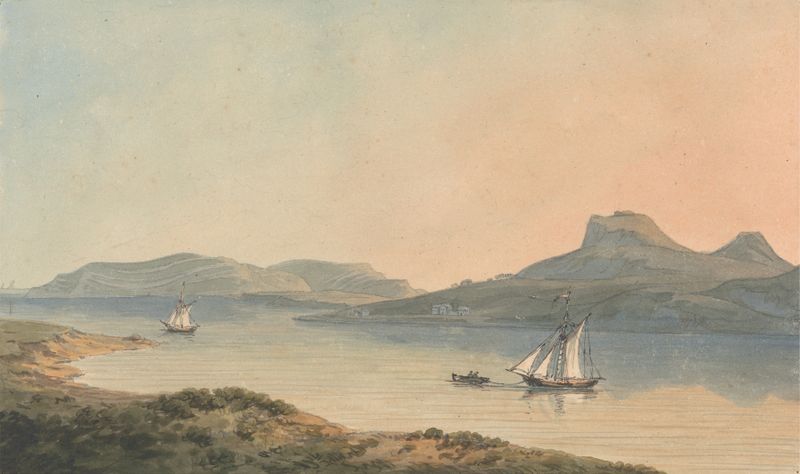
View of the Early Castle of Diganwy
John Warwick Smith
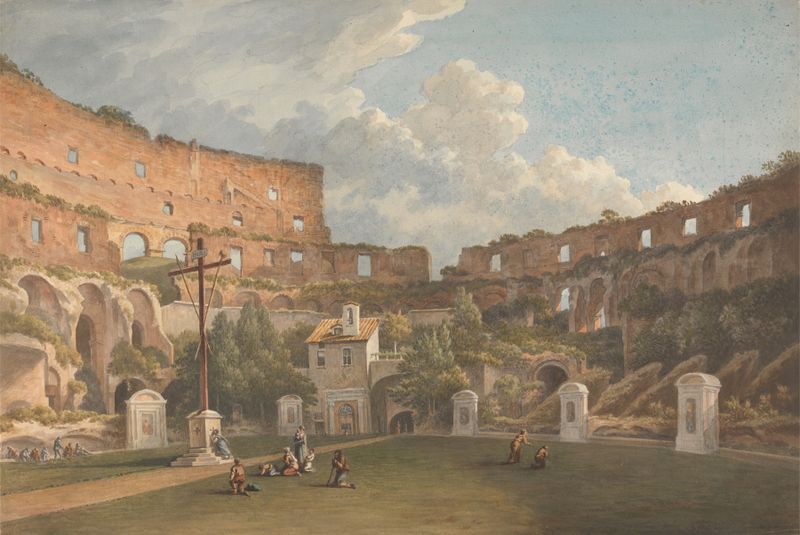
An Interior View of the Colosseum, Rome
John Warwick Smith
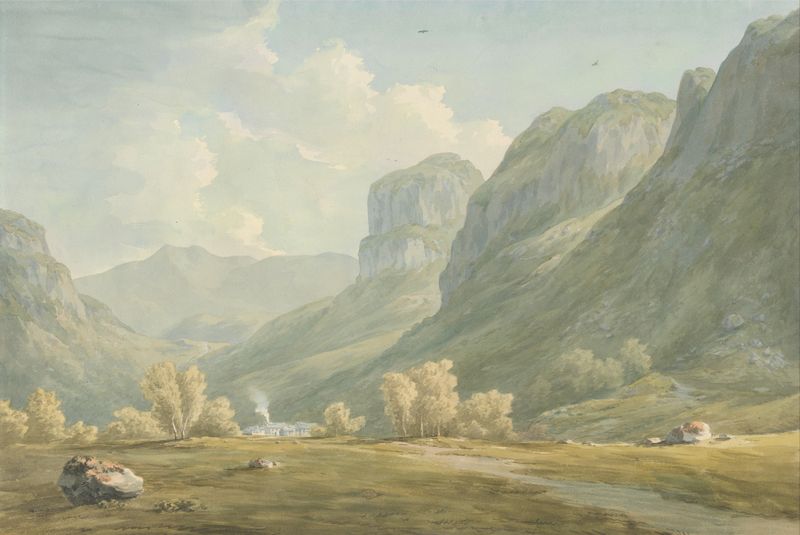
Village of Stonethwaite and Eagle Cragg, Borrowdale
John Warwick Smith
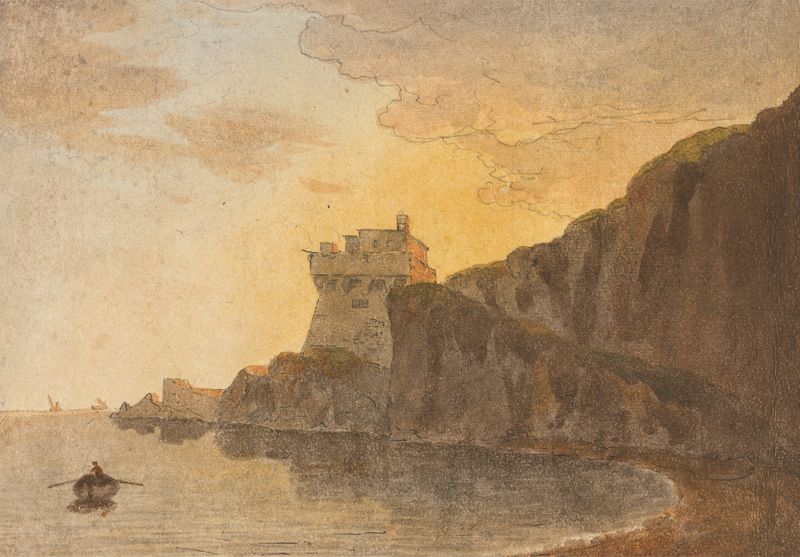
In the Bay of Salerno, near Vietri
John Warwick Smith





