
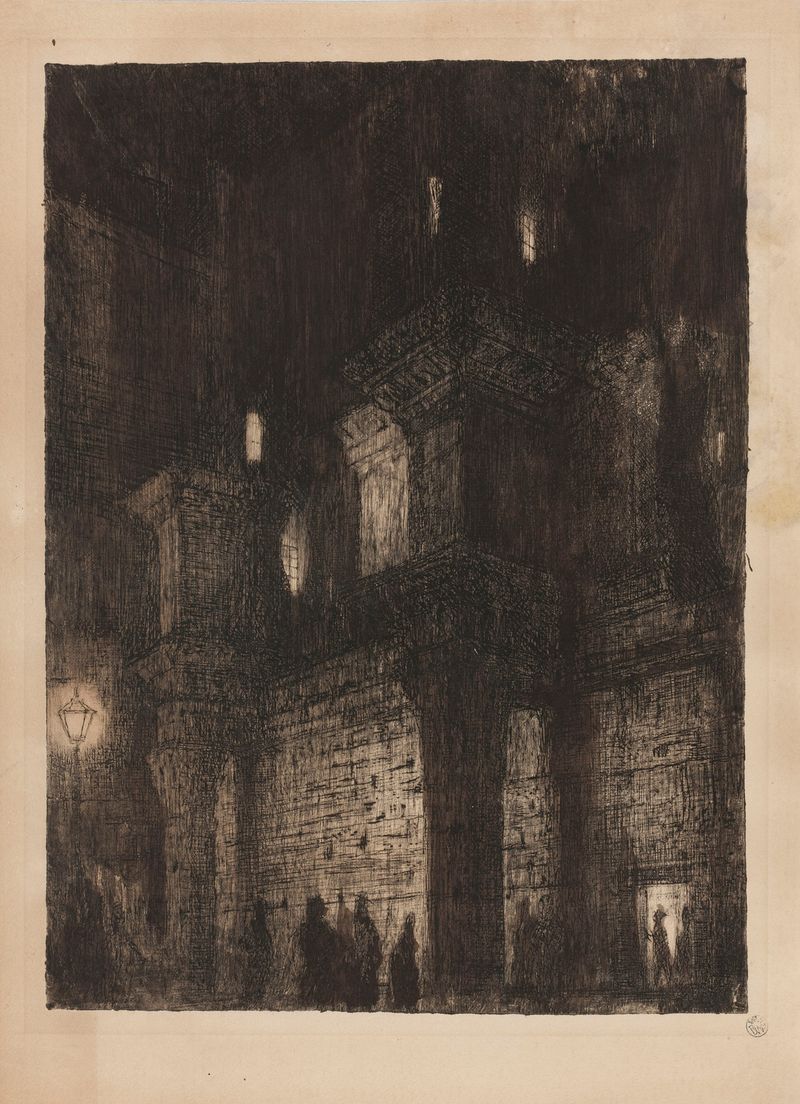
Castle tower. Chart I — History & Facts
Can beauty exist without sorrow? This question echoes through the hauntingly exquisite lines and forms found in the work of Feliks Jabłczyński. In Castle tower. Chart I, we are invited into an intricate interplay of shapes and shadows, where the echoes of madness ripple beneath the surface of elegance. Focus on the jagged silhouettes rising against a brooding sky, where the tower dominates the composition, its sharp angles hinting at both strength and fragility.
Notice how the muted palette—deep blues and grays—conveys an atmosphere steeped in melancholy, while soft light filters through the opaque clouds, casting an ethereal glow. The use of perspective draws your gaze upwards, evoking a sense of longing that melds with the tower’s formidable presence. Delve deeper into the artwork’s emotional landscape, where contrasting elements of solidity and instability coexist. The tower, a symbol of ambition, stands resolute yet isolated, suggesting the madness that accompanies great aspirations.
The surrounding space is not empty; rather, it is teeming with unresolved tension, hinting at the psychological struggle inherent in creation. Each brushstroke seems to whisper secrets of hope entwined with despair, revealing the artist's inner turmoil. In 1916, Jabłczyński was navigating a world fraught with uncertainty amidst the turmoil of World War I. Painted during his time in Paris, *Castle tower.
Chart I* emerged from an era where artists grappled with their identities in response to chaos. This work encapsulates both his personal experiences and the broader quest for meaning in a fractured reality, reflecting the tumultuous spirit of the age.
More Artworks by Feliks Jabłczyński
Browse all →
Villa Borgia in Rome
Feliks Jabłczyński

Mariensztat Street in Warsaw
Feliks Jabłczyński
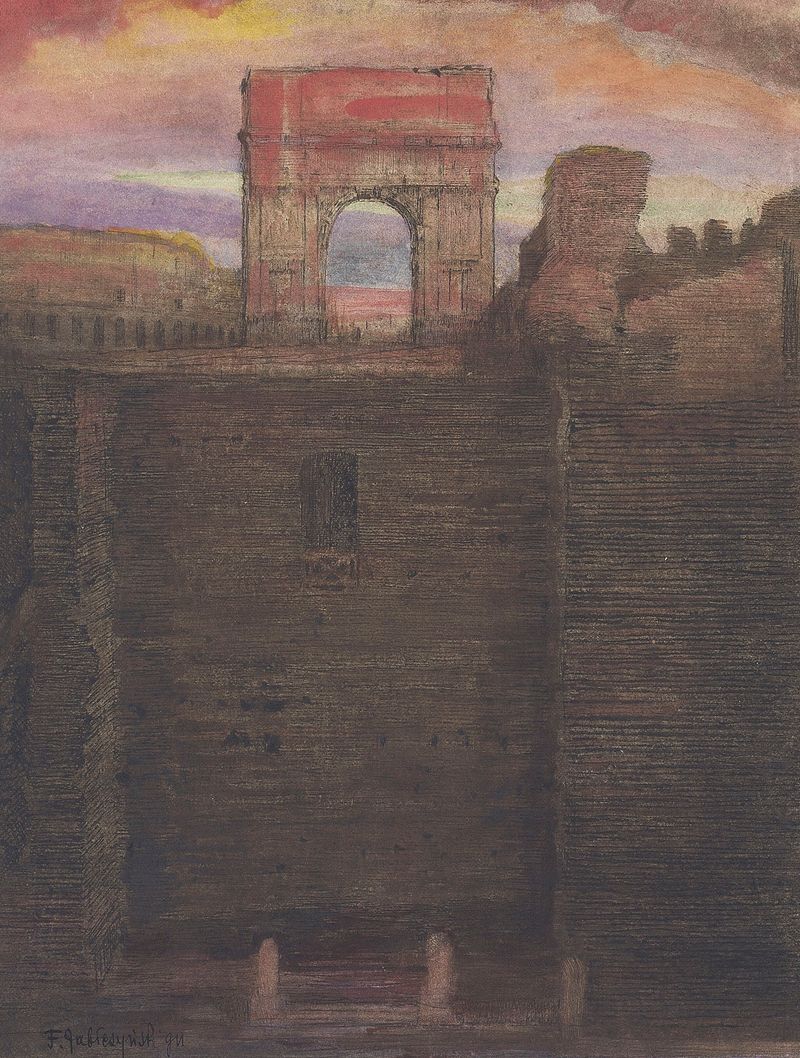
The House of Vestals and the Arch of Titus in the background
Feliks Jabłczyński
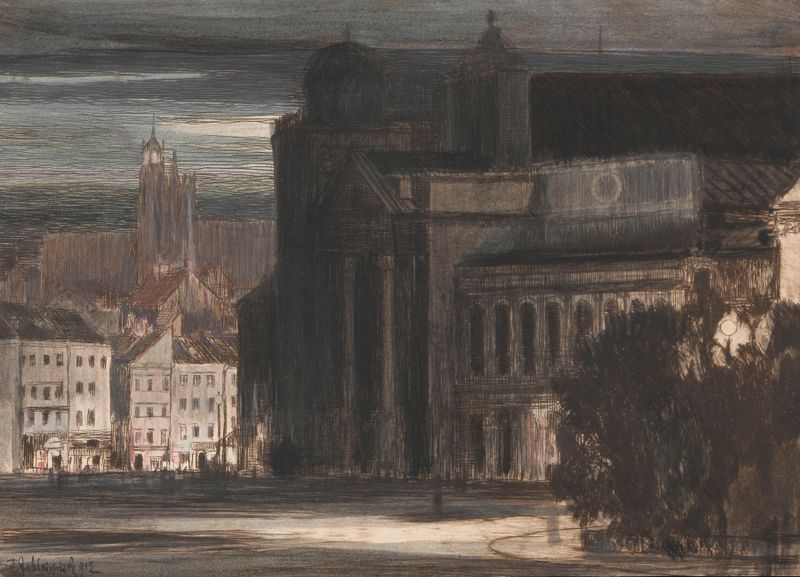
View of the Church of St. Anna and the Castle Square in Warsaw
Feliks Jabłczyński

Kaplica Boimów we Lwowie
Feliks Jabłczyński
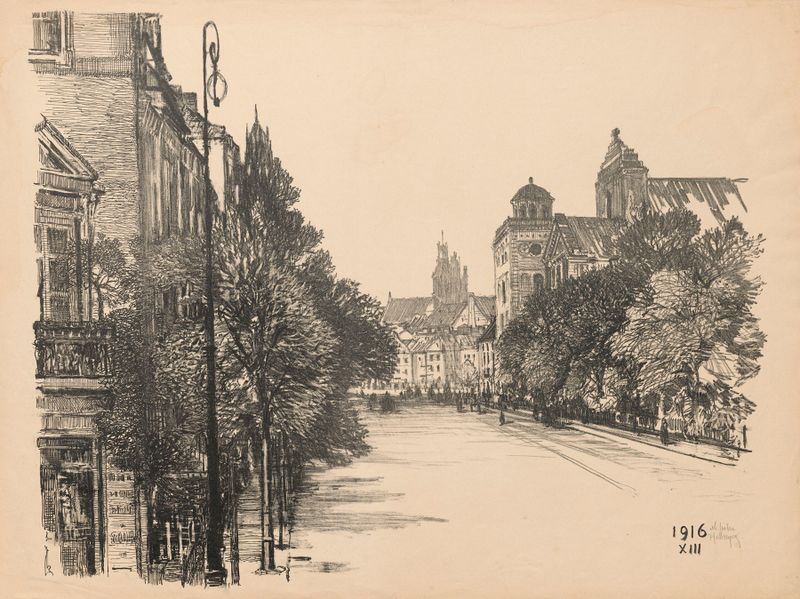
Krakowskie Przedmieście Street
Feliks Jabłczyński
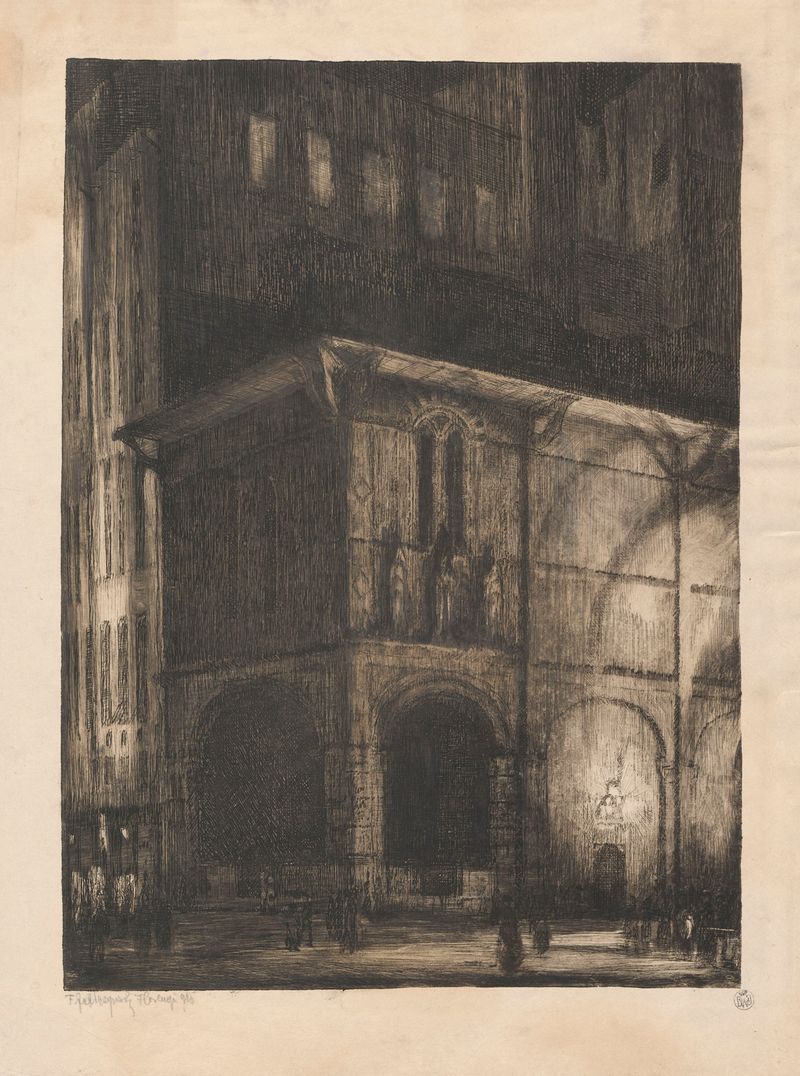
Florence
Feliks Jabłczyński
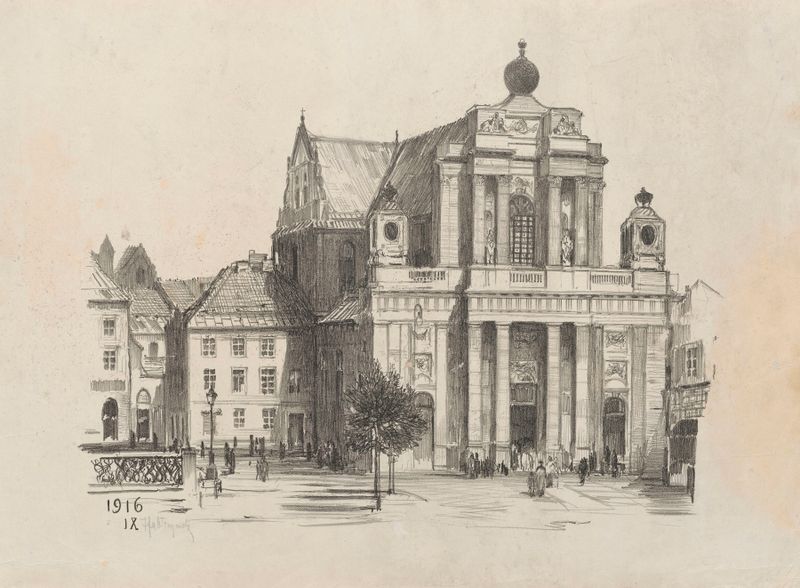
Carmelite Church.
Feliks Jabłczyński

The Visitation Sisters Church
Feliks Jabłczyński
Forum Nervae
Feliks Jabłczyński
More Architecture Art
Browse all →
The statue of Liberty
Frédéric Auguste Bartholdi

View of Houses in Delft, Known as ‘The Little Street’
Johannes Vermeer

View of Houses in Delft, Known as ‘The Little Street’
Johannes Vermeer

The Cathedral in Rouen. The portal, Grey Weather
Claude Monet

The yellow house
Vincent van Gogh

The Church in Auvers-sur-Oise, View from the Chevet
Vincent van Gogh