Florence — History & Facts
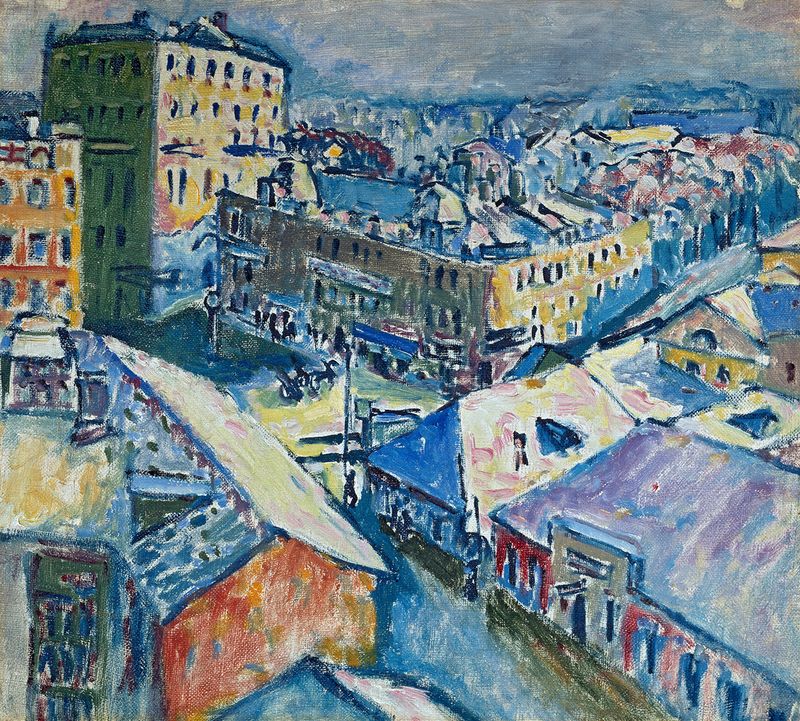
What lies beneath the surface of beauty often hides an unsettling fear, a reminder of impermanence and turmoil. Focus on the swirling strokes that sweep across the canvas, where deep blues and earthy browns collide in a dance of motion. Look to the left, where the faint outlines of a city rise, wrapped in hazy golden light, beckoning yet shrouded in ambiguity. Notice how the artist uses contrasting colors to depict the vibrancy of life against the shadows of uncertainty, creating a tension that vibrates through the entire composition. Delve deeper into the layers, and you'll find glimpses of anxiety lurking amid the idyllic scene.
The jagged edges of the brushwork suggest the chaos of urban existence, while the soft hues hint at fleeting serenity. Amidst this turmoil, the ethereal skyline symbolizes aspirations that both allure and frighten, reminding us of the fragility inherent in the pursuit of beauty. The emotional interplay invites viewers to confront their own fears, revealing how the familiar can quickly dissolve into uncertainty. In 1910, when this piece was created, the artist found himself in a period of transition, influenced by the rapidly changing landscape of Europe before World War I.
Living in Paris, Jabłczyński was surrounded by burgeoning modernist movements, grappling with the tension between tradition and innovation. His work reflects not only personal introspection but also the collective anxiety of a society on the brink of profound change.
More Artworks by Feliks Jabłczyński
Browse all →
Villa Borgia in Rome
Feliks Jabłczyński

Mariensztat Street in Warsaw
Feliks Jabłczyński
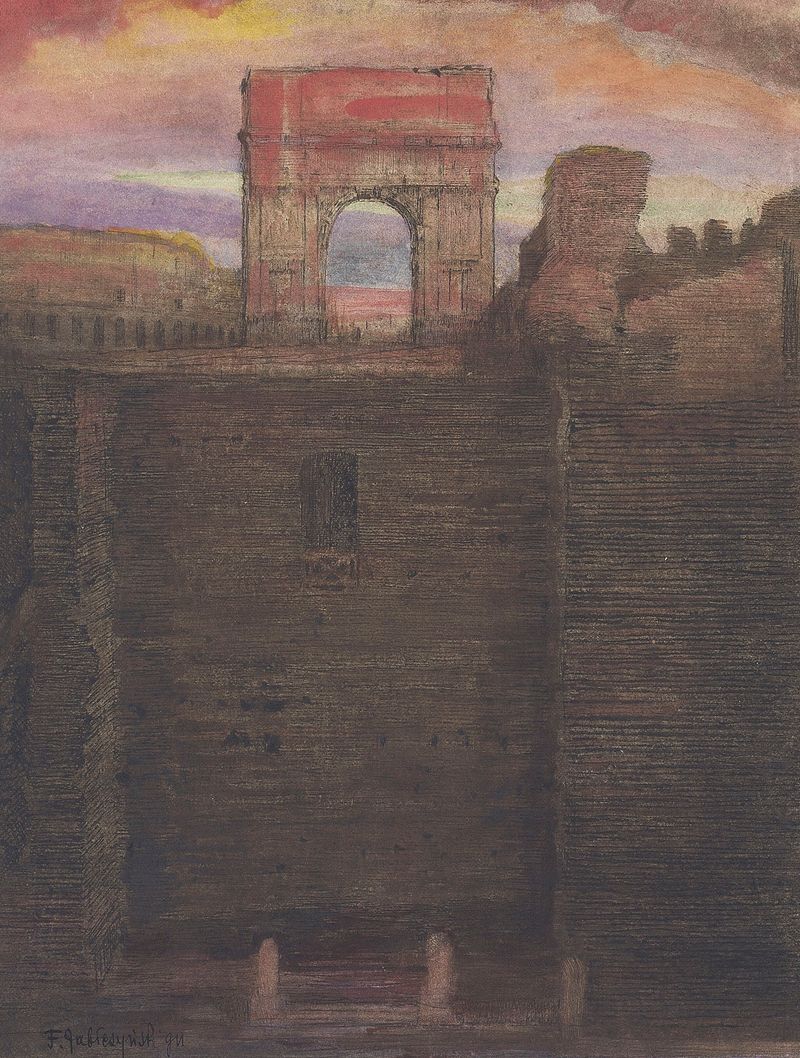
The House of Vestals and the Arch of Titus in the background
Feliks Jabłczyński
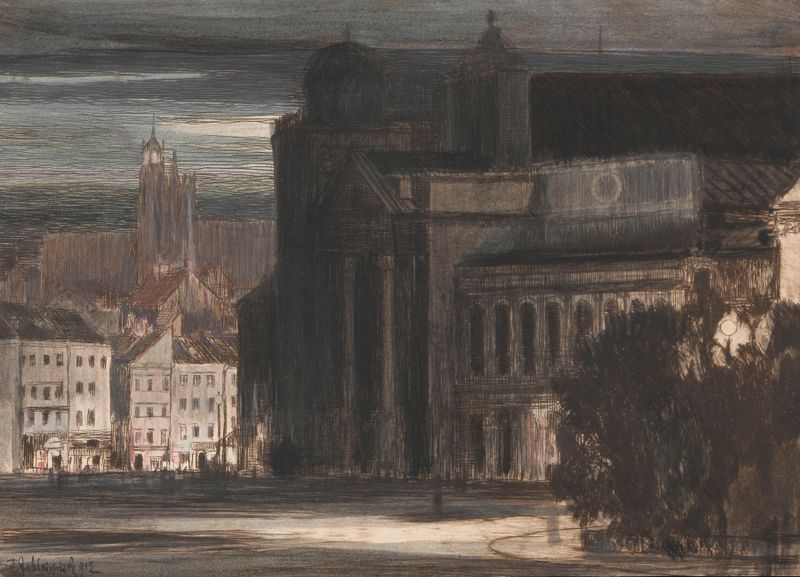
View of the Church of St. Anna and the Castle Square in Warsaw
Feliks Jabłczyński

Kaplica Boimów we Lwowie
Feliks Jabłczyński
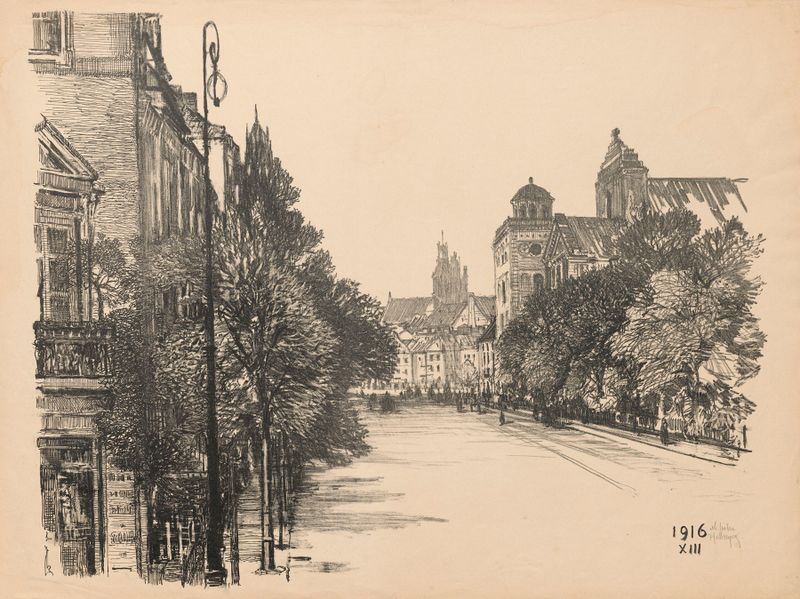
Krakowskie Przedmieście Street
Feliks Jabłczyński
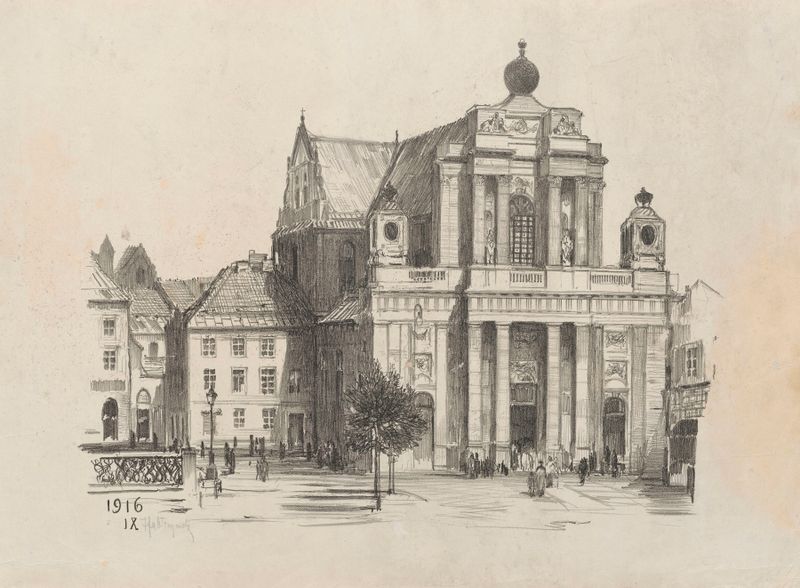
Carmelite Church.
Feliks Jabłczyński

The Visitation Sisters Church
Feliks Jabłczyński
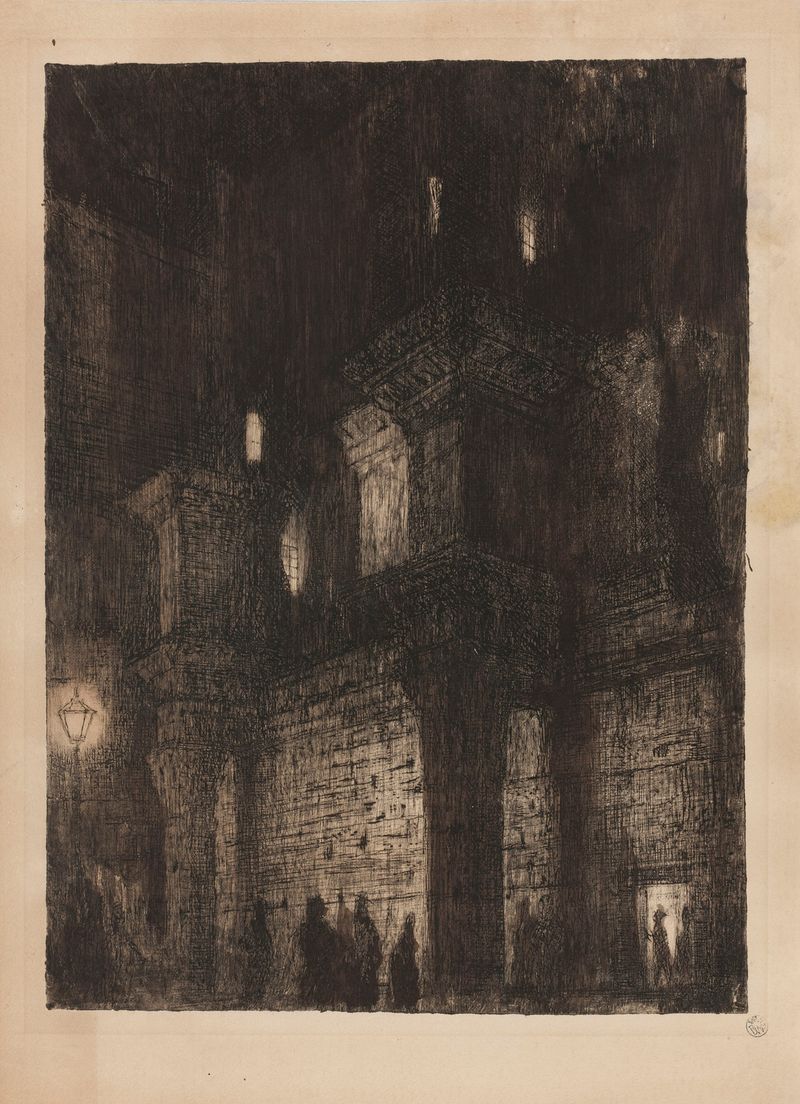
Forum Nervae
Feliks Jabłczyński
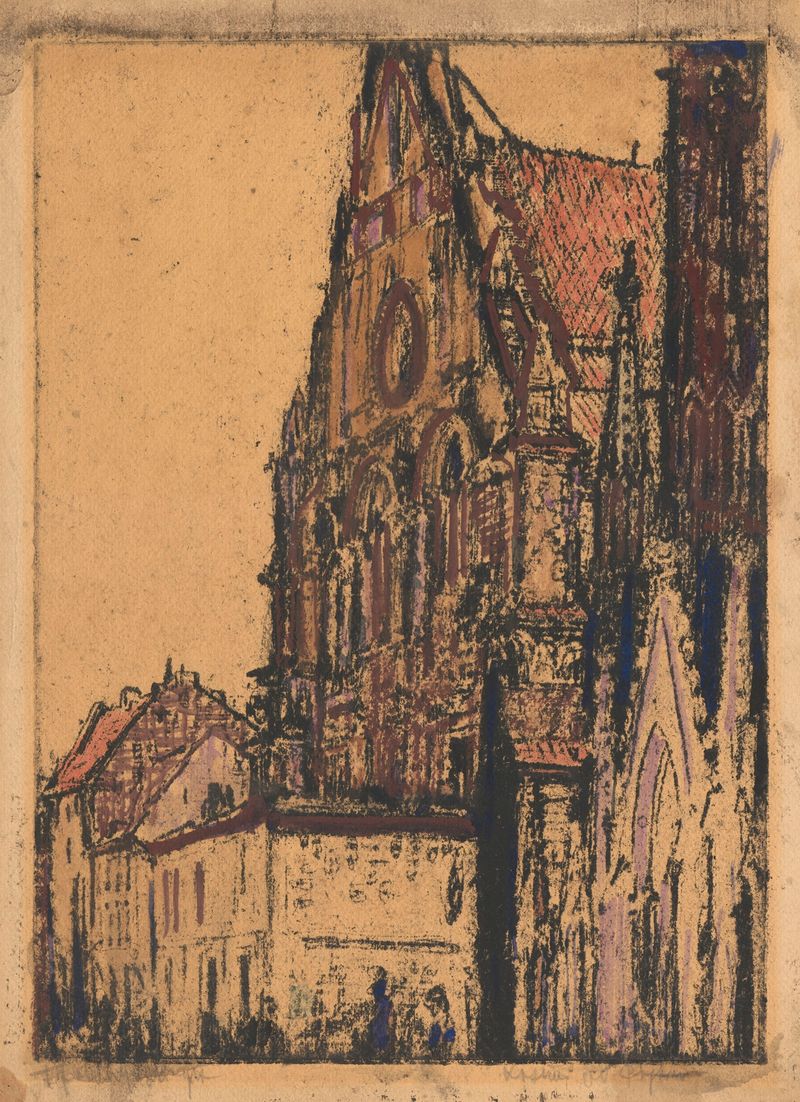
The Piarist Church in Warsaw
Feliks Jabłczyński