Cat Hunting a Pheasant (after a fresco from the Palace of Hagia Triada, Crete) — History & Facts
In the quiet corners of human existence, decay whispers its story, entwining beauty with the inevitability of loss. Begin by focusing on the cat, poised with a predatory grace. Its sleek form is rendered in rich, earthy tones, creating a striking contrast against the pastel backdrop inspired by ancient frescoes. The feline's sharp gaze, directed towards the pheasant, holds a tension that pulses through the composition.
Notice how the artist employs delicate brush strokes to evoke softness in the fur and feathers, inviting exploration of textures that reveal both life and impending demise. Delve deeper into the symbolism of this work. The cat, a traditional hunter, embodies the primal instinct and the cycle of life and death, while the pheasant, vibrant yet oblivious, represents the fragility of existence. The interplay of light captures the tension between the cat's stealth and the pheasant's splendor, suggesting that beauty often walks hand in hand with danger.
This duality speaks to the viewer about the underlying melancholy of nature's balance, where every moment of grace is shadowed by the specter of decay. The piece was created by an unidentified artist in the late 19th to early 20th century, a time marked by a resurgence of interest in classical art forms and antiquity. This artist drew inspiration from a fresco located in the Palace of Hagia Triada, Crete, echoing the historical significance of the Minoan civilization. In an era wherein the art world was grappling with modernity, this work stands as a bridge between past and present, reflecting a deep-seated reverence for nature woven through art's enduring tapestry.
More Artworks by Unidentified artist
Browse all →
Self-portrait with a Bandaged Ear and Pipe
Unidentified artist

Feast in the House of Levi
Unidentified artist
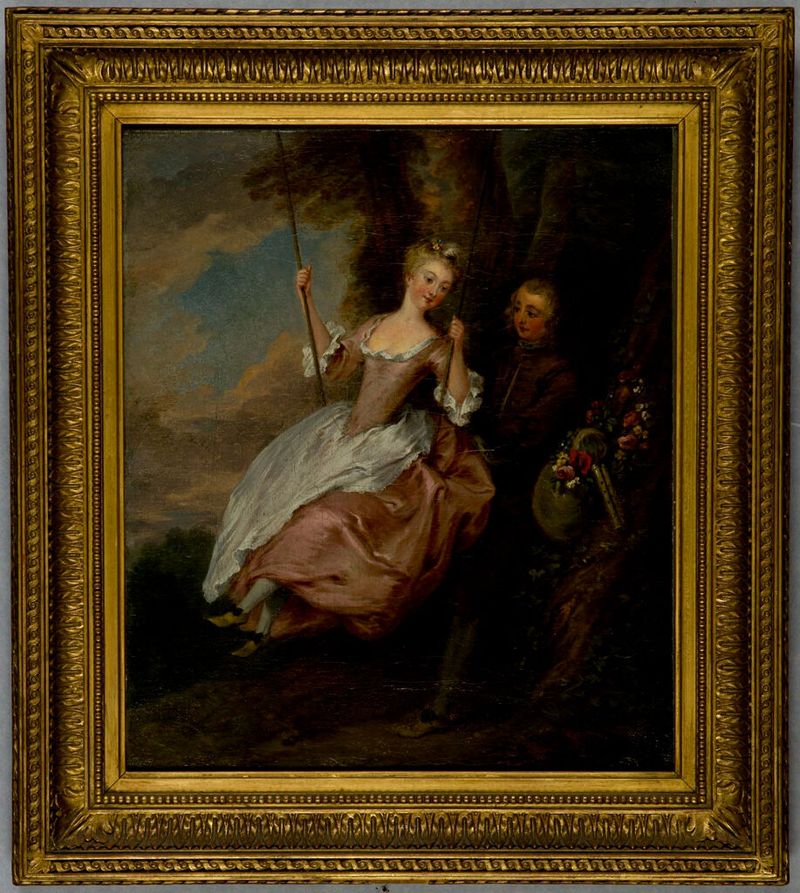
The Swing
Unidentified artist

Geoffrey Chaucer (1340?-1400)
Unidentified artist

Portrait of Michelangelo after the "Strozzi" original in the Uffizi Gallery
Unidentified artist
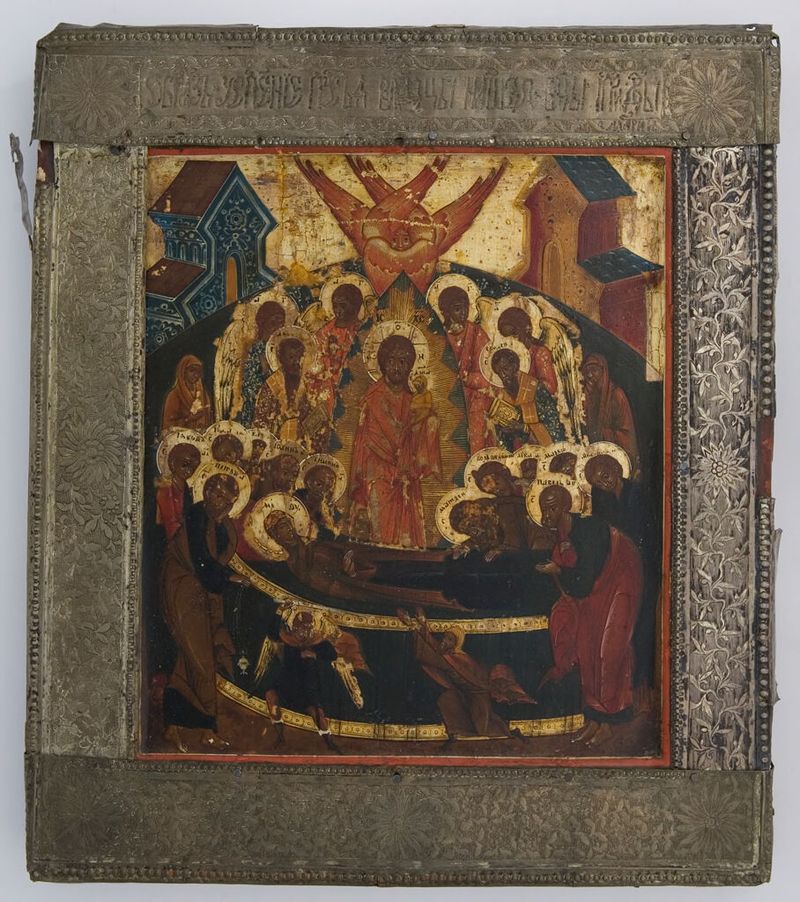
Dormition of the Virgin
Unidentified artist

Charles I (after a van Dyck painting in the Staatliche Museen, Gemaldegalerie, Dresden)
Unidentified artist

Madonna and Child
Unidentified artist

John Winthrop, the Younger (1606-1676)
Unidentified artist

Crucifix with the Virgin and Saint John the Evangelist, Christ the Redeemer, and a Praying Woman
Unidentified artist