
Catholic Church of St. Alexander — History & Facts
When Taras Shevchenko painted Catholic Church of St. Alexander in 1850, he was living under strict surveillance in exile, forbidden by the Russian authorities to write or paint anything political. Yet, during this period of repression, he turned his eye to the architecture of Kyiv, capturing its landmarks with a sense of longing and quiet resistance.
The church itself, constructed in the early 19th century, had become a symbol of the city’s Polish Catholic community—an unusual subject for a Ukrainian artist at a time when Catholicism was viewed with suspicion by the Russian Empire. Shevchenko’s work stops time at a moment of calm, with the neoclassical façade of St. Alexander bathed in gentle daylight. The church’s columns and domed roof stand out against the cityscape, rendered with careful attention to proportion and shadow.
Figures move quietly near the entrance, their presence dwarfed by the architecture, suggesting both the endurance of faith and the vulnerability of its practitioners. The artist’s restrained palette and precise lines recall the documentary clarity of Canaletto, yet Shevchenko’s view is more intimate, less about spectacle than about memory and place. The inclusion of everyday people anchors the church in lived experience rather than idealized grandeur. The original medium of Catholic Church of St.
Alexander is still debated—some sources suggest watercolor, others sepia ink—but all agree it belongs to a series of architectural studies Shevchenko created during his exile. These works were not commissioned; rather, they were personal acts of preservation, recording Kyiv’s landmarks at a time when their future was uncertain. The painting has survived wars and regime changes, passing through private hands before entering a public collection in Ukraine, where it is now seen as both a work of art and a historical document.
In the context of Shevchenko’s career, it stands apart from his more famous literary and political works, offering a quieter, but no less powerful, testament to his enduring attachment to his homeland.
More Artworks by Taras Shevchenko
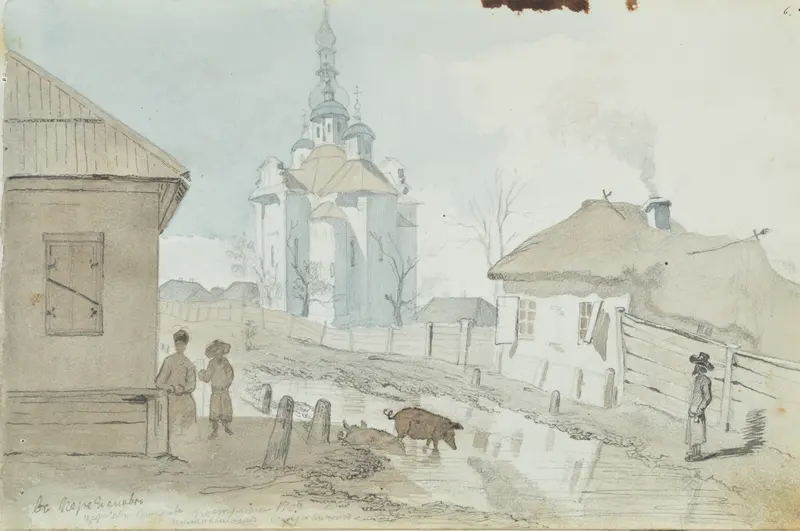
1845 Sh Sketchbook f.06r
Taras Shevchenko

1845 Sh Sketchbook f.04r
Taras Shevchenko

1848 Bilia vohnu
Taras Shevchenko
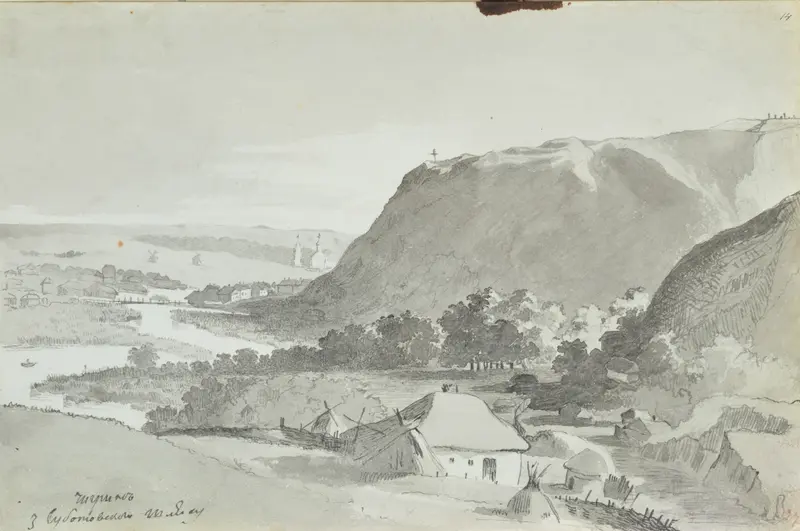
1845 Sh Sketchbook f.14r
Taras Shevchenko
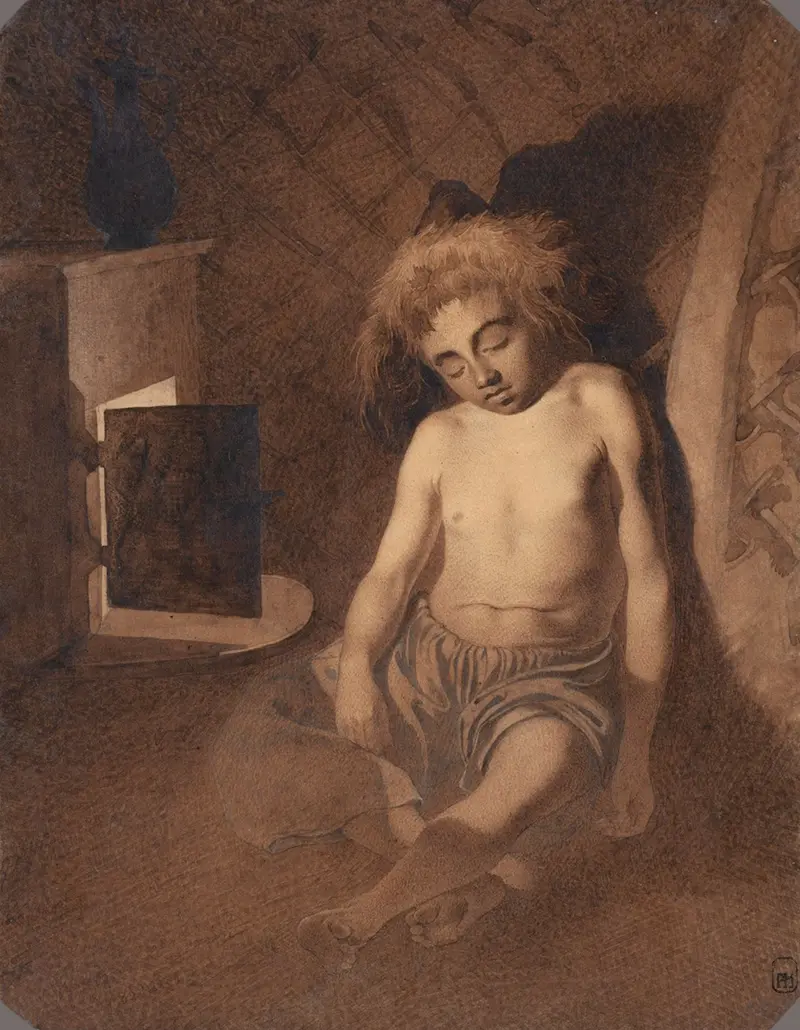
1848 Hlopcyk zasnuv
Taras Shevchenko
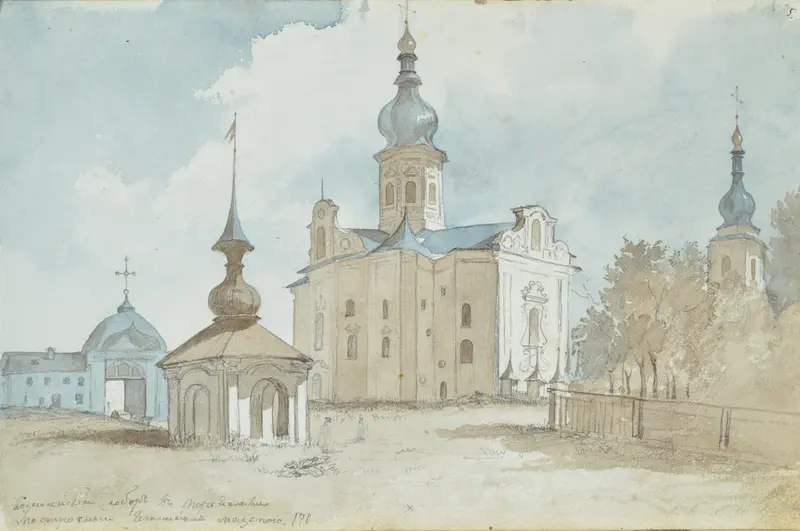
1845 Sh Sketchbook f.05r
Taras Shevchenko
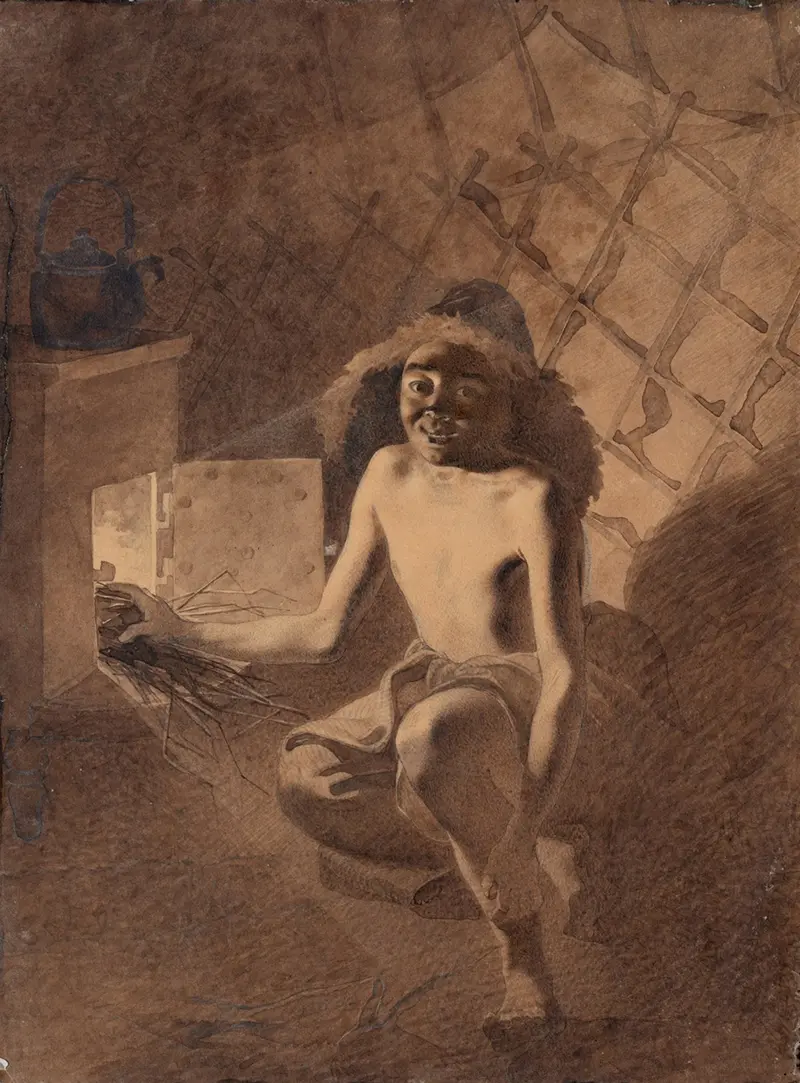
1848 Hlopcyk rozpalije
Taras Shevchenko
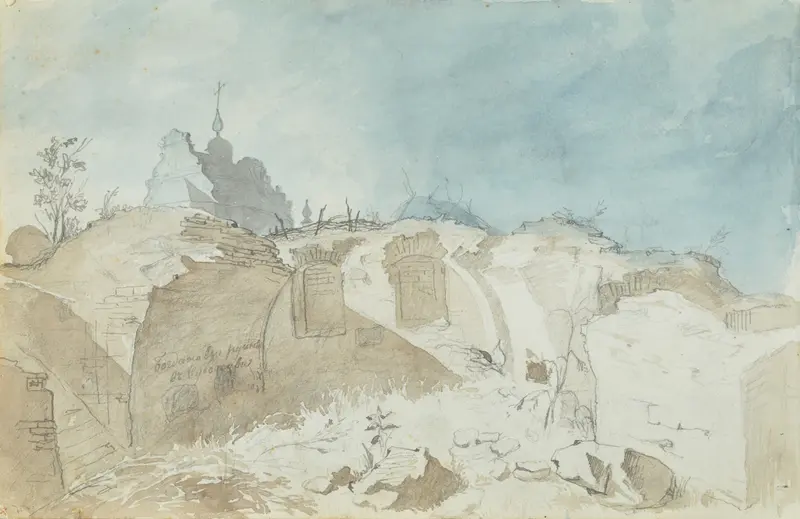
1845 Sh Sketchbook f.12v
Taras Shevchenko
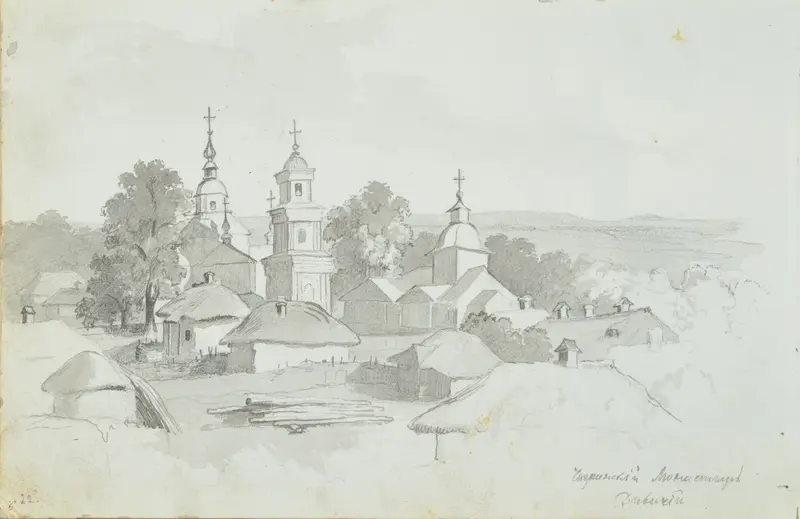
1845 Sh Sketchbook zz f.11v
Taras Shevchenko
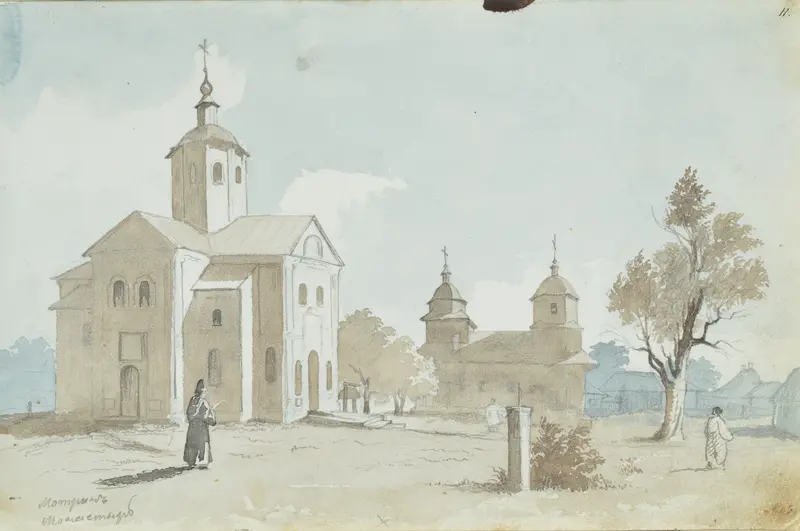
1845 Sh Sketchbook f.11r
Taras Shevchenko





