Cattle — History & Facts
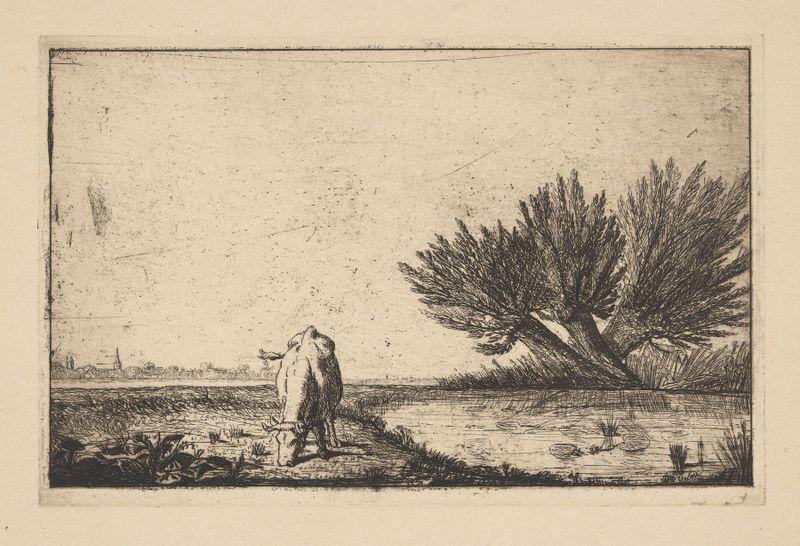
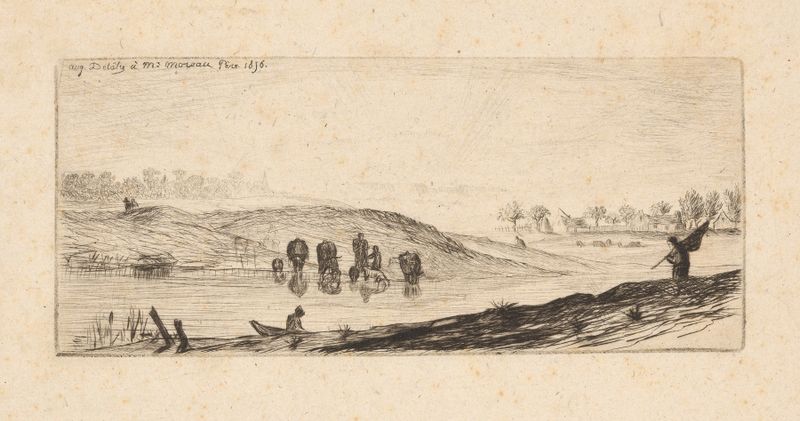
Can beauty exist without sorrow? In Cattle, the essence of rural life unfolds, echoing the passage of time and the weight of existence itself. The painting captures not only the serene beauty of the pastoral but also hints at the underlying struggles that define it. Look to the left, where the gentle slope of the field meets the soft outlines of the grazing cattle. Delâtre employs a muted palette, rich in earthy tones, to evoke the tranquility of nature while simultaneously imbuing it with an undeniable heaviness.
Notice how the light filters through the clouds, casting a diffused glow that emphasizes the texture of the animals’ coats and the grass below, guiding the viewer's gaze towards the harmonious yet melancholic scene. Yet, beyond the picturesque surface lies a profound dichotomy. The cattle, peacefully grazing, symbolize both sustenance and the cyclical nature of life, tethered to the land and its inevitable changes. The interplay of light and shadow suggests not only the passage of day but also the passage of time itself — a reminder that beauty often coexists with the knowledge of loss.
This tension invites contemplation of the fleeting moments that define existence. In 1858, Auguste Delâtre was immersed in the burgeoning movement of realism, seeking to capture the authenticity of everyday life. He painted Cattle during a period marked by rapid changes in France, both socially and artistically, as artists began to shift their focus away from romanticized subjects towards a more honest depiction of the world around them. This work stands as a testament to that transformative epoch, embodying both the simplicity of rural life and the complex emotions it evokes.