Rowboat — History & Facts
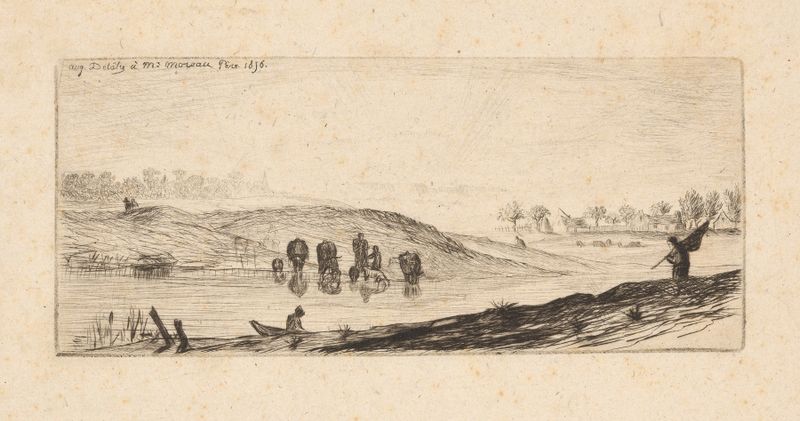
What if silence could speak through light? In Auguste Delâtre’s Rowboat, the stillness of a tranquil waterscape invites the viewer to listen closely to nature’s whispers. Look to the center, where a delicate rowboat is moored, its outline gently softened by the lapping waves. The reflection in the water mimics the boat's form, creating a sense of unity between the vessel and its environment. Notice how the light filters through the clouds, casting gentle glimmers upon the surface, as if illuminating a secret world beneath.
The palette of soft blues and muted greens evokes a serene harmony, inviting contemplation and tranquility. Yet, beneath this calm, there is an underlying tension. The juxtaposition of the still boat and the dynamic ripples speaks to the fragile balance between stability and movement. The ethereal quality of light hints at fleeting moments, evoking the transient nature of human experience.
Each detail—from the subtle brushstrokes capturing the intricate play of light to the quiet absence of human presence—echoes the profound silence that envelops this scene. Delâtre painted Rowboat in 1858 during a time when the French art scene was shifting toward realism and impressionism. He worked in France, exploring the intersections of light and landscape, which informed his artistic practice. Amidst this evolving landscape, Delâtre sought to capture the essence of nature, focusing on its meditative qualities, contributing to the dialogue around the emotional power of light and reflection in art.