Children beside barn — History & Facts
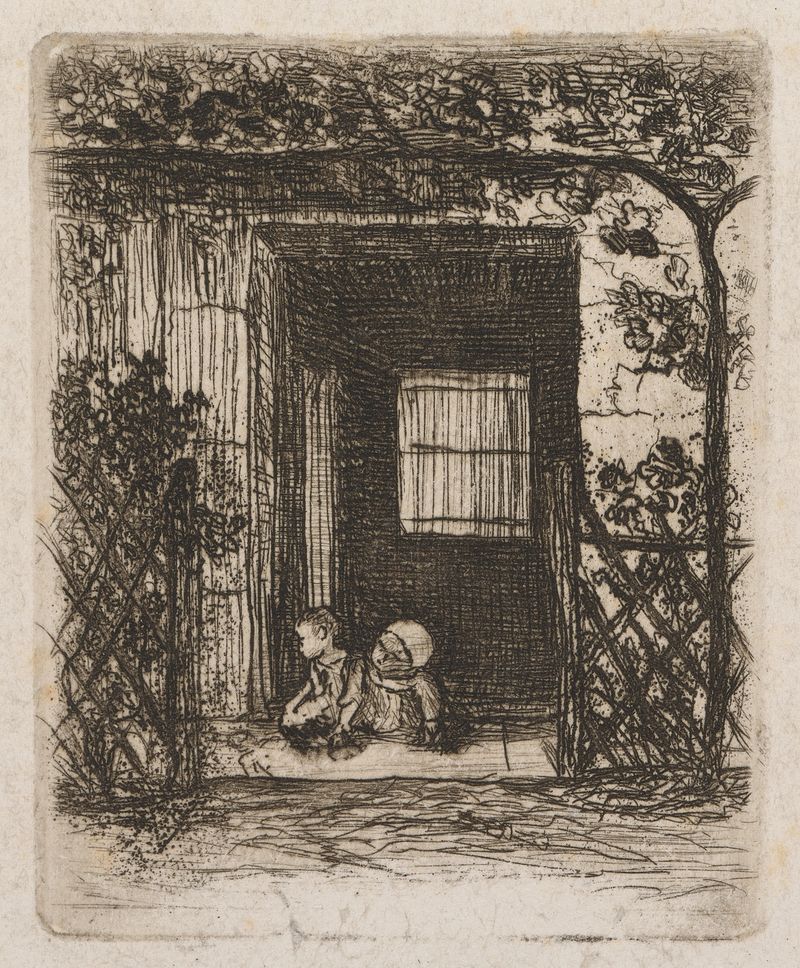
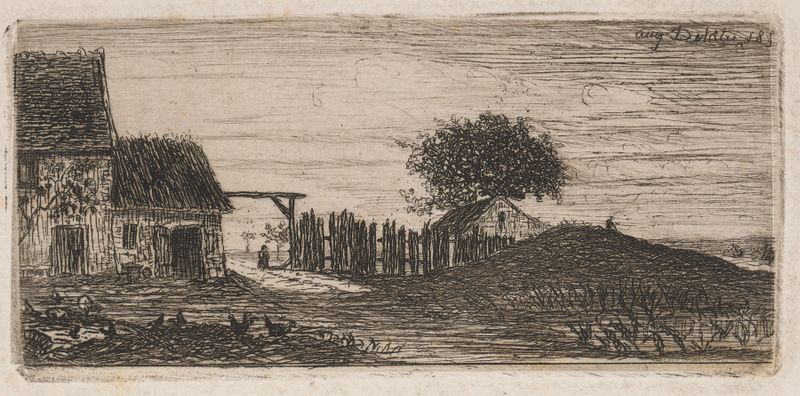
This sentiment dances on the edge of every brushstroke in the ethereal work of Delâtre. Here, the essence of childhood innocence collides with the weight of fleeting time, inviting us to ponder the delicate balance between joy and sorrow. Look to the foreground, where two children—one boy and one girl—stand beside a weathered barn, their expressions a curious blend of wonder and contemplation. Notice how the soft, golden light envelops their figures, highlighting the muted colors of their simple clothes.
The barn looms behind them, its rustic texture rendered with meticulous detail; it appears both a sanctuary and a relic of days gone by. The naturalistic approach and gentle brushwork evoke a sense of intimacy, pulling the viewer into this poignant moment. Yet, beneath this simplicity lies a deeper narrative. The children, embodying the innocence of youth, are juxtaposed against the barn’s sturdy, aged facade, suggesting the inevitable passage of time and the loss of innocence.
Their attire, while humble, hints at a life of labor and toil, transforming their playful demeanor into a silent acknowledgment of life's burdens. The warmth of the sunlight contrasts with the shadows cast by the barn, embodying the duality of existence—the joy of childhood set against the realities of mortality. Created in 1854, this piece reflects a transformative period for Auguste Delâtre, who was deeply influenced by the natural landscape and rural life of France. At the time, the art world was shifting towards realism, and Delâtre was navigating his own artistic voice.
He sought to capture the spirit of his surroundings, crafting not just images, but narratives rich with emotion and truth, resonating through the ages.