Cattle at the waterhole — History & Facts
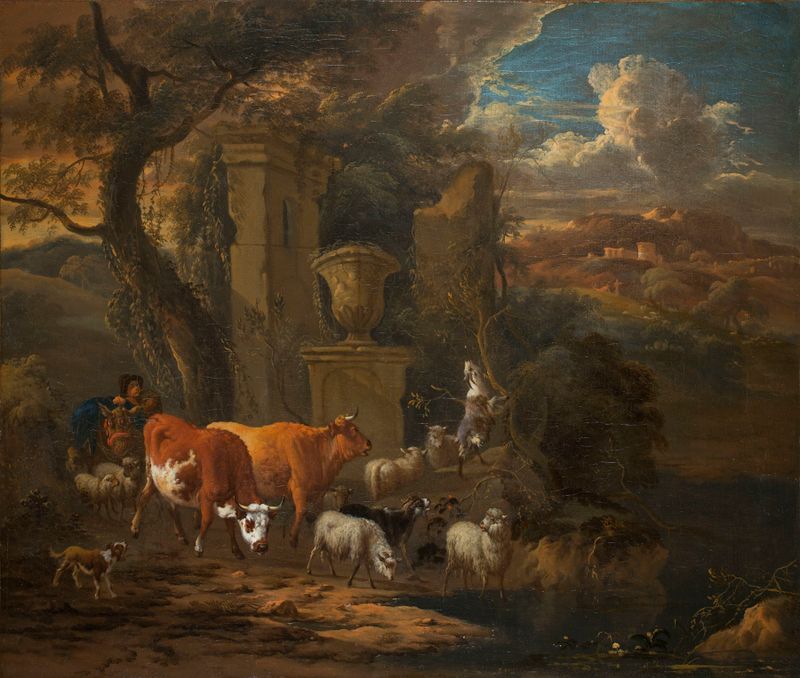
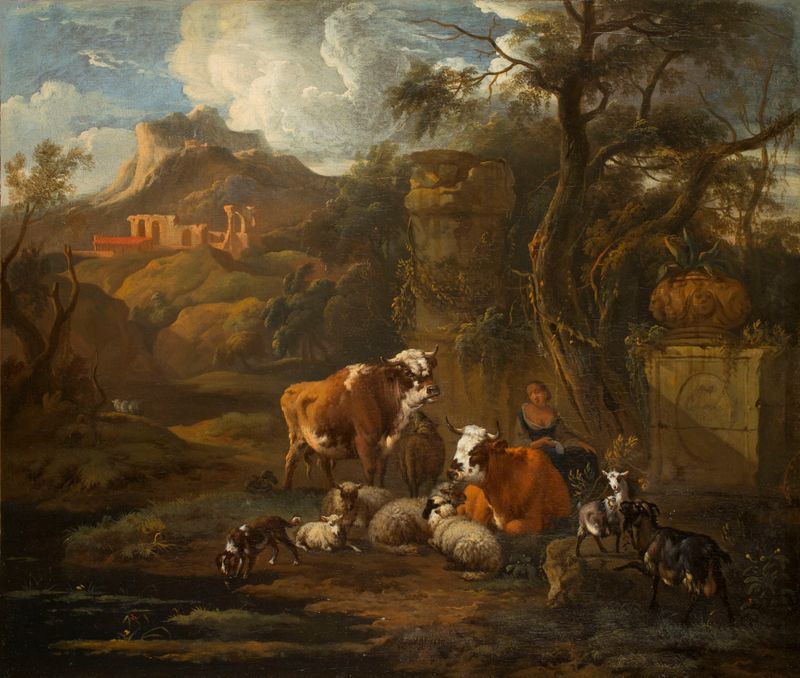
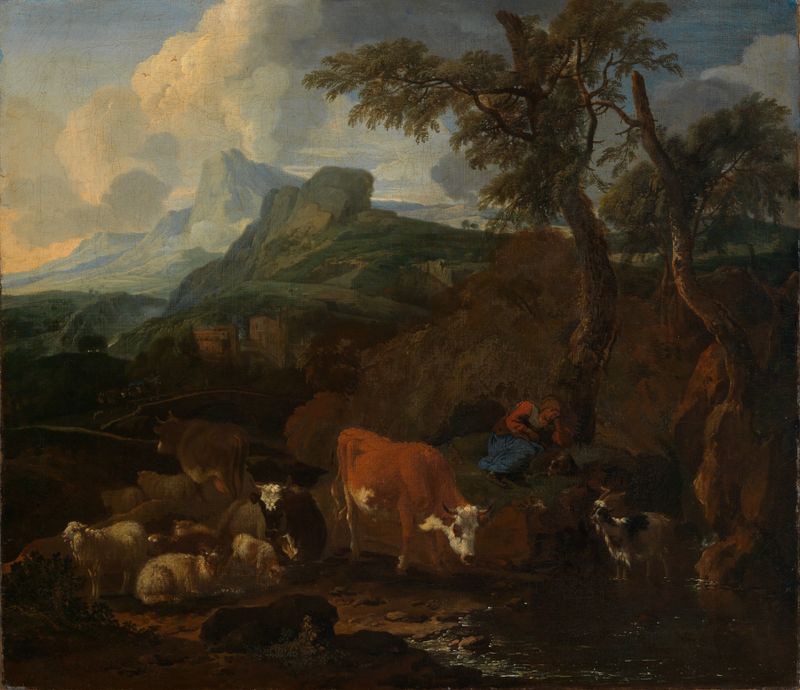
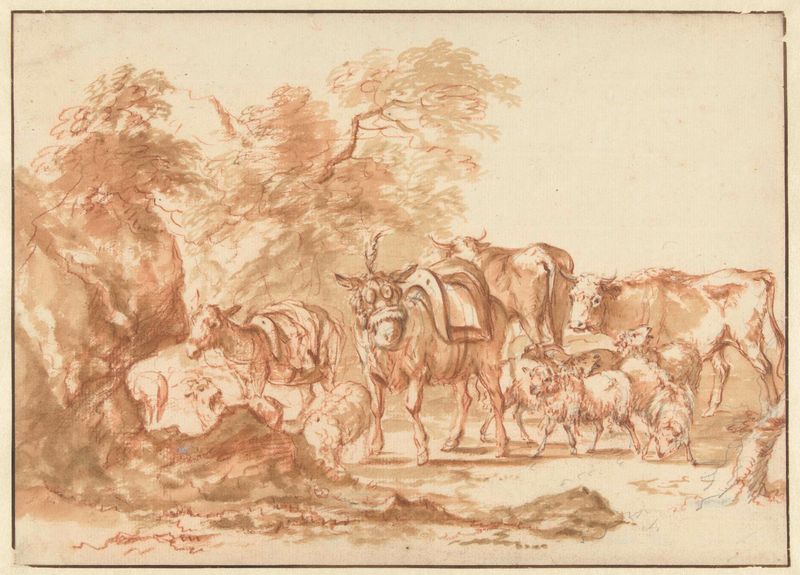
In the stillness of an empty landscape, where the cries of nature echo between the silence and the sorrow, we find a moment suspended in time: the waterhole, a simple yet profound gathering point, reveals the weight of loss. Focus on the tranquil blues and browns that envelop the scene, where the water reflects the sky's somber hues. Notice how the gentle ripples shimmer under the soft light, drawing the eye to the cattle that gather around, their forms solid but somehow forlorn. Each creature seems unaware of the narrative unfolding in their midst, their quiet demeanor contrasting with the heavy atmosphere that surrounds them. The composition invites contemplation; the waterhole acts as both a refuge and a reminder of what once was.
The cattle’s stillness suggests a deep-rooted connection to the land, hinting at a shared grief for the cyclical nature of life and death. This tension between serenity and melancholy resonates through the brushstrokes, revealing Carree's understanding of the fragile balance within nature’s embrace. Created during an undefined period, Michiel Carree's artistic journey was marked by a dedication to portraying pastoral themes in a way that resonates with universal emotions. While little is known about this specific work's context, Carree's exploration of rural landscapes reflects the broader movements of his time, where artists sought to capture the essence of the natural world and the human experience within it.