Drijfjacht op herten — History & Facts
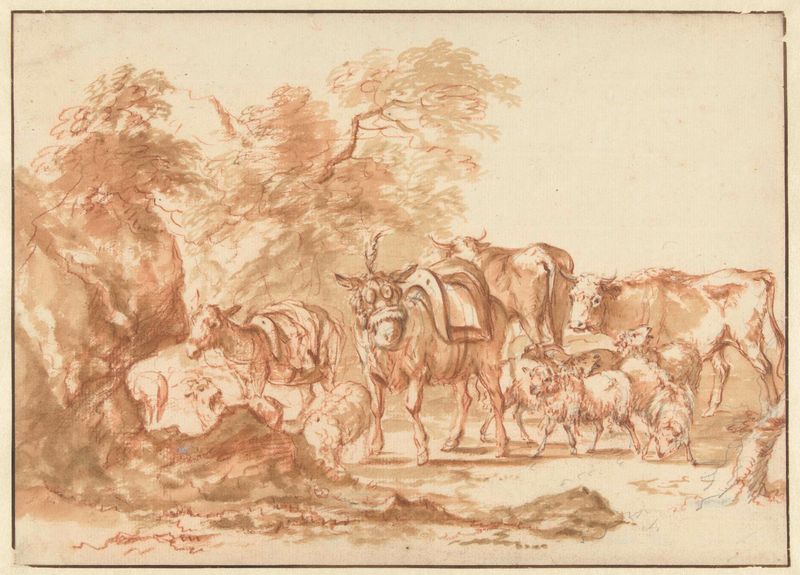
What secret hides in the quiet of the canvas? In the stillness of Drijfjacht op herten, silence echoes louder than any shout, revealing the tension of betrayal lurking beneath the surface. Look to the left at the dense thicket where hunters stealthily emerge, their forms draped in muted greens and browns, harmonizing with the landscape. The muted palette invites a sense of foreboding, accentuated by the contrasting whiteness of the deer, whose elegance starkly interrupts the surrounding gloom. Notice how the play of light dances through the leaves, creating dappled patterns that slip away from the figures, as if to conceal the impending violence of the hunt. Beneath the surface of this tranquil scene lies a profound dichotomy.
The hunters, poised with bows, embody both the power of nature and the fragility of life, suggesting a betrayal of trust in their role as stewards of the wild. The serene backdrop belies a moment of impending loss, where the beauty of the deer stands in tragic juxtaposition to the hunters' ruthless intent. Here, the canvas conveys a deeper narrative of survival, revealing the complex relationship between man, nature, and the moral dilemmas that arise in the pursuit of dominance. Created between 1667 and 1727, the artist crafted this work during a time when the art world was rife with the exploration of realism and the complexities of human emotion.
Emerging from the Golden Age of Dutch painting, they navigated a landscape saturated with artistic competition and innovation. Amidst this, the piece reflects not only the tranquil beauty of the hunt but also the underlying tensions that permeate both nature and society.