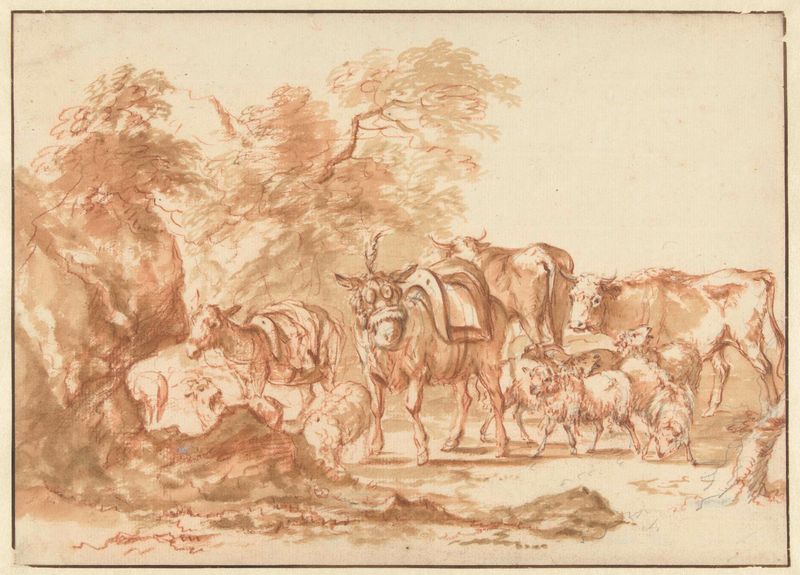
Italianised Landscapes with Shepherd and Shepherdess — History & Facts
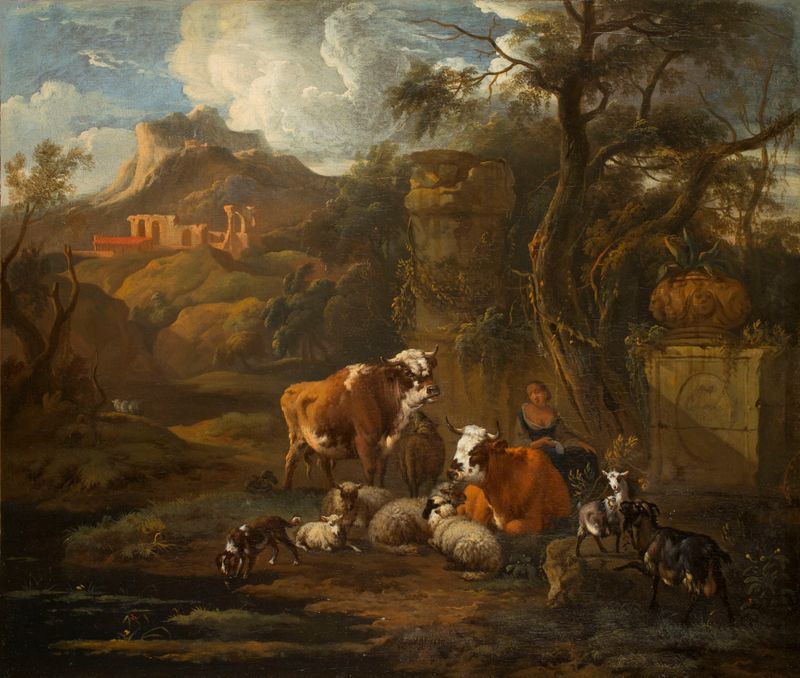
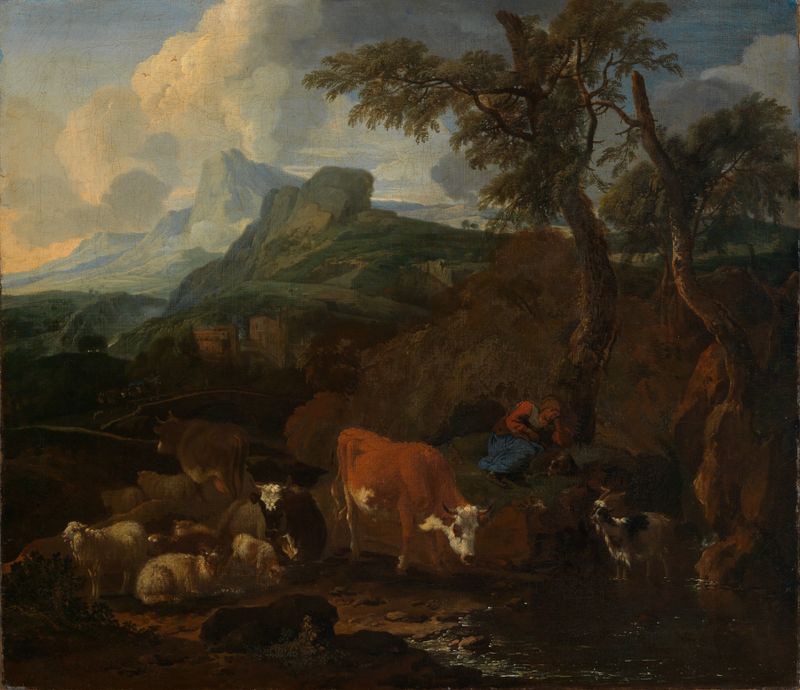
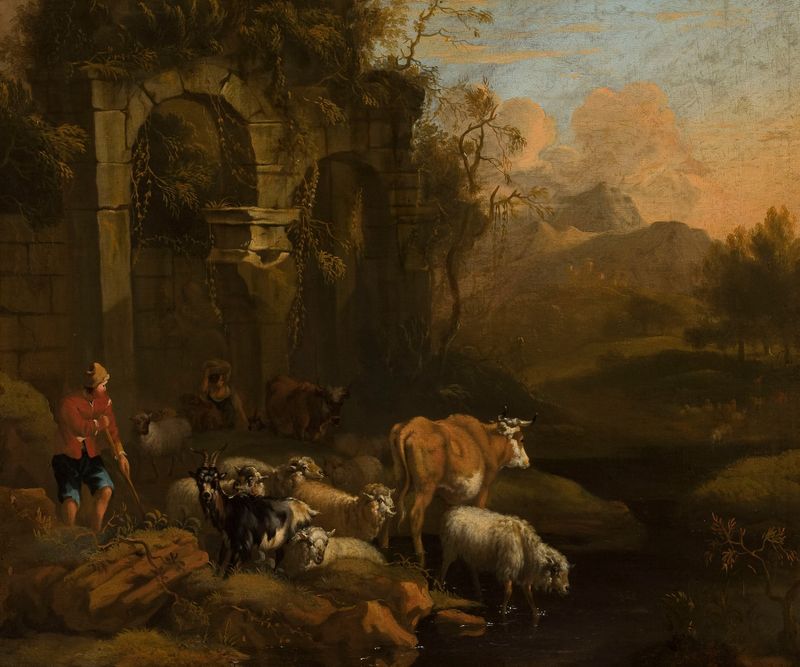
Who listens when art speaks of silence? In Italianised Landscapes with Shepherd and Shepherdess, the interplay of tranquil forms and muted tones invites us into a world poised on the brink of transformation—a moment where nature and humanity weave a delicate fabric of existence. Look to the left at the serene shepherd, his gaze cast thoughtfully over the gentle hills swathed in pastel greens and soft earth tones. The shepherdess, depicted to the right, cradles a tender lamb, her soft gaze mirroring the peacefulness of the landscape. Notice how the light falls upon their figures, illuminating the quiet intimacy of their connection while casting elongated shadows that hint at the passage of time.
The colors blend harmoniously, evoking a sense of unity between the couple and their pastoral surroundings. As you explore deeper, subtle contrasts emerge: the shepherd’s sturdy, grounded presence juxtaposed against the ethereal essence of the shepherdess and her lamb. The distant hills, painted with a dreamlike quality, suggest an idealized reality that transcends the everyday, prompting reflections on love, care, and the cyclical rhythms of life. This tranquil scene resonates with the viewer, whispering of the transformations that occur within ourselves and our relationships to the world. In 1691, during a period of artistic exploration in the Netherlands, Michiel Carree painted this work while navigating the transition from the Baroque to a more pastoral style.
Influenced by the Italian landscapes popular at the time, he sought to capture the serene beauty of rural life, tapping into the emotional resonance of nature's tranquility amidst a rapidly changing world.